
Elisabeth de Kleer
The Brooding Sentinel of Geldersekade
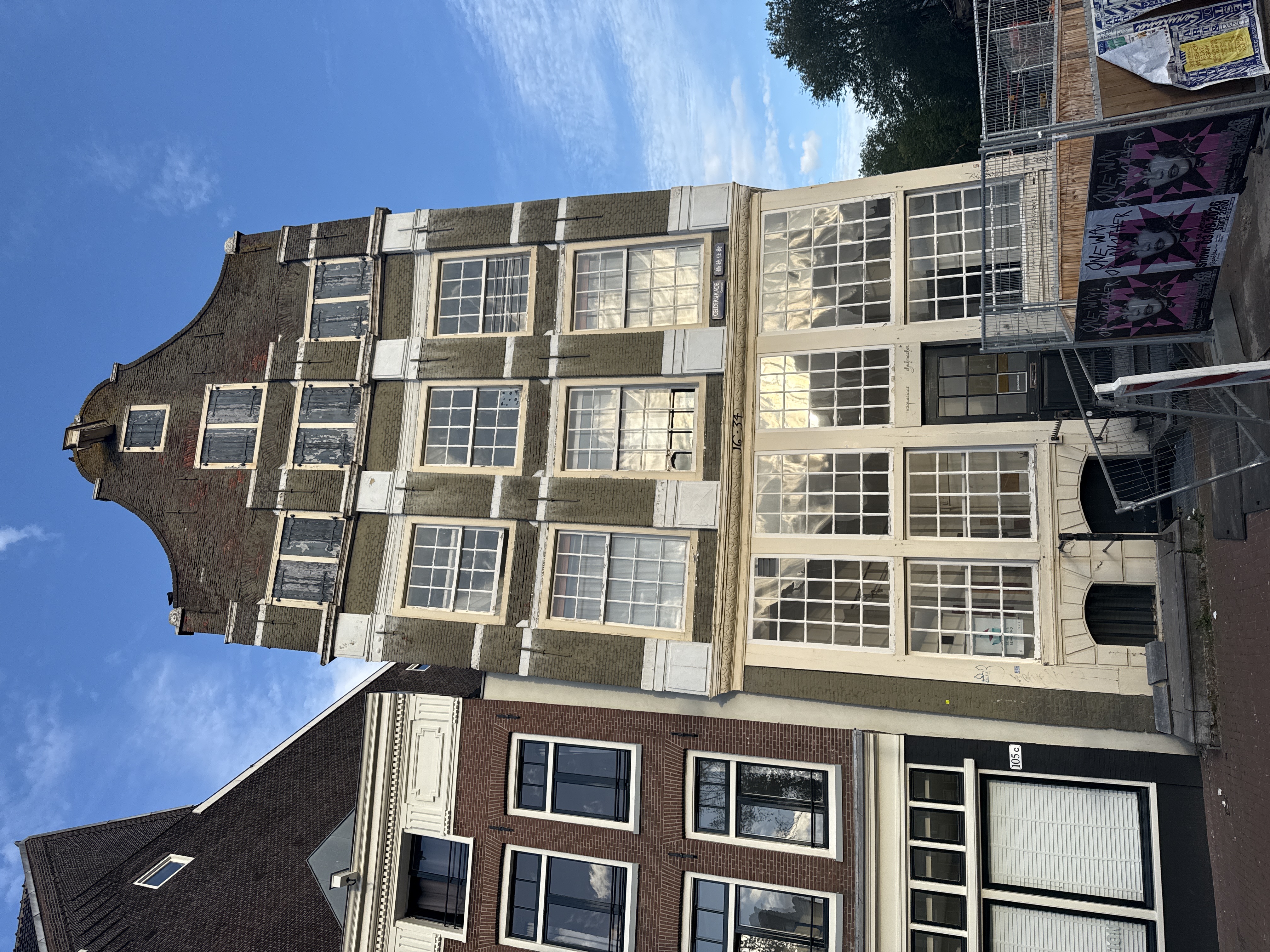
Here, in the heart of Amsterdam’s Geldersekade, we gaze upon a monument to the monumental indifference of time. Behold this canal house at number 105A. It stands with a certain grim determination, its neck craned forward toward the water as if searching for a truth that was lost in the 17th century. We call this the *visserswoning* style, but in truth, it is a vertical struggle against the swamp.
Observe the facade—a neck-gable that reaches toward the indifferent blue sky, its bricks weathered by the relentless humidity of the Low Countries. The large windows on the lower levels are not merely for light; they are wide, unblinking eyes staring back at the chaos of the city. Above the grand windows, we see the date 1634 carved into the stone. It is a reminder that while empires fall and the jungle of the modern world encroaches, these bricks remain, locked in a silent battle with gravity.
The hoist beam at the very top—a lone wooden finger pointing into the void—was once used to haul goods up to the attic, for the staircases inside are so narrow and cruel that they defy the dignity of the human form. One must imagine the heavy ropes groaning under the weight of spices or grain, a rhythmic sound lost to the indifference of history. Even the posters plastered on the temporary fences below, screaming of fleeting modern events, cannot diminish the profound, brooding ancientness of this structure. It is a house that has seen everything and says absolutely nothing.
The Leaning Double-House of 1634
Geldersekade 105 is a rare "double house" dating back to 1634, recognizable by the date stone on the facade. While most Amsterdam canal houses are narrow to minimize property taxes, this building spans a wider footprint, indicating significant wealth during the Dutch Golden Age.
The most distinctive feature is the leaning facade. Many older Amsterdam buildings lean forward ("op de vlucht"), but this is often intentional. It allowed merchants to hoist heavy goods—spices, silks, or tobacco—via the pulley hook at the top without damaging the expensive glass windows below. The top shutters lead to the original warehouse space.
Sitting at the edge of the Zeedijk and Chinatown, this area was historically a rugged sailor's quarter. The proximity to the Red Light District meant these canals were once frequented by sex workers and sailors coming off ships from the Dutch East India Company. Today, it marks the intersection of 17th-century merchant history and Amsterdam’s oldest diverse immigrant neighborhood.