UG
Ulrich Gall
The High-Stakes World of Jade Gambling
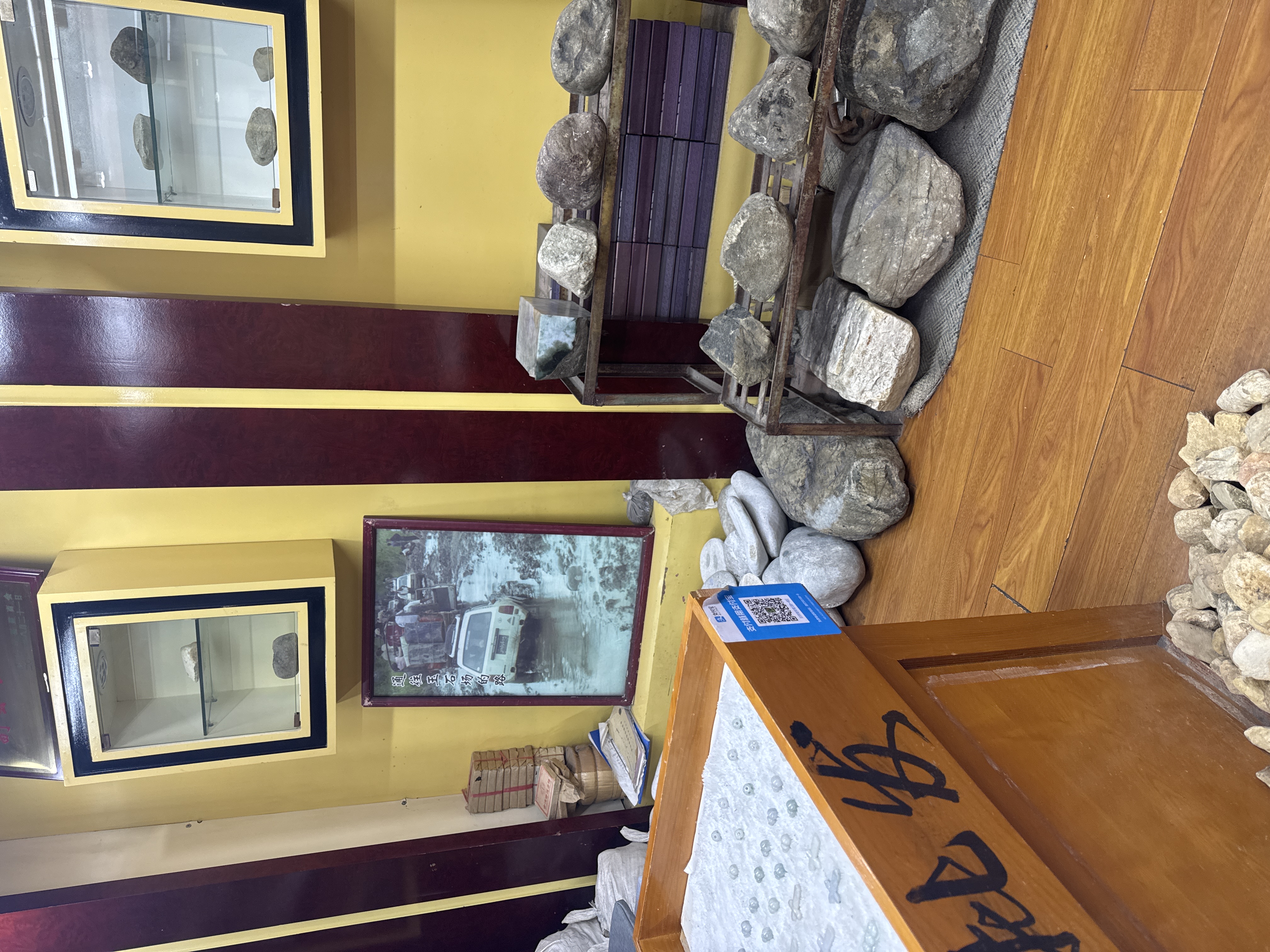
While these rough, unassuming rocks might look like ordinary river stones, they are actually a form of high-stakes treasure known as "gambling stones." In the specialized markets of Yunnan province, particularly here in Lijiang and near the Burmese border, these boulders are sold as raw jadeite. The practice is called *du shi* (赌石), or "stone gambling," because the true quality and color of the jade are hidden beneath a weathered outer crust. A buyer might pay thousands of dollars for a rock that looks dull on the outside, hoping that when it is sliced open, it reveals the vibrant, translucent emerald green of high-grade jadeite. If it does, the value could skyrocket to a hundred times the purchase price; if it’s just solid grey stone inside, the investment is lost instantly.
The framed photograph of a white SUV struggling through deep mud provides a glimpse into the arduous journey these stones take. The vertical Chinese text on the photo reads, "The road leading to the jadeite mine," highlighting the remote and treacherous terrain of northern Myanmar, where the world's finest jadeite is sourced. Lijiang serves as a major gateway for this trade. Because the mines are located in conflict zones and rugged mountains, transporting these heavy boulders is a feat of endurance, often involving convoys battling monsoon rains and unpaved tracks.
The large rocks on the lower shelves and floor are the raw "gambling" stock, while the smaller, pale green items arranged on the white fabric in the foreground represent the finished product: carved jade beads and pendants. You can see a QR code on the blue sign, which is the standard way to pay via mobile apps like WeChat or Alipay, even for items worth a small fortune. For locals, jade is more than just jewelry; it is believed to possess a soul, offering protection and health to the wearer, which explains why people are willing to take such significant financial risks on a simple-looking rock.
The High-Stakes World of Jade Gambling
These unpolished boulders are raw jadeite, known locally as "gambling stones" (*du shi*). In Yunnan, particularly near the Myanmar border, the sale of raw jade is a high-stakes trade where buyers purchase stones with intact crusts, hoping a high-quality green interior lies beneath the weathered exterior. The photograph on the wall, showing a vehicle bogged down in mud, documents the treacherous "Jade Road"—the smuggling and transport routes from Hpakant, Myanmar, into China.
The "gambling" aspect stems from the inability of modern technology (like X-rays) to determine a stone's interior quality through the iron-rich oxidation crust. Value is determined by "opening a window"—grinding a small patch to reveal a glimpse of color. A stone purchased for a few thousand dollars can be worth millions if it contains "Imperial Jade" (vivid emerald green), or it can be worth nothing if the interior is fractured or grey. This industry is the economic backbone of the region but is also linked to intense conflict and labor exploitation in the Myanmar mines.
The High-Stakes World of Jade Gambling
The unremarkable boulders displayed here are actually raw Burmese jadeite, the core of a high-stakes industry known as "stone gambling" (*dǔshí*). Yunnan’s proximity to Myanmar makes Lijiang and Ruili hubs for this trade.
Buyers purchase these "gambling stones" based on a tiny window (*kaichuang*) cut into the weathered crust or by shining a flashlight through the rock to guess the interior's color and translucency. A single stone can cost thousands; if it contains high-grade "imperial green" jade, the value skyrockets to millions. If it's just common rock inside, the investment is lost instantly.
The framed photo showing a vehicle bogged down in mud depicts the brutal reality of the Hpakant jade mines in Myanmar. This region produces 95% of the world’s jadeite but is notorious for landslides, drug addiction among miners, and funding ethnic conflict. Local trade often involves "grey market" smuggling across the border to bypass official gemstone auctions.