UG
Ulrich Gall
The Steampunk Sanctuary of Shuhe
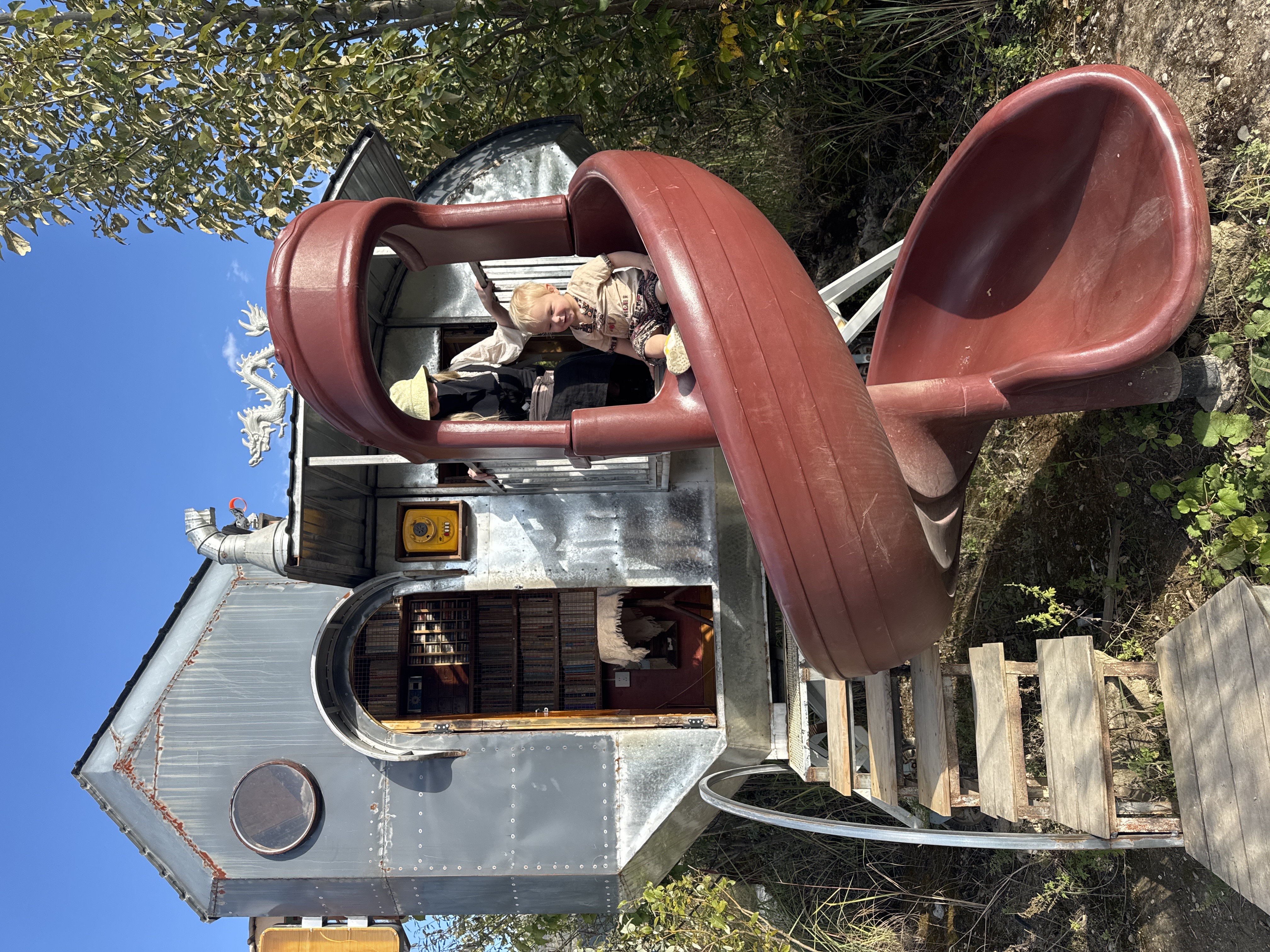
Here, in the high plateaus of Yunnan, we encounter a most curious manifestation of the human spirit. It is a structure of galvanized metal and rivets, a desperate attempt to impose geometry upon the chaotic indifference of the foliage. Look at it—an aluminum vessel that has abandoned the sky to root itself among the trees. It is a Treehouse Café, yet it resembles a steampunk bathyscaphe designed by a madman who dreamed of both literature and gravity.
Observe the bookshelf nestled within its metallic belly. There is a profound loneliness in these books, standing shoulder to shoulder in a room of cold steel, waiting for a reader who may never come, or who may instead choose the path of the plastic descent. And then, there is the slide—a crimson, helical tongue protruding from the structure’s mouth. It is a spiral of joy, perhaps, but also a reminder of the inevitable downward trajectory of all things. A child sits at the precipice, contemplating the friction of his own existence, while above him, a silver dragon perched on the roof stares into the void of the blue sky.
The dragon does not blink. It represents a mythic permanence atop a construction of temporary whimsy. Here, one can consume caffeine and contemplate the overwhelming weight of the landscape, all while being encased in a tin can that seems ready to launch into a dream, or simply rust away into the silent, encroaching green. It is a testament to our need to build strange, beautiful, and utterly unnecessary things in the face of nature’s overwhelming silence.
The Steampunk Sanctuary of Shuhe
Hidden away in the rural outskirts of Shuhe Ancient Town, this metallic "Treehouse Cafe" represents a whimsical blend of Steampunk aesthetics and traditional Yunnan folk culture. While the structure looks like a retro-futuristic spaceship or a DIY submarine, its metallic roof is adorned with a traditional Chinese dragon, a common protective symbol in local architecture, bridging the gap between modern industrial art and ancient Lijiang heritage.
This specific spot is part of a growing movement in rural China where artists and young entrepreneurs return to the countryside—often referred to as "New Ruralism"—to build creative sanctuaries that stand in stark contrast to the nearby UNESCO World Heritage sites. The interior, visible through the arched doorway, functions as a cozy library and reading nook, packed with books that suggest a deliberate slow-living lifestyle. The playground slide attached to the front emphasizes this playful, unpretentious approach to design, turning a piece of architecture into an interactive toy.
One detail that might catch the eye of a Western visitor is the woman’s attire; she is wearing a full face covering and a wide-brimmed hat. In high-altitude regions like Yunnan, where the sun’s UV rays are incredibly intense, this "facekini" style of sun protection is a standard practical choice rather than a fashion statement or a religious garment. It allows locals and domestic tourists to enjoy the outdoors for hours without the risk of severe sunburn. The yellow box next to the door is a vintage-style rotary phone, likely repurposed as a decorative call-bell or intercom, adding to the curated "lost-in-time" atmosphere of this unique countryside retreat.
The Steampunk Treehouse of Shuhe
This structure is part of the Shuhe Treehouse Café (树屋咖啡馆), a prominent example of the "Glamping" and architectural DIY movement in Lijiang’s Shuhe Ancient Town. Unlike the traditional wooden Naxi architecture dominant in the region, this installation utilizes industrial salvage—corrugated metal, riveted steel plates, and plastic playground components—reflecting a modern Chinese subculture known as "Wild Luxury" (野奢).
The interior functions as a miniature library or study, a trend in Yunnan's rural revitalization projects designed to attract "Digital Nomads" from tier-one cities like Beijing and Shanghai. The roof features a traditional Chinese dragon silhouette, blending local folklore motifs with a steampunk aesthetic. This specific site is located near the Baisha and Shuhe districts, areas increasingly populated by "drifters" (dapiao)—urbanites who have abandoned high-pressure corporate lives for a slower, bohemian lifestyle in the Yunnan highlands.
The Steampunk Treehouse of Shuhe
Located in the rural periphery of Shuhe Ancient Town, this structure is part of the "Treehouse Cafe" (树屋咖啡馆), a DIY architectural project blending Steampunk aesthetics with Naxi cultural elements. The metallic exterior utilizes salvaged corrugated zinc and riveted sheet metal, a departure from the region’s traditional timber-and-tile "Sanfang Yizhaobi" architecture.
Notice the Chinese dragon ridge ornament atop the tin roof—a nod to local folklore where dragons are water deities protecting against fire, a constant historical threat to Lijiang's wooden structures. The interior serves as a micro-library, reflecting a localized "slow life" movement popular among urban Chinese youth fleeing coastal megacities for Yunnan’s high-altitude plateau.
The woman’s face covering is a "Facekini-style" UV mask, ubiquitous in high-elevation Yunnan to protect against intense solar radiation at 2,400 meters. The slide and play elements represent a trend in Chinese rural revitalization where "Instagrammable" (Wanghong) whimsy is used to draw domestic tourists to formerly agricultural zones.