UG
Ulrich Gall
The Neon Wax Museum of Lijiang
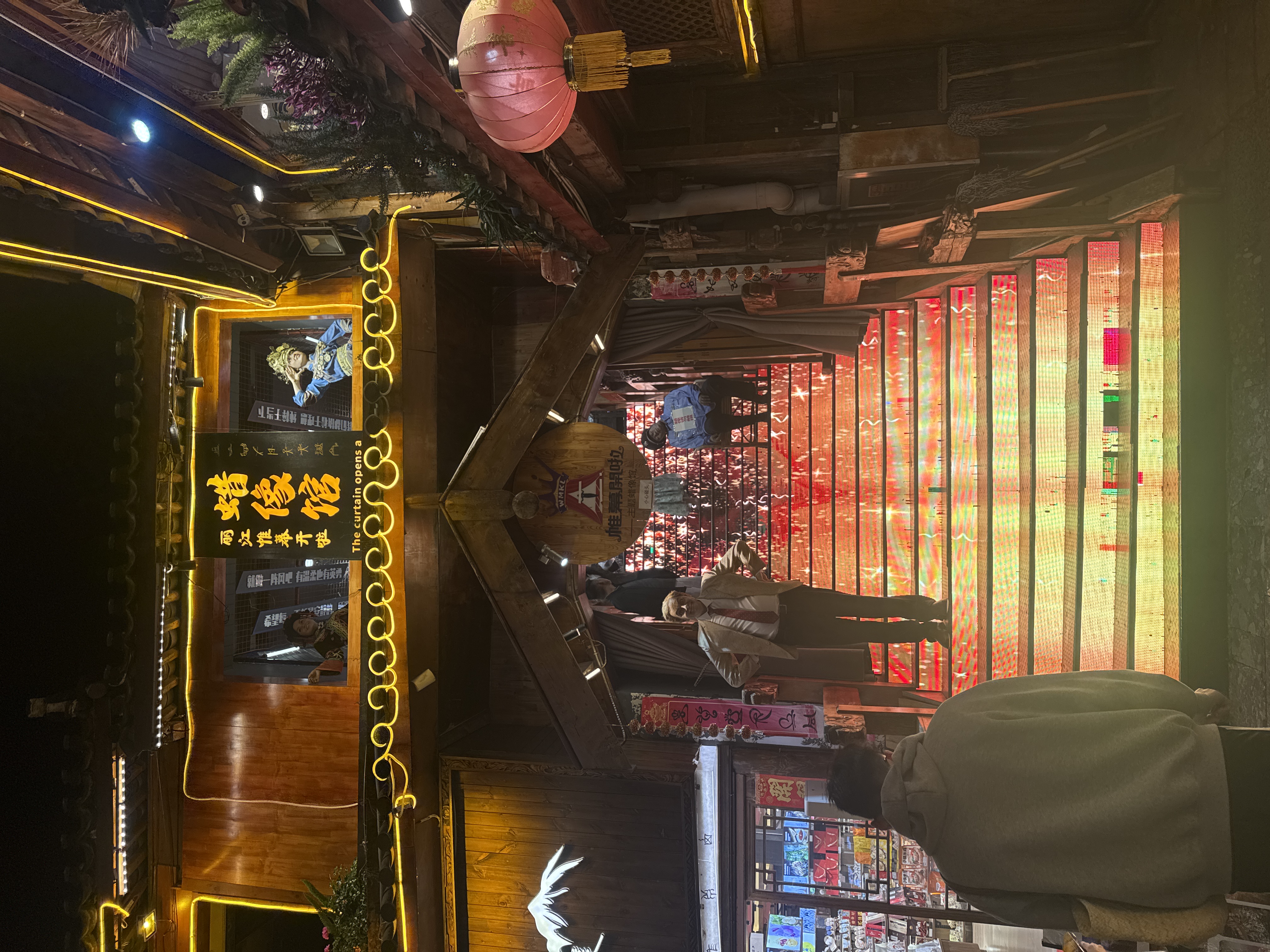
While exploring the ancient cobblestone streets of Lijiang, it is common to see traditional Naxi architecture, but this vibrant, neon-lit entrance offers a much more modern, kitschy twist on Chinese pop culture. The large gold characters on the black sign, 蜡像馆 (Làxiàng Guǎn), literally translate to "Wax Museum." The smaller text below announces that "The curtain opens in Lijiang," inviting visitors to step inside for a surreal encounter with both Chinese and global celebrities.
The figures standing on the glowing LED staircase are wax replicas. On the left, you might recognize a likeness of Rowan Atkinson’s "Mr. Bean," a character who remains immensely popular across China for his physical comedy, which transcends language barriers. To his right, a seated figure slumped over appears to be a common trope in these local wax attractions—a sleeping security guard or an ordinary person intended to trick the eye and create a "uncanny valley" moment for passersby.
These types of private wax museums have become a phenomenon in Chinese tourist towns. Unlike the prestigious Madame Tussauds, these local iterations often feature figures that range from strikingly realistic to hilariously off-model, frequently blending Hollywood stars with legendary figures from Chinese history and folk opera. In the window above, you can see a figure dressed in the elaborate blue and gold regalia of a traditional Peking Opera performer, complete with a feathered headdress, standing alongside a figure in more contemporary formal wear.
The building itself is located within the Lijiang Old City, a UNESCO World Heritage site known for its historic wooden structures and complex canal system. However, as tourism has surged, the ground floors of these ancient buildings have been transformed into a neon-lit landscape of boutiques, cafes, and quirky attractions like this one. The glowing stairs and the mix of traditional lanterns with modern LED strips reflect the high-energy, commercialized nightlife that now defines much of the Dayan district after the sun sets.
The Lijiang Wax Museum
This is the entrance to the Lijiang Wax Museum (蜡像馆), a kitschier, local alternative to major chains like Madame Tussauds. Located within the UNESCO World Heritage site of Lijiang Old Town, these private museums often feature an idiosyncratic mix of global celebrities and local cultural icons.
The figures positioned on the stairs are wax replicas; the one on the left is a likeness of Mr. Bean (Rowan Atkinson), a character that maintains immense popularity across China due to his slapstick, non-verbal humor which transcends language barriers. The upper level displays wax figures in traditional Naxi ethnic dress, reflecting the local indigenous culture of Lijiang. The use of LED-lit stairs and neon signage is a common tactic in Chinese tourist districts to blend ancient wooden architecture with modern "cyberpunk" aesthetics to attract night-time foot traffic.
The Uncanny Wax Figures of Lijiang
Lijiang Wax Museum (蜡像馆) on Qiyi Street. Unlike high-end Madame Tussauds, local Chinese wax museums often feature "uncanny valley" replicas of global icons and local ethnic Naxi figures. The stiff figure in the tan suit is a likeness of Rowan Atkinson’s Mr. Bean, a massive cult figure in China representing Western slapstick. To his right, the slumped figure is likely a comedic or "drunk" trope, common in these kitschy, commercialized tourist traps.
The museum capitalizes on Lijiang's status as a UNESCO World Heritage site, mixing traditional Mu-style timber architecture with jarring LED-lit stairs and neon. The upper window displays figures in traditional Naxi attire, reflecting the local minority culture of Yunnan, albeit in a highly commercialized "Disneyfied" format. These establishments are part of the "night economy" (夜经济), a government-pushed initiative to keep tourist districts profitable after dark through flashy, low-brow entertainment.