UG
Ulrich Gall
An Edison Electric Range - A Century of Cooking Innovation
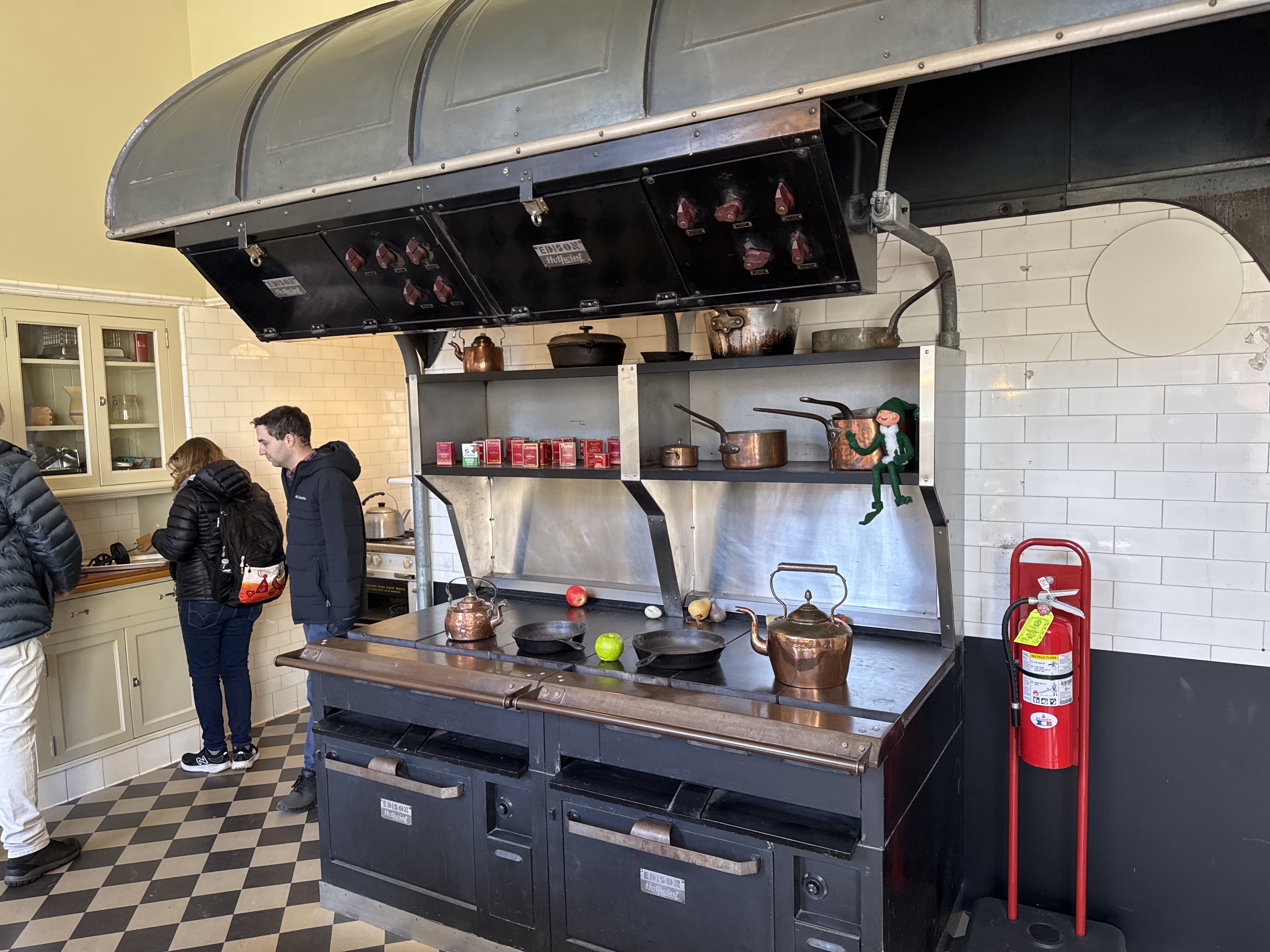
Beneath the imposing, industrial-looking range hood in what appears to be a historic kitchen, you'll find a fascinating relic of early 20th-century innovation: an Edison Electric Range. While electric stoves are commonplace today, this particular model is notable not just for its age, but because it bears the name of the legendary inventor, Thomas Edison.
Edison was deeply involved in establishing the electric utility industry, and while he’s perhaps best known for the light bulb, his company also ventured into developing electric appliances to create demand for electricity in homes. This range, likely installed in a grand estate like the one hinted at by the sophisticated setting, would have been a cutting-edge piece of technology in its day. Unlike the gas or wood-fired stoves that were standard, an electric range offered a cleaner, potentially safer, and more convenient way to cook. The large, black range with its multiple heating elements and substantial ovens reflects the robust design typical of early electric appliances, often built to last using heavy-duty materials.
The upper portion with its various knobs and controls, situated above the actual cooking surface and integrated into the exhaust hood, suggests a centralized control system that was advanced for the era. The various copper pots and pans, along with the kettle, evoke a sense of a bustling, well-used kitchen. And a quirky, perhaps an "Elf on the Shelf" type figure, perched on the shelf, adds a touch of modern whimsy to this historical scene.
Early Electric Kitchen Range (Edison)
The massive range in front of you, with its large hood, is an early electric stove, likely dating from the first half of the 20th century. Look closely at the hood and you might spot the word "Edison," referring to the inventor Thomas Edison. While Edison is most famous for the light bulb, his company, General Electric (GE), was a major pioneer in early electrical appliances, including these large commercial or institutional electric ranges. Before electric stoves became common, most cooking was done over wood, coal, or gas. Early electric models, particularly large ones like this, were quite advanced and often had individual heating elements controlled by switches, similar to the ones you see. The impressive size suggests it was used in a busy kitchen, perhaps for a large family or an estate staff.
The Hetch Hetchy Kitchen Stove
This is the historic kitchen of the **Pulgas Water Temple** complex, specifically the **Dining Room Terrace**. The massive black stove is a vintage **Edison Electric** range, notable for its early use of electricity for heavy-duty cooking.
The specific text visible under the hood—*“EDISON Hotpoint”*—identifies it as a product of the **Edison Electric Appliance Company**, which later merged into what became General Electric (GE) Appliance. This commercial unit likely dates to the 1920s or 1930s.
The entire complex, including this kitchen, was part of the original construction for the **Hetch Hetchy Aqueduct** system, bringing Sierra Nevada mountain water to the San Francisco Bay Area. The kitchen served personnel and perhaps honored guests involved in operating the system; it wasn't a public restaurant.