UG
Ulrich Gall
Filoli Gardens and the Carriage House Clock Tower
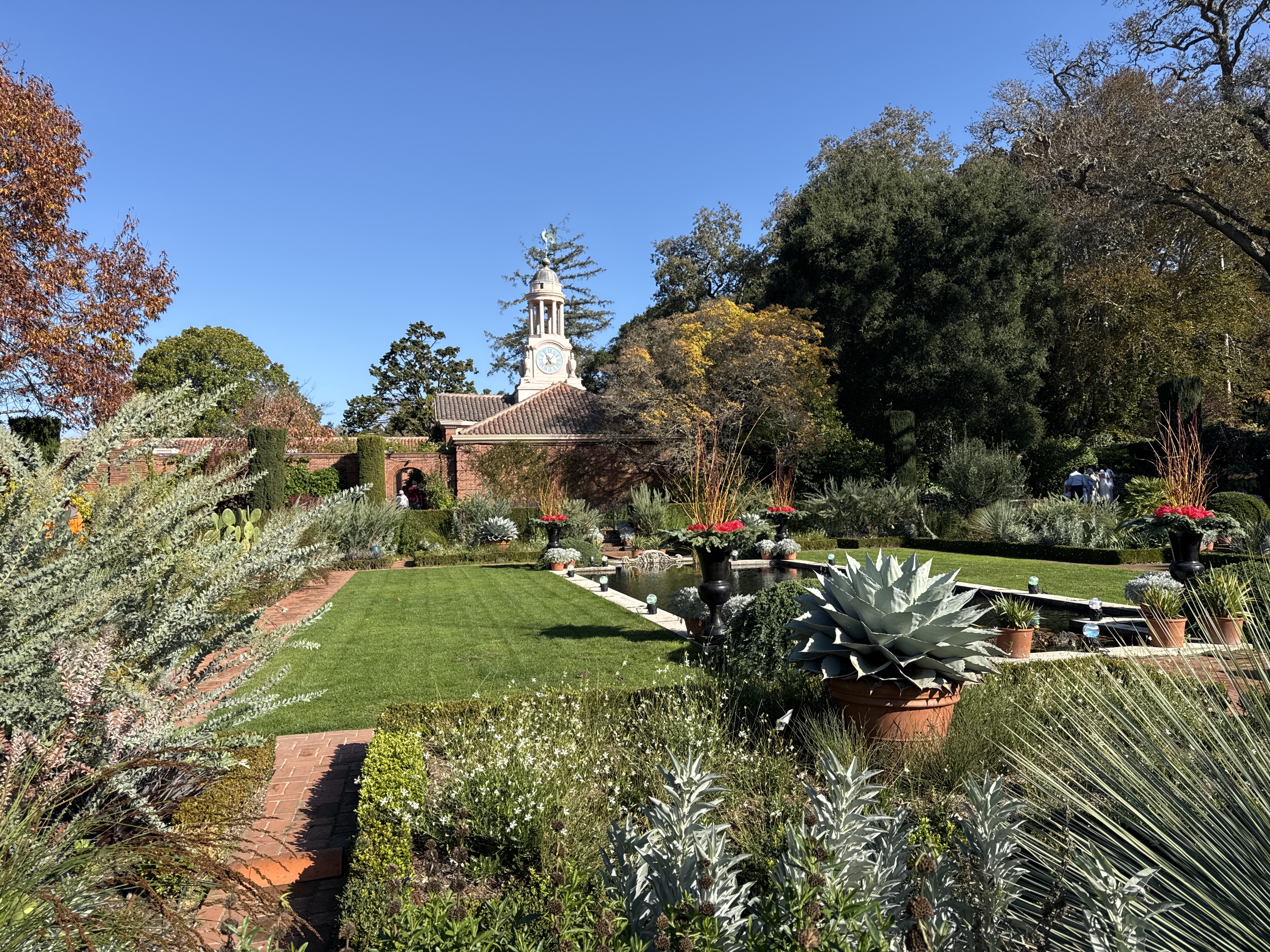
You're looking at a picturesque area within Filoli, a historic country estate nestled in the rolling hills of Woodside, California. What stands out immediately is the elegant classical clock tower, which isn't just a decorative accent, but actually marks the Carriage House. This building originally housed the estate's vehicles and stables, reflecting a time when such grand homes were largely self-sufficient, relying on horse-drawn transport.
Filoli was built between 1915 and 1917 for William Bowers Bourn II, a prominent gold mine owner, and his wife Agnes Moody Bourn. The name "Filoli" itself is quite unique and an acronym derived from Bourn's personal credo: "FIght for a just cause; LOve your fellow man; LIve a good life." This motto was deeply ingrained in the Bourns' vision for their estate, which was not only a private residence but also a working farm and a place of beauty.
The estate is renowned for its magnificent formal gardens, which you can see a glimpse of here with their meticulously manicured lawns, brick pathways, and diverse plantings, including mature trees and potted succulents. These gardens are designed in a classic European style, reminiscent of Renaissance and Baroque gardens, and are divided into many distinct "rooms," each with its own character and purpose. Many of the features, like the ornamental urns and reflecting pools, are designed to create a sense of grandeur and tranquility. Today, Filoli is a National Trust for Historic Preservation site, open to the public, offering a fascinating window into early 20th-century California estate life and horticultural excellence.
Filoli Estate and its Eclectic Gardens
You’re looking at a section of the Filoli Estate, a grand country estate nestled in the Santa Cruz Mountains of Woodside, California. The clock tower you see is part of the historic Bourn-Roth Estate, now a National Trust for Historic Preservation site. Built between 1915 and 1917, the estate's 654-acre property includes a 36,000 square foot Georgian Revival mansion and 16 acres of formal gardens, featuring diverse horticultural designs. The name "Filoli" is an acronym based on the original owner William Bourn’s credo: "Fight for a just cause; Love your fellow man; Live a good life."
These gardens are particularly noteworthy for their Mediterranean climate plant collections and meticulously maintained formal layouts, often utilizing specific plant groupings or architectural elements to create distinct "garden rooms." The large succulent in the foreground is likely an Agave, a genus of plants native to tropical and subtropical regions of the Americas and often used as a striking focal point in dry gardens due to its architectural form and drought tolerance.
Pulgas Water Temple Garden and Hetch Hetchy Terminus
This is the **Pulgas Water Temple Garden**, part of the San Francisco Public Utilities Commission complex. The clock tower in the background is the **Pulgas Water Temple**, a neoclassical monument built in 1934 to celebrate the terminus of the 160-mile **Hetch Hetchy Aqueduct**. The aqueduct carries high-quality Sierra Nevada mountain water from the Hetch Hetchy Valley in Yosemite National Park to the Bay Area—providing drinking water for over 2.6 million people. The surrounding gardens, with their formal design, brick walkways, and diverse plantings—including the prominent Agave (likely *Agave americana* or a similar large species)—offer a serene, European-style contrast to the rugged California landscape.