UG
Ulrich Gall
An Olive Tree Bearing Fruit
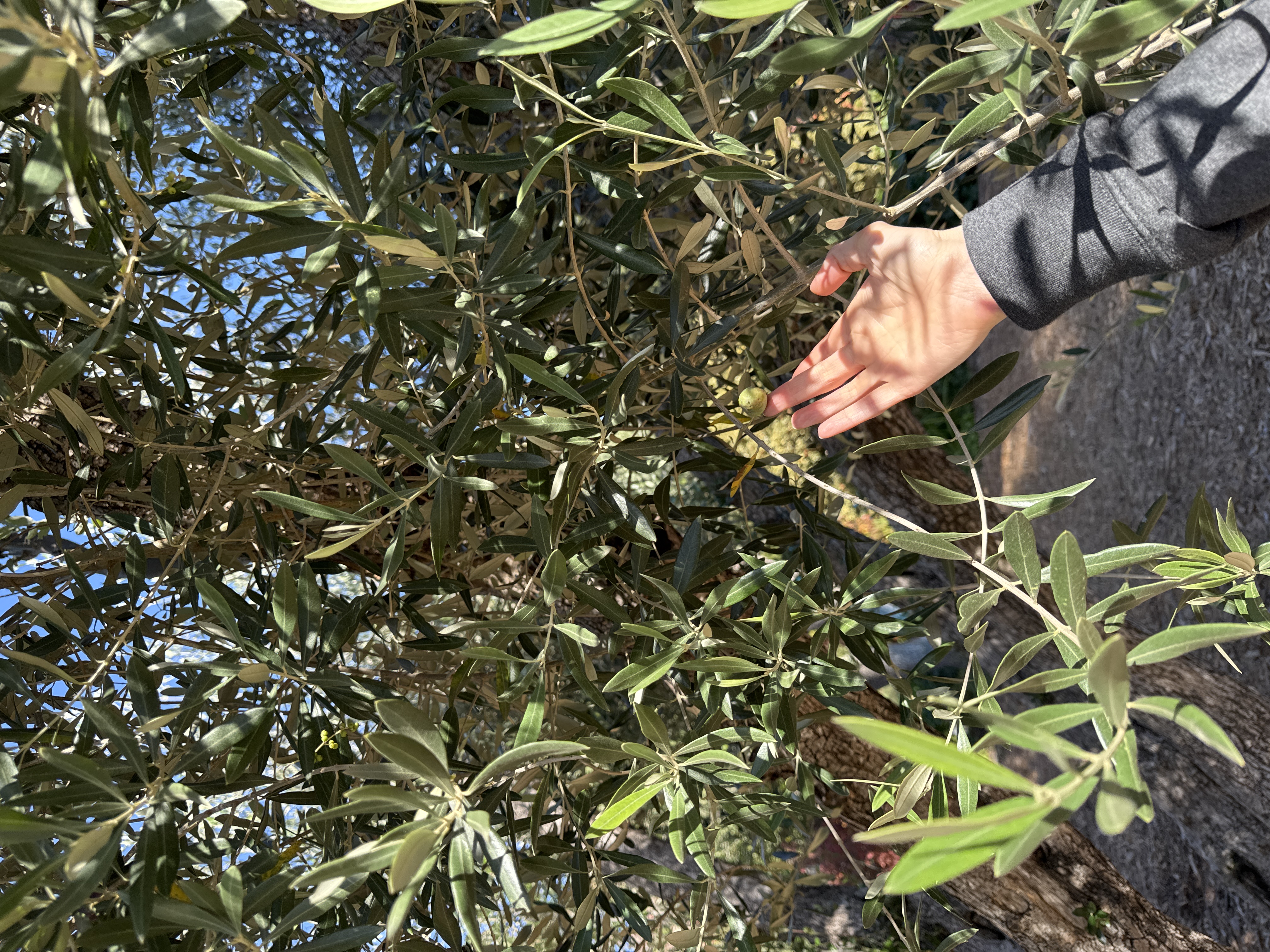
Despite olive oil being a staple in many kitchens in Europe and North America, many people have never actually seen an olive tree, let alone an olive still on the branch. This is an olive tree, easily recognizable by its narrow, silvery-green leaves, and the small, oval fruit, which is currently still young and green.
Olive trees are incredibly resilient and have a long history, with some living for thousands of years. Originating in the Mediterranean basin, they thrive in climates with hot, dry summers and mild, wet winters, making areas like California's landscape quite suitable for them. In fact, Spanish missionaries first brought olive trees to California in the 18th century.
It's common to see olive trees planted ornamentally in landscapes, parks, and even along roadsides in California, not just in commercial orchards. While the olives look tempting, especially when they turn a dark purple or black, it's generally best to avoid eating them straight from the tree. Fresh olives are extremely bitter due to a compound called oleuropein. They require extensive brining, curing, or fermentation processes to become the edible, delicious fruit we enjoy, a process that typically takes weeks or even months. The same goes for making olive oil, which involves pressing the ripened olives to extract their rich, flavorful liquid. So, while it's fascinating to see them growing, it's a good reminder of the journey these fruits take before they reach our tables.
Unripe Olives on an Olive Tree
This is an olive tree, easily identifiable by its distinct long, narrow, silvery-green leaves. Olives are native to the Mediterranean basin and the Near East, but they thrive in climates with hot, dry summers and mild, wet winters, like parts of California. The small, pea-sized olives visible on the branch are still green, indicating they are unripe. These are far too bitter to eat straight from the tree due to oleuropein, a phenolic compound. They need extensive processing, typically involving brining or curing, to become edible. Depending on the varietal and desired oil characteristics, olives are harvested for oil either when green (for pungent, peppery oil) or later, when they turn black (for milder oil).
Olive Tree (Olea europaea) and its Fruit
Olive tree (*Olea europaea*). Mediterranean staple, thrives in California's similar climate. One of the oldest cultivated trees—dates back at least 6,000 years.
The small green fruit is an **olive**. Olives are inedible straight from the tree due to high oleuropein content (a bitter compound). Require curing—soaking in brine, water, or oil—which removes bitterness, taking anywhere from a few days to months.
California Central Valley now produces much of the US olive crop, primarily 'Manzanillo' and 'Sevillano' varieties for curing, and 'Arbequina' for olive oil.