UG
Ulrich Gall
The Playful Growth of California Bay Laurels
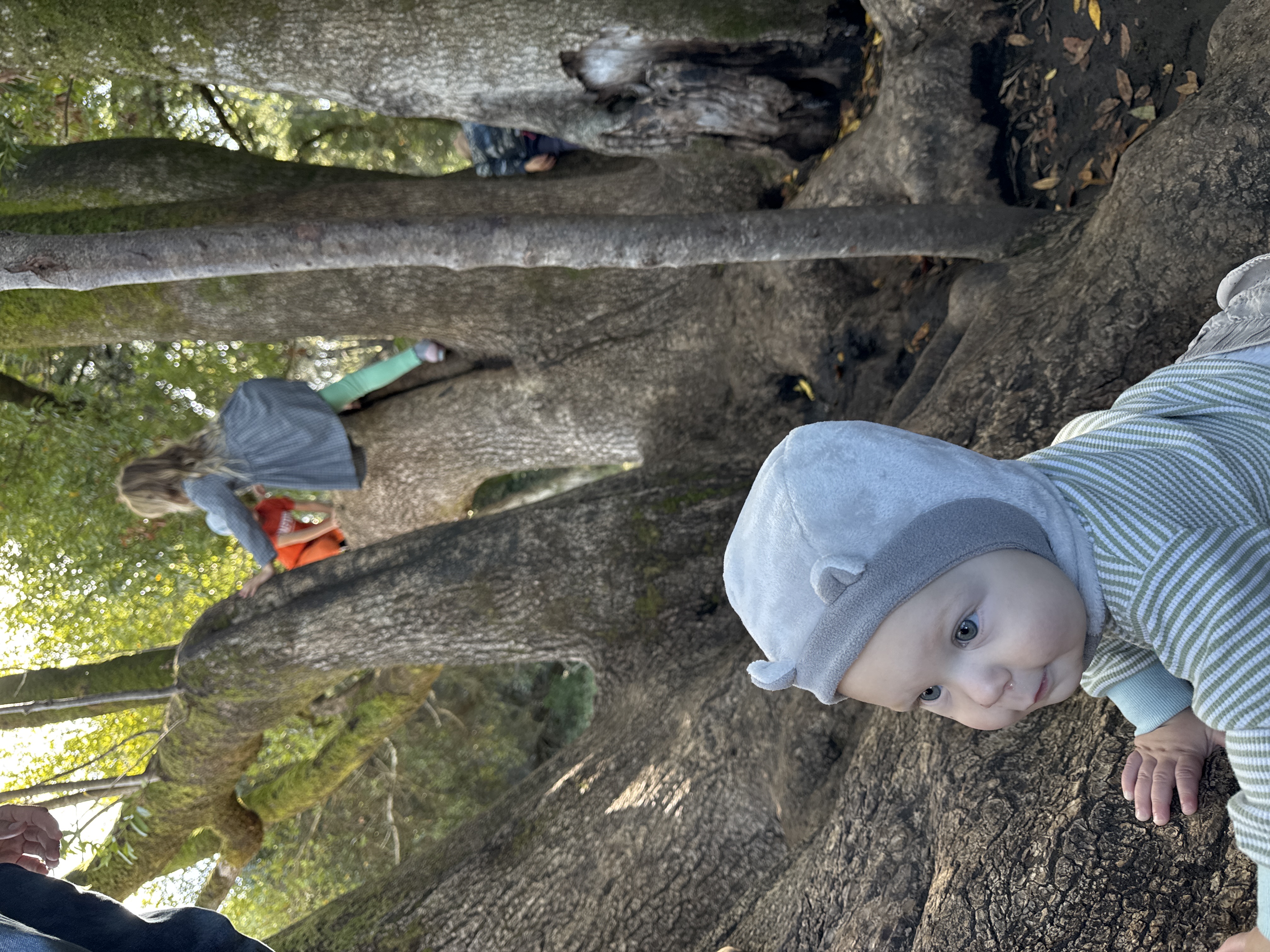
What you're seeing here are likely California Bay Laurels, also known as Oregon Myrtles, which are native to the western United States. While they might look like ordinary trees from a distance, up close, they reveal a fascinating growth pattern, especially around their base and lower branches. These trees have a distinctive way of growing and adapting, often twisting and branching out in ways that create natural platforms and intriguing spaces within their canopy and root systems.
This particular appearance, with thick, gnarled trunks and low-hanging, sturdy branches, is characteristic of mature Bay Laurels that have had the space and time to grow unhindered. They thrive in environments like the Paul Creek Bridge area in San Mateo County, where they can often be found along waterways or in sheltered canyons, creating a dense, almost magical, woodland. The way their roots and lower branches often intertwine and grow close to the ground makes them incredibly inviting for exploration and, as your photo shows, perfect for climbing. For children, these trees become natural playgrounds, offering endless opportunities for imaginative play and developing their coordination and sense of adventure. It's a wonderful example of how nature provides both beauty and function, even in unexpected ways.
Coast Live Oaks
These trees are likely coast live oaks (Quercus agrifolia), prevalent in coastal California. Their broad, spreading branches and often multi-trunked growth habit make them excellent climbing trees. They are evergreen, retaining their leaves year-round, which is characteristic of many oak species in warmer climates. The moss and lichen on the bark, particularly on the larger branches, indicate a healthy, established ecosystem, benefiting from the region's mild, humid conditions.
Coast Live Oak Tree Climbing
Trees here likely Coast Live Oaks (*Quercus agrifolia*), common evergreen oak in California's coastal regions. Known for their distinct, sprawling shape and massive, often multitrunked bases and lower branches, perfect for climbing. The thick, mossy bark common on older trees, like the one pictured, suggests a healthy, humid microclimate. This region of San Mateo County favors their growth. These trees are crucial to the local woodland ecosystem, providing habitat and food.