UG
Ulrich Gall
The Stony Shores and Surfing Breaks of Lima's Costa Verde
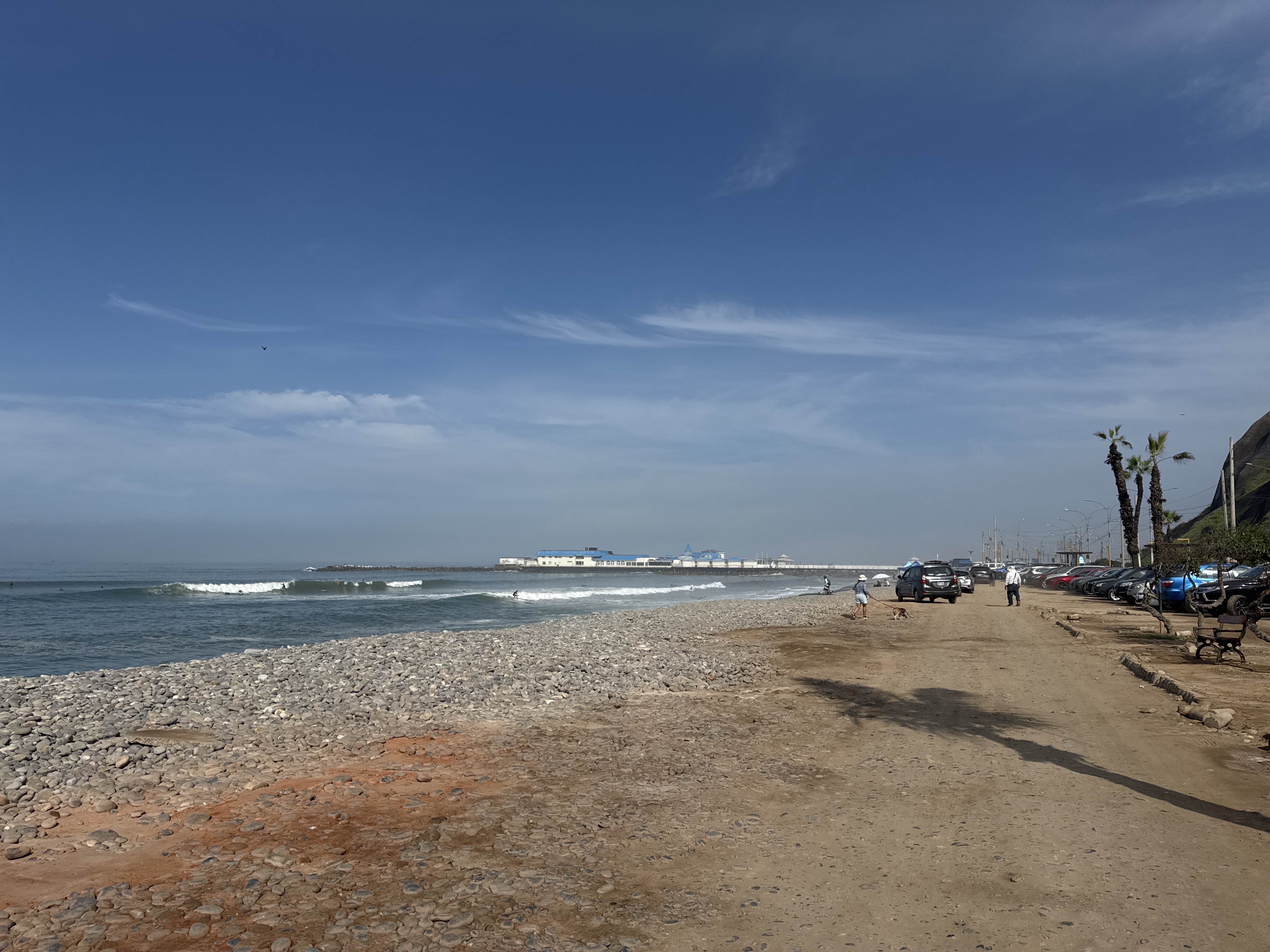
This stretch of pebbly beach along the Costa Verde in Lima offers a fascinating glimpse into how this sprawling city embraces its Pacific coastline. What might look like a simple coastal road is actually part of a multi-lane highway and cycleway carefully carved into the steep cliffs, connecting different districts of Lima and providing stunning ocean views. The beaches here, unlike the sandy shores often associated with coastal cities, are primarily made up of smooth, rounded stones, known locally as "canto rodado." This unique geological feature is a result of the relentless action of the Pacific waves shaping the rocks that fall from the eroding cliffs above.
In the distance, you can see waves breaking over a long rock barrier, which is a common sight along the Costa Verde. These are artificial breakwaters, strategically placed to protect the coastline from erosion and to create more consistent waves for surfing. Lima is a major surfing destination, and you'll often find surfers waiting for the perfect wave, even on weekdays. The building you see further down the coast is likely part of one of Lima's many beach clubs or restaurants, which are popular spots for locals to enjoy the ocean breeze and fresh seafood. The Costa Verde itself is a testament to urban planning in a challenging environment, offering both a crucial transportation artery and a recreational paradise for residents and visitors alike.
Lima's Pebble Beaches and the Humboldt Current
This coastal area is part of Lima's Costa Verde, a unique multi-level urban zone where cliffs meet the Pacific Ocean. Unlike many popular beaches in Europe or North America, Lima's beaches frequently consist of pebbles rather than sand, a result of the city's geological structure and the Pacific's powerful currents. The water in this part of Peru is colder than expected for its latitude due to the Humboldt Current, which brings nutrient-rich, cold water from the Antarctic, making it a haven for marine life but less inviting for casual swimming. Despite this, it's a popular spot for surfing, with waves often breaking against jetties near the shore. The structure further out in the water is likely a pier, possibly part of a yacht club or a fishing pier, common along this stretch of coast.