UG
Ulrich Gall
Panamanian Hacienda in El Valle de Antón
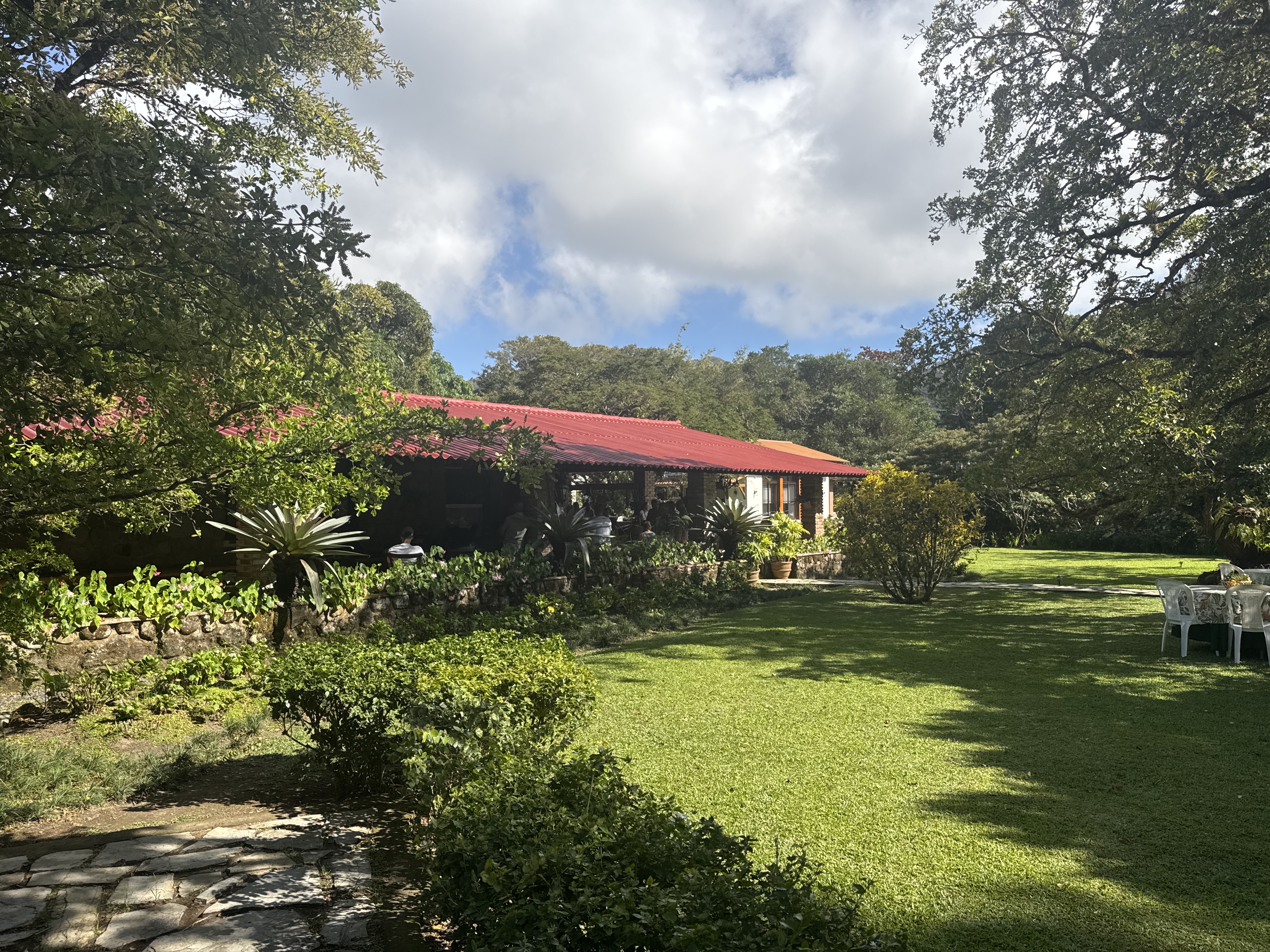
The vibrant red roof you see crowning the building in front of you is a classic example of roofing commonly found throughout Latin America, often made from corrugated metal or clay tiles, and its color provides a striking contrast against the lush green Panamanian landscape. This particular building appears to be a *hacienda*-style structure, blending Spanish colonial influences with a comfortable, sprawling design perfect for its tropical surroundings.
Looking closely, you'll notice groupings of large, spiky plants with broad, thick leaves. These are likely bromeliads, a diverse family of plants native to the Americas, famous for storing water in their central cups and often seen growing on trees or rocks in the wild, or as striking ornamental features in gardens like this one. They are particularly abundant in Panama's humid, tropical climate.
The setting, with its expansive, well-kept lawn and surrounding trees, hints at the tranquility and cooler climate offered by El Valle de Antón. Unlike the hot, humid lowlands of Panama, El Valle, nestled within the caldera of an extinct volcano, boasts a unique microclimate. It's often referred to as "the valley of eternal spring" due to its consistently pleasant temperatures. This cooler air and rich volcanic soil make it a haven for diverse flora and fauna, and an attractive escape for both locals and visitors seeking a refreshing change from the coastal heat. The area is also known for its local market, which sells handicrafts, flowers, and produce, as well as several natural attractions like waterfalls and hot springs.
Panamanian Country House (Finca) in El Valle de Antón
This appears to be a typical Panamanian country house, often called a *finca*, set in the lush, green landscape characteristic of El Valle de Antón's fertile volcanic crater. Many such properties in this region are privately owned, serving as weekend retreats or guesthouses, offering a cooler climate than coastal Panama. The architectural style, with a broad, low-pitched roof, and integration with extensive gardens, is common. While many houses here feature Spanish colonial influences, this one seems to blend into a broader tropical rural aesthetic. The visible plants like bromeliads and various shrubs are well-suited to the region's subtropical conditions.