UG
Ulrich Gall
Ancient Andean Textile from Huallamarca
This seemingly simple textile is a window into the incredible sophistication of pre-Columbian Andean weaving, which some experts consider even more advanced than European tapestry techniques of the same era. Not only were weavers crafting intricate patterns, but they were often literally writing history, beliefs, and social structures into the very fabric of their creations.
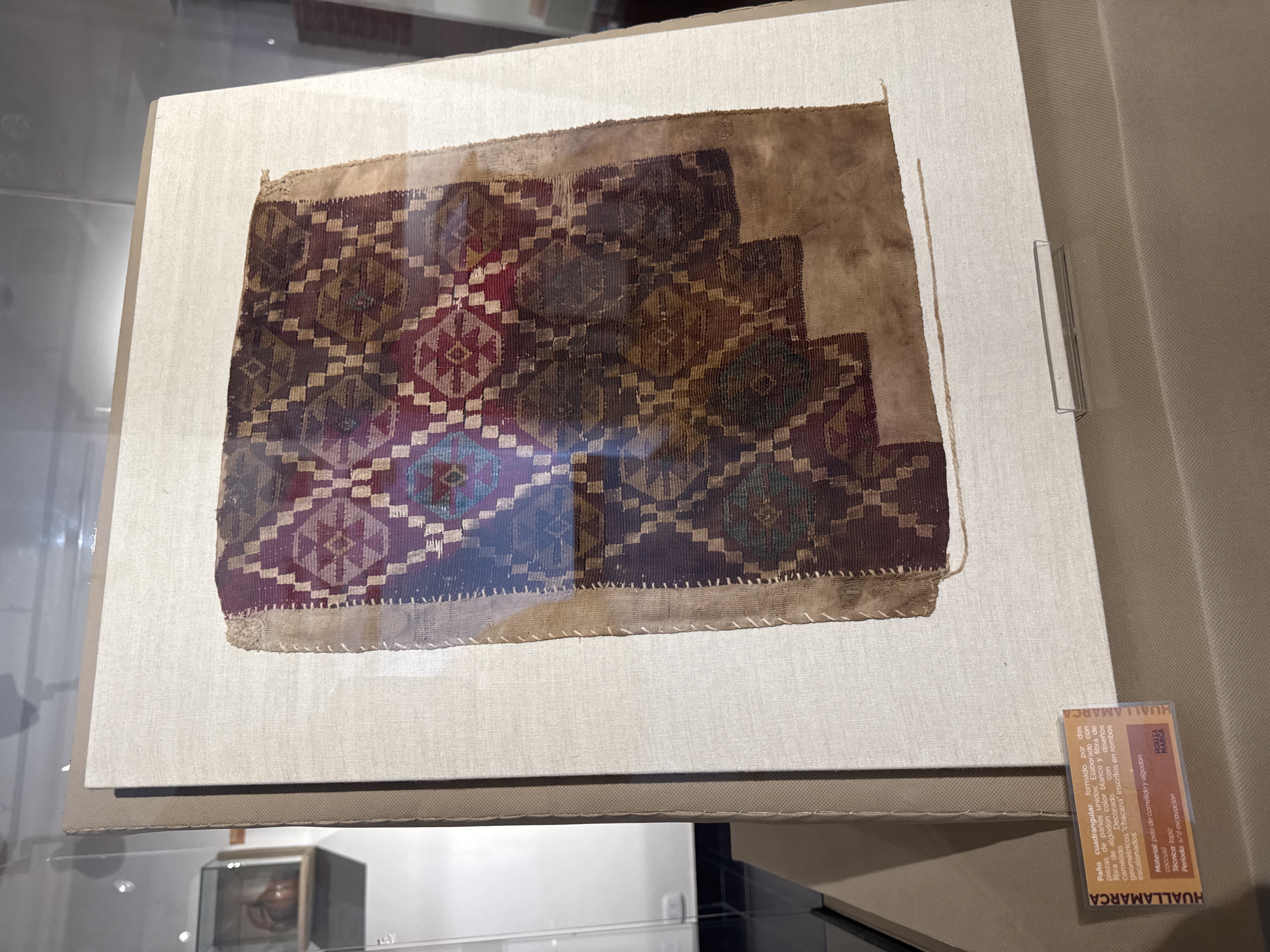
What you're seeing here is a rectangular cloth, or "paño cuadrangular" as the museum label indicates in Spanish, from the Huallamarca site itself. It's a fascinating example of ancient Peruvian textile art, made using two distinct panels that have been sewn together. The label also tells us it's woven from camelid hair and cotton, materials commonly used in the Andes. Camelid fibers, like alpaca or llama wool, were prized for their warmth and softness, while cotton was cultivated in the warmer coastal regions.
Look closely at the pattern: you'll notice geometric "chaquiras" — a term often referring to small beads or adornments, but in this context likely describing the small, repeated geometric motifs — arranged within rhomboid, or diamond, shapes in a stepped pattern. These stepped elements aren't just decorative; they are a classic motif in Andean art, frequently symbolizing mountains, agricultural terraces, or even the spiritual ascent between different cosmological layers. Such patterns often carried deep cultural and symbolic meaning, much like heraldry in Europe, communicating information about the wearer's status, origin, or even religious beliefs. The specific colors and patterns could have indicated membership in a particular community or a person's role within society. This textile dates from an excavation where its exact age wasn't specified, but it's a testament to a long tradition of textile production in the region.
Ancient Peruvian Quadrangular Cloth with "Chaucas" Pattern
This exhibit displays a quadrangular cloth likely from the Pinillas Unificadas culture, created with two different sets of threads: plain white and a colorful one. It features geometric designs, locally known as "Chaucas," arranged in stepped rhombus patterns. The materials used are camelid hair and cotton, and the weaving technique is tapestry. This artifact was found during an excavation, though its specific period isn't noted.
Ancient Andean Textile Fragment
This is likely a pre-Columbian textile fragment, possibly Huari or Inca period, from the Huallamarca archaeological site. The geometric patterns, like the "chacana" (Andean cross), are significant symbols related to cosmology and calendrical systems. The intricate weaving technique, visible even in its fragmented state, likely indicates the use of camelid fibers (alpaca, llama, vicuña) and cotton, dyed with natural pigments for vivid, lasting colors. The diagonal grid structure is typical of Andean weaving traditions.