UG
Ulrich Gall
Protecting Lima's Ancient Adobe Pyramids
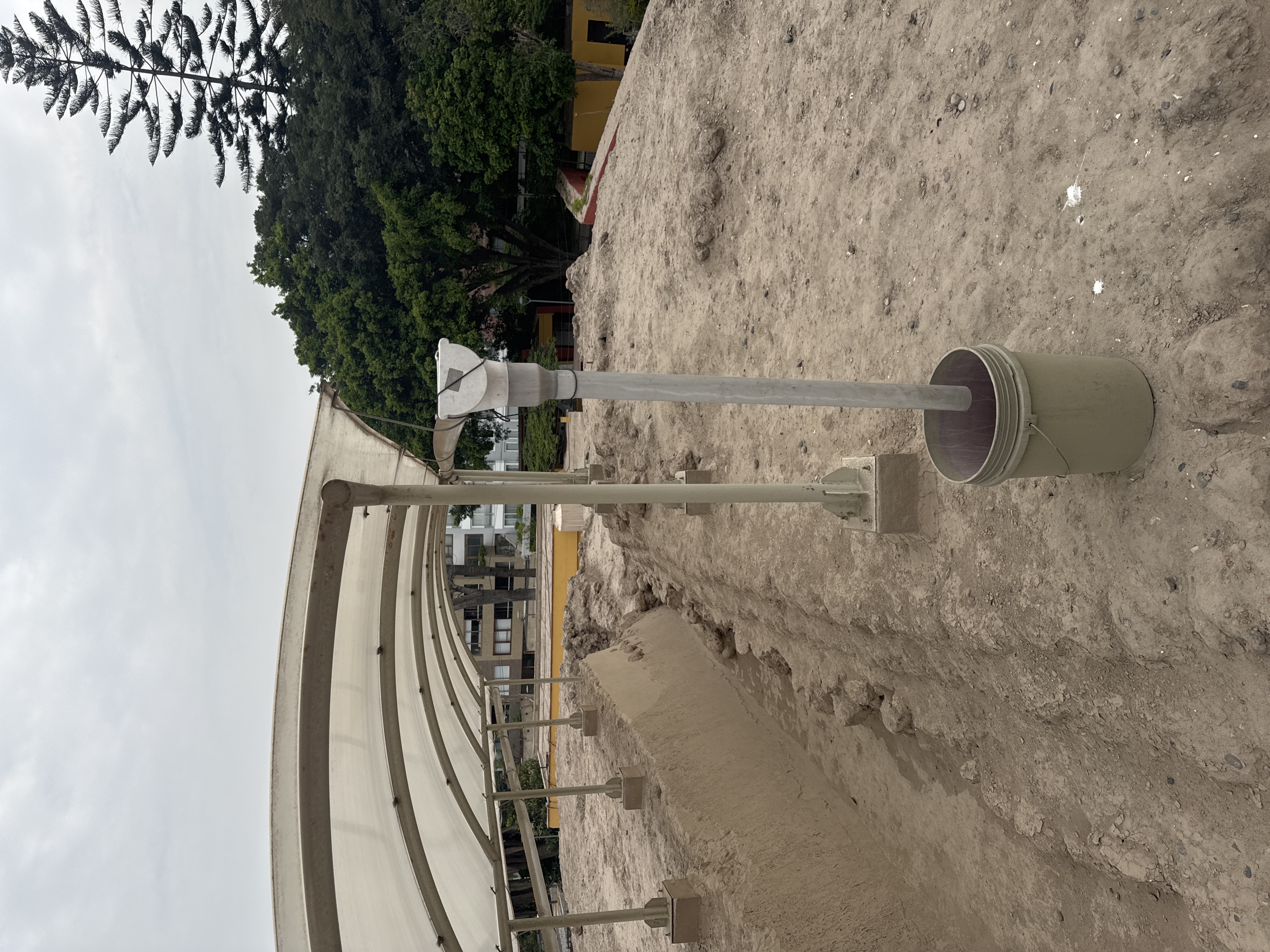
This seemingly simple structure is actually part of an elaborate system designed to protect a very important archaeological site: the Huallamarca Huaca. In Lima, "huaca" refers to ancient pre-Hispanic ceremonial and administrative centers, often constructed from adobe bricks. They are found scattered throughout the modern city, a fascinating testament to Peru's long and rich history.
The structure you're observing here, with its translucent cover and supporting poles, is part of a protective roof system. This roof shields the exposed adobe walls of the huaca underneath from the elements, particularly the rare but damaging rains of Lima, as well as the strong coastal fog (garúa) and constant wind erosion. Adobe, being essentially sun-dried mud, is very susceptible to degradation from moisture and wind, so these covers are crucial for preserving these fragile ancient monuments for future generations. The sand-colored mounds and depressions you see are the archaeological remains themselves, representing layers of human activity over centuries.
The bucket and pipe system, while looking somewhat makeshift, is likely a very practical and common solution on archaeological sites for managing water. It could be a simple temporary drainage system, perhaps collecting rainwater or runoff to prevent it from pooling and damaging the excavated areas. Or it might be for a smaller, localized collection of samples, or even a system to monitor water infiltration into the site. These seemingly basic elements are often part of the complex, ongoing work of archaeological conservation.
The Huallamarca Huaca itself is one of Lima's most significant archaeological sites, dating back as far as 200 BC, built by the Lima culture, and later occupied by the Wari and Ychsma cultures. It's an imposing step pyramid, rising over 20 meters high, that served as a temple, cemetery, and administrative center. What might look like dusty mounds are actually layers of history, revealing much about the societies that predated the Inca Empire.
Preservation at Huallamarca Archaeological Site
The structure you see is part of the Huallamarca archaeological site, a pre-Incan temple built by the Lima culture around 200 AD. This pyramid, or *huaca*, was originally made of adobe bricks with ramps instead of stairs. It served as a religious administrative center and later as a cemetery for various cultures like the Wari and Ichma. The protective white canopy shields the fragile adobe from rain and sun, crucial for its preservation. The drainage pipe and bucket are practical measures to manage rainwater runoff, preventing erosion to the exposed archaeological remains.
Huaca Huallamarca: An Ancient Mud Pyramid
This structure is a *huaca*, an ancient ceremonial and administrative center of the Lima Culture (100–650 CE) and later the Ychsma culture (900–1450 CE). Originally much larger, it was a truncated pyramid, built from millions of handmade mud bricks (adobe) and then coated with mud plaster, often painted. Covered by sand and forgotten, it was rediscovered and partially excavated. The modern canopy protects the exposed archaeological remains from erosion by sun and (rare) rain.