UG
Ulrich Gall
Informal Waste Management in Rural Colombia
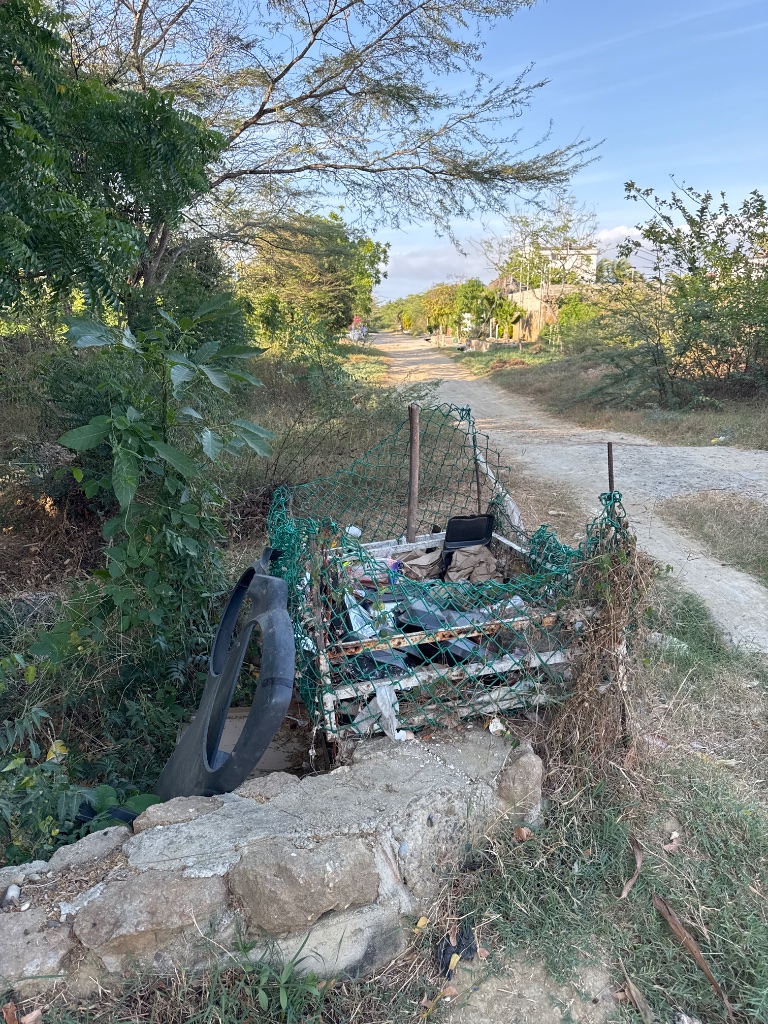
The scene you're looking at, common in many developing regions, highlights a rather ingenious, albeit informal, approach to managing waste in environments where formal municipal services might be limited or nonexistent. What you see is a makeshift container, likely constructed from repurposed materials like metal shelving and green mesh, overflowing with various items. This structure often serves as a local collection point for trash, particularly in rural or semi-urban areas like Tubará, Atlántico, where residents might not have curbside pickup.
The presence of such a container, typically located at the side of a dirt road or path, points to a community's self-reliance in handling its refuse. While it may appear untidy, it often represents an attempt to centralize waste before it can be burned, buried, or transported to a more formal disposal site, which might be a considerable distance away. These informal solutions spring from necessity, reflecting a blend of resourcefulness and the challenges of infrastructure development. The discarded tire next to it, for instance, might also eventually find its way into a similar informal collection or be repurposed locally for various uses. This entire setup truly offers a glimpse into the everyday realities of resource management in certain parts of the world.
Informal Waste in a Drainage Ditch (Caño)
The structure you've captured appears to be a *caño* or an open-air drainage ditch, common in many parts of Colombia and other tropical regions. These *caños* are designed to manage water flow, particularly during heavy rains, preventing localized flooding. Unfortunately, due to a lack of formal waste management infrastructure in some areas, and often cultural factors or socio-economic challenges, these drainage systems frequently become informal waste receptacles. The accumulation of trash, like the tire and other debris seen here, can lead to serious environmental issues, including water contamination, breeding grounds for disease-carrying insects, and blockages that exacerbate flooding during storms. This highlights a persistent environmental and public health challenge faced by many developing communities.
Informal Waste Disposal in Rural Colombia
This appears to be a makeshift garbage collection point or ditch, common in rural or semi-urban areas lacking formal waste management infrastructure. Items like tires, plastic, and general debris accumulate, often contributing to environmental issues, especially when near water sources. This informal system reflects challenges in waste disposal, relying on local, often unregulated, solutions.