UG
Ulrich Gall
The Intertidal Landscape of Puerto Velero
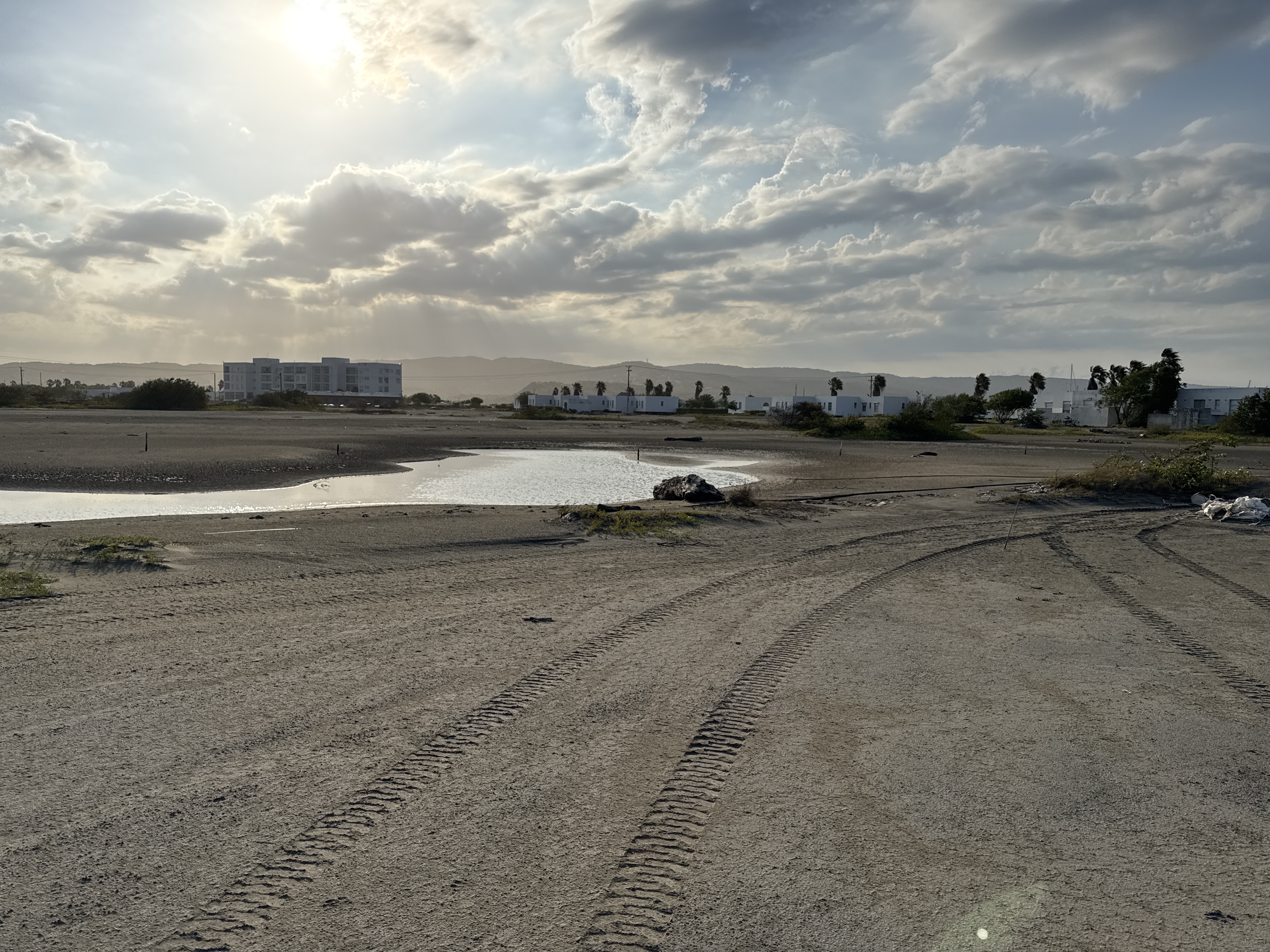
Looking out at this scene, you're observing a landscape shaped by a fascinating ecological phenomenon common to tropical and subtropical coastlines: a mangrove forest undergoing a period of low tide or perhaps even some natural reclamation. Mangroves are trees or shrubs that grow in saline coastal sediments, typically in brackish water, and they play an incredibly vital role in coastal ecosystems worldwide.
What might appear as a somewhat barren, muddy expanse with scattered pools of water is actually the intertidal zone where these resilient plants thrive. The small bodies of water you see are likely tidal pools or remnants of channels that fill and empty with the rhythm of the ocean. The land itself is typically soft, nutrient-rich mud, often an anaerobic environment where specialized mangrove roots called pneumatophores would normally emerge to help the plants breathe. While you don't see dense, towering mangroves in this particular view, the low, shrub-like vegetation along the water's edge and in the distance strongly suggests their presence. They act as nurseries for marine life, protect coastlines from erosion and storm surges, and even capture carbon.
The distinct tire tracks in the foreground indicate human activity and development in the area, a common sight as coastal communities often expand near these rich ecosystems. The buildings in the background, appearing somewhat stark against the natural landscape, are a testament to this growth. This intersection of nature and development is a crucial dynamic in places like Puerto Velero, where the beauty and resources of the coast attract tourism and settlement, even as the delicate balance of the environment needs protection.
Coastal Landscape of Tubará with Salt Flats and Development
This landscape, likely seen from the Vía Puerto Velero in Tubará, Atlántico, Colombia, shows the characteristic dry, salt-affected terrain often found in coastal regions with arid or semi-arid climates. The presence of tire tracks and scattered refuse suggests human activity, while the standing water might be a temporary lagoon or a section of a salt flat. The buildings in the distance are typical of developing coastal towns, often a mix of residential and tourism-related structures built to cater to burgeoning resort areas, which Puerto Velero is becoming known for. The distant mountains indicate a varied topography beyond the immediate coastal plain.
Ciénaga del Totumo's Landscape
This looks like the area around the Ciénaga del Totumo, a small mud volcano near Cartagena, Colombia. People visit to bathe in the therapeutic mineral mud, said to cure various ailments. The surrounding area, like this, is often stark, saline, with temporary pools and scrubby vegetation, typical of a coastal dry forest or saltmarsh environment.