UG
Ulrich Gall
Driftwood Accumulation at a Colombian River Mouth
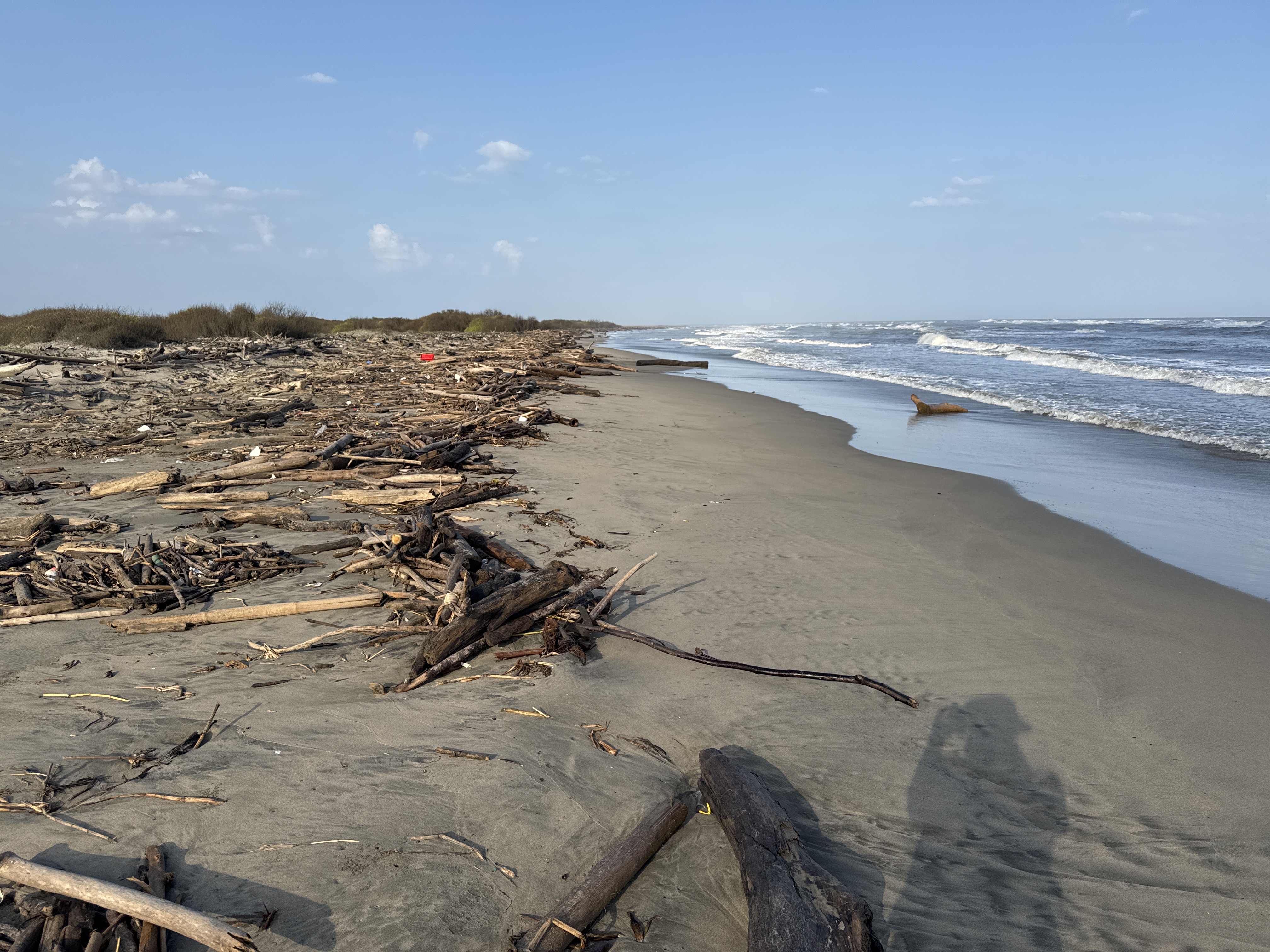
What you're witnessing here is a natural phenomenon common to many coastlines, but particularly pronounced in areas with strong river systems flowing into the ocean. This extensive accumulation of driftwood along the beach in Puerto Velero, near the mouth of the Magdalena River, is a direct result of the river carrying vast amounts of organic debris from inland forests and depositing it along the coast.
The Magdalena River, Colombia's principal river, stretches over a thousand miles from its source in the Andes to the Caribbean Sea. It acts like a giant conveyor belt, collecting fallen trees, branches, and other plant matter from its extensive basin. When the river reaches the ocean, especially during periods of high flow or after heavy rains inland, it disgorges this material into the marine environment. Ocean currents and waves then distribute and wash much of it ashore, forming these significant driftwood deposits.
This scene might look unusual if you're accustomed to pristine, manicured beaches, but it's a testament to the powerful hydraulic connection between Colombia's interior and its coast. While visually striking, these natural accumulations of woody debris play an important ecological role. They provide habitat for various forms of marine life, stabilize dunes, and slowly break down to enrich the sand with nutrients. However, these natural processes are increasingly intertwined with human impact; plastics and other man-made debris often get mixed in with the natural driftwood, serving as a visual reminder of the broader challenges of river and ocean pollution.
The Environmental Tale Told by Driftwood on Colombia's Coast
This accumulation of driftwood along the shore in Puerto Velero is a common sight in areas where rivers meet the sea. The Magdalena River, Colombia's largest and main artery, empties into the Caribbean Sea relatively close to this location. It carries an enormous volume of sediment, organic material, and debris, especially during its rainy seasons. This driftwood is often evidence of deforestation and agricultural runoff upstream, as much of it originates from riverbanks eroded by intense rainfall and human activity in the interior of the country, rather than natural forest decay. While it creates a unique and often stark landscape, it also highlights the environmental impact of human actions far inland on coastal ecosystems.
Extensive Driftwood on Colombian Coast
The significant amount of driftwood on this beach suggests the proximity of a river mouth or a strong current bringing debris from upstream. This accumulation is typical for dynamic coastal environments, often changing with tides and storms.