UG
Ulrich Gall
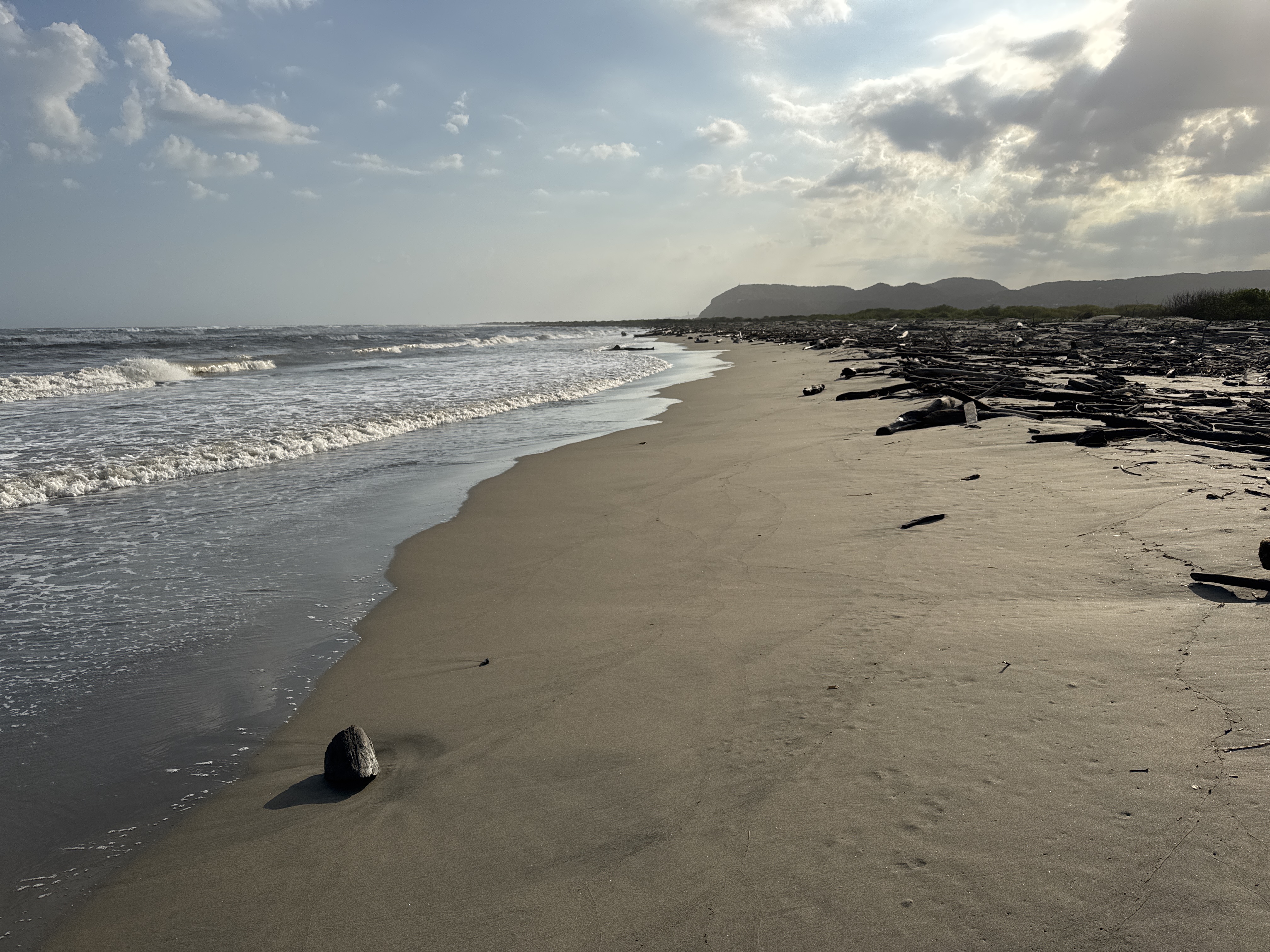
Driftwood Deposits on a Wild Colombian Beach
The striking accumulation of driftwood along this Colombian beach tells an interesting story about ocean currents and the local ecosystem. Unlike many tourist beaches that are meticulously cleared, the presence of these natural deposits suggests a less manicured, more wild coastline. The sheer volume of wood indicates that the area is likely part of a dynamic coastal system where rivers meet the sea and strong natural forces are at play.
The debris you see isn't just random trash; it's mostly natural wood, washed in by the tides. This is quite characteristic of certain stretches of coastline, especially those near estuaries or areas with significant terrestrial runoff from forests. The movement of offshore currents, like the Caribbean Current, plays a crucial role in directing where such materials end up. Over time, these masses of driftwood can create unique microhabitats, becoming homes or shelters for various marine and coastal creatures, even serving as natural coastal protection by reducing erosion. While some might consider it untidy compared to pristine resort beaches, it's a testament to the powerful, untamed beauty of nature and the ongoing process of coastal evolution that you're witnessing here at Puerto Velero.
Driftwood on a Caribbean Beach
The beach at Puerto Velero often features a significant amount of driftwood, especially after strong currents or storms. This is common along many coastlines, but particularly noticeable in regions with dense vegetation near the sea. The driftwood here might include branches, roots, and even whole tree trunks carried down rivers and out to the ocean from inland areas, eventually washing ashore. While some see it as debris, driftwood plays an ecological role, providing shelter and nutrients for coastal ecosystems.
Driftwood Beach, Puerto Velero, Colombia
This beach, near Puerto Velero, Colombia, is characterized by its significant deposits of driftwood, a common feature along coastlines where rivers meet the sea. The debris, often from the local Magdalena River, gets carried by currents and deposited here. These types of beaches are sometimes chosen for their wild, untamed beauty, offering a stark contrast to manicured tourist beaches. The waves themselves are typical of a Caribbean Sea coastline, with moderate surf.