
Eddie Codel
The Guardians of the Stream
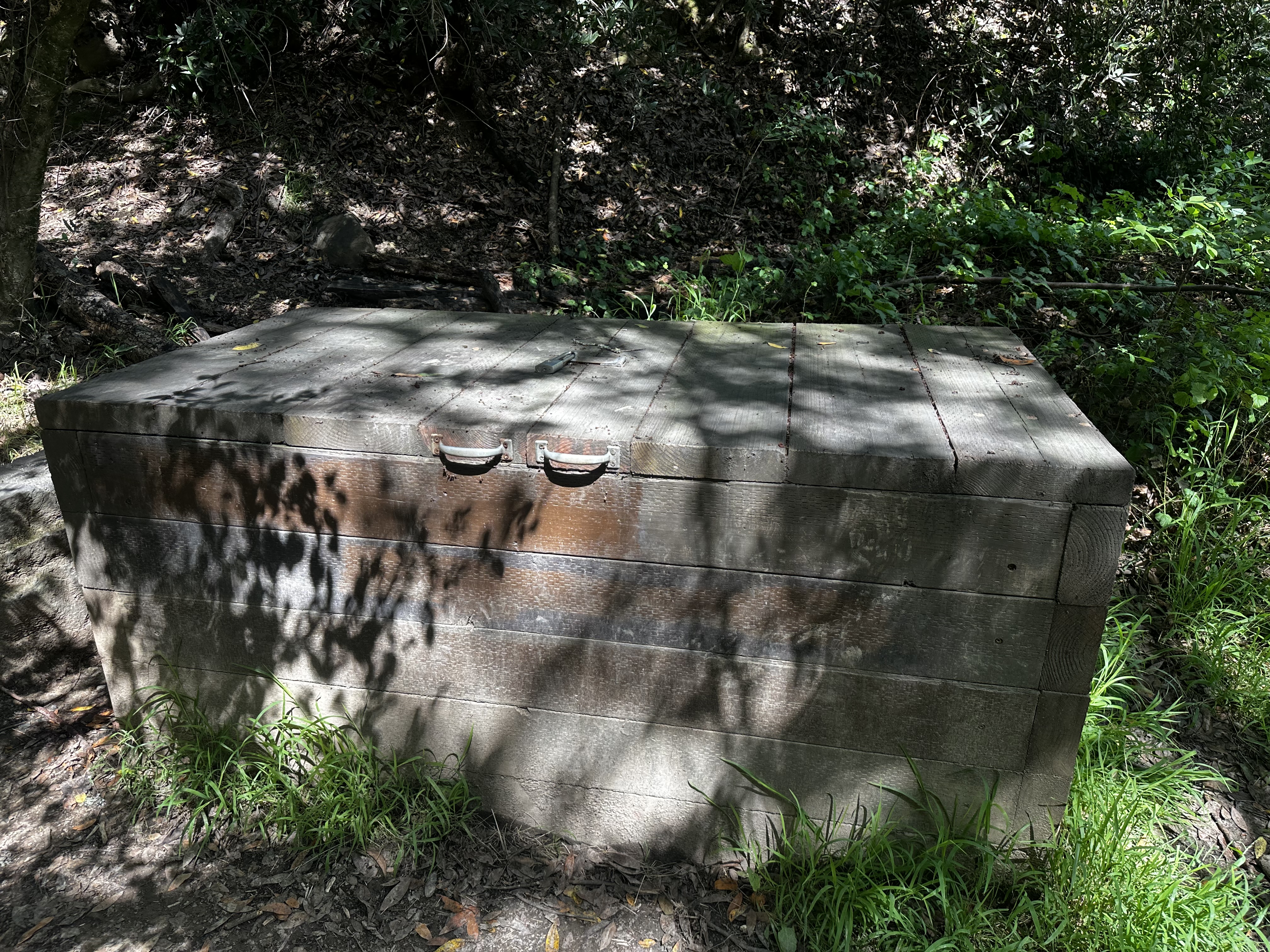
While the East Bay hills are famous for their sweeping views and towering redwoods, some of their most important residents are actually hidden in plain sight along the Stream Trail in Redwood Regional Park. This unassuming wooden chest is part of a sophisticated program to protect the local rainbow trout population, which is one of the few remaining native runs in the entire San Francisco Bay Area.
During the rainy winter months, these trout migrate from the reservoirs up into the small tributaries of San Leandro Creek to spawn. In the spring, after the eggs hatch, the "fry" (baby fish) begin their journey back downstream. This box serves as a staging area for ecologists and volunteer "trout scouts." It often contains specialized equipment like nets, measuring boards, and aerated buckets used to monitor the health and number of the migrating fish. By keeping the gear on-site and locked away from the elements and curious wildlife, researchers can conduct quick, non-invasive check-ups on the trout to ensure the population is successfully rebounding after decades of habitat loss.
The box is built with heavy timber and a secure latch not just to prevent theft, but to keep out the park's more mischievous locals—raccoons and black bears—who are easily attracted to the scent of fish that lingers on the equipment. While it might look like a piece of rustic trail furniture or a simple storage bin, it is actually a vital outpost for one of the longest-running urban wildlife conservation efforts in Northern California.
Redwood Park Wildlife Locker
This heavy-duty wooden chest in Redwood Regional Park is a specialized **bear box** or wildlife-resistant storage locker. While black bears are rare in this specific part of Contra Costa County, these bins are critical for managing smaller, highly opportunistic "problem" animals like raccoons, squirrels, and coyotes.
In California park systems, "food" is legally defined to include anything with a scent, such as toothpaste, sunscreen, and even empty wrappers. If wildlife associates these human scents with a reward, they lose their natural fear and become aggressive—a process called habituation. These boxes are designed with recessed latches or specialized handles that require human dexterity (opposable thumbs) to operate, preventing animals from scavenging and ensuring they remain wild and self-sufficient.
Trail Crew Cache
Heavy-duty wooden storage box, standard gear for trail maintenance in California Regional Parks. Built from rot-resistant pressure-treated timber or redwood to survive high-humidity canyon microclimates.
Used by East Bay Regional Park District (EBRPD) crews to store "idiot-proof" heavy tools—shovels, McLeods, Pulaskis—preventing rangers from hauling 50+ lbs of steel up steep switchbacks daily. The heavy-duty padlock and recessed lid protect against both opportunistic theft and curious black bears or raccoons looking for salt on tool handles.
Crucial for the Stream Trail's unique ecosystem: these tools manage silt runoff to protect the spawning grounds of native Rainbow Trout in Redwood Creek. Without on-site storage for rapid trail repair, hiker erosion would suffocate fish eggs in mud. Simple, rugged, and essential for "invisible" conservation.