UG
Ulrich Gall
The Jagged Rainbow of the Biomuseo
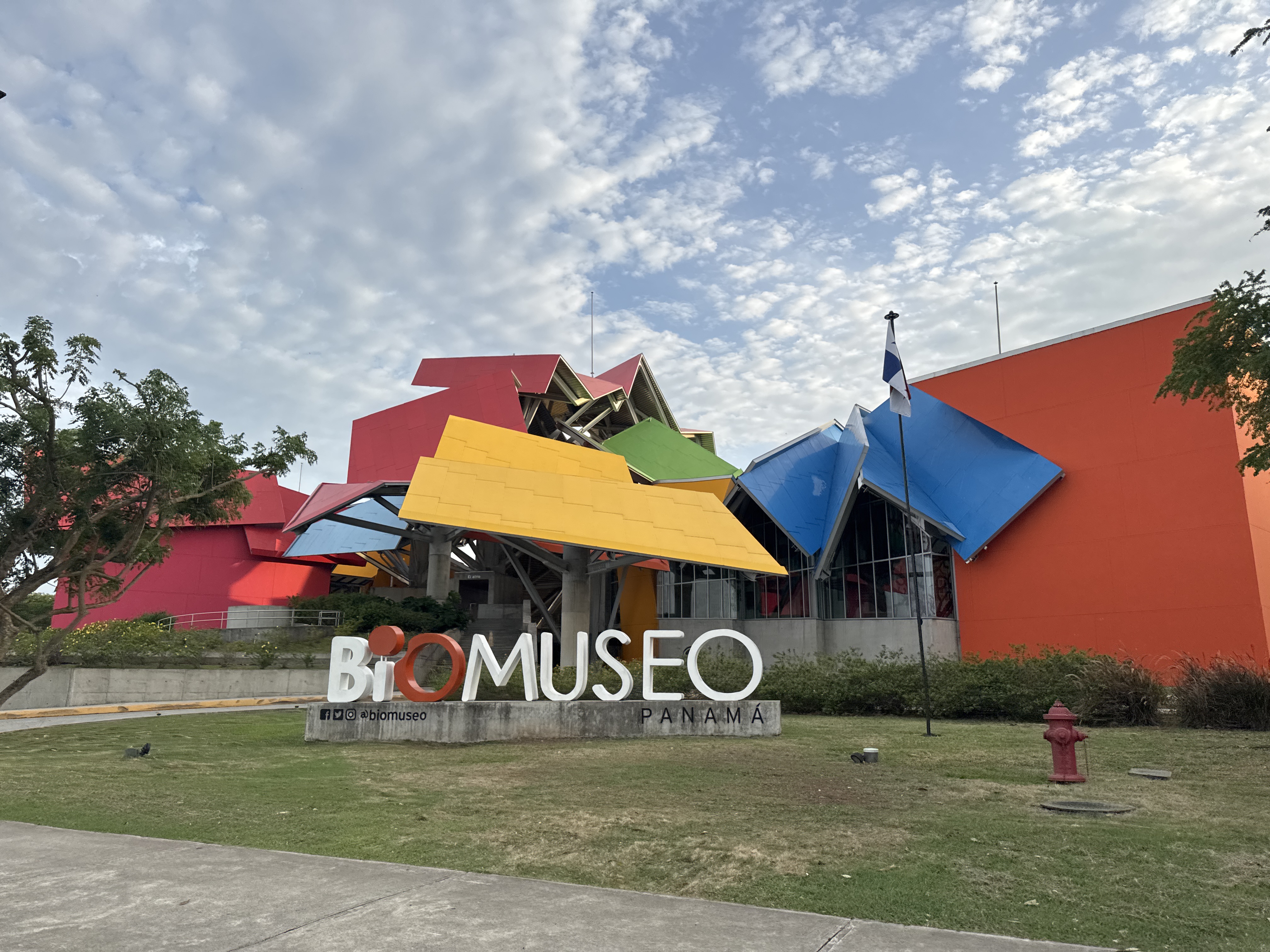
Look closely at these jagged, violent shards of color screaming against the indifferent Panamanian sky. This is the Biomuseo, a frantic architectural outburst designed by Frank Gehry. It is his only work in Latin America, a gargantuan pile of folded metal that attempts to tell a story of profound geological upheaval.
Three million years ago, a bridge of earth rose from the depths of the ocean, screaming as it tore through the tides to connect North and South America. This is the Isthmus of Panama. It was an event of catastrophic consequence; it severed the great world ocean in two and forced the currents of the planet to redirect themselves, forever altering the climate of the earth and the very destiny of nature itself.
The museum’s roof, with its chaotic yellows, blues, and reds, mimics the vibrant canopy of the tropics and the diverse life that began to migrate across this thin strip of land. Inside, one finds the "Panamarama," a space where screens surround you in a digital fever dream of biodiversity. It is a monument to the biological exchange—the silent, relentless march of creatures moving between continents, unaware that they were participating in a massive evolutionary experiment.
While the exterior appears as a crumpled toy forgotten by a giant child, it serves as a stern reminder that we live on a planet of constant, crushing transformation. Here, at the mouth of the great Canal—a monumental scar of human will—the Biomuseo stands as a witness to the moment the world was divided and joined all at once. It is a beautiful, multicoloured chaos.
The Biomuseo: A Fragmented Rainbow by Frank Gehry
The striking, fragmented canopy of the Biomuseo is Frank Gehry’s first design in Latin America, and its chaotic bursts of color are far more than just a stylistic choice. While many people recognize Gehry for his shimmering metallic curves in cities like Bilbao or Los Angeles, this building—finished in 2014—uses a palette of bright reds, yellows, and blues to mirror the vibrant Caribbean and tropical identity of Panama. The crinkled, asymmetric metal plates are designed to look like a canopy of trees in a rainforest, providing ventilation and protection from the intense tropical sun and heavy rains.
The location itself is historically significant. The museum sits on the Amador Causeway at the entrance of the Panama Canal, on land that was once part of the United States-controlled Canal Zone. This spot was chosen to highlight Panama’s unique role as a "bridge of life." Roughly three million years ago, the Isthmus of Panama rose from the sea, physically connecting North and South America. This geological event changed the world's climate by rerouting ocean currents and allowed for the "Great American Biotic Interchange," where animals like saber-toothed cats migrated south while giant sloths and armadillos moved north.
Inside, the museum tells this story across eight galleries, emphasizing that Panama has a higher density of bird, mammal, and reptile species than almost anywhere else on Earth. The name itself, "Biomuseo," is a combination of the Greek word for life, *bios*, and *museo*, the Spanish word for museum. It serves as a reminder that this small strip of land is responsible for much of the biodiversity found across the Americas today.
ERROR
Explanation failed to generate: ActiveRecord::StatementInvalid
Regenerate Explanation
Gehry’s Tropical Collision: The Biomuseo
Frank Gehry’s only design in Latin America. The Biomuseo’s chaotic, brightly colored metal canopies represent the formation of the Isthmus of Panama three million years ago. This geological event was a biological "big bang": it bridged North and South America, triggering the Great American Biotic Interchange where species like sabertooth cats moved south and giant ground sloths moved north.
Crucially, the land bridge split the Atlantic and Pacific oceans, creating the Gulf Stream and fundamentally altering the global climate—making Northern Europe habitable. The museum sits on the Amador Causeway, a site formerly part of the U.S. Canal Zone's Fort Amador. This area was off-limits to Panamanians for nearly a century until the 1999 handover. The jagged architecture reflects the "collision" of tectonic plates. Inside, the "Panamarama" exhibit uses 14 screens to envelop visitors in Panama’s hyper-diverse ecosystems.