UG
Ulrich Gall
The Silent Sentinels of the Panama Canal
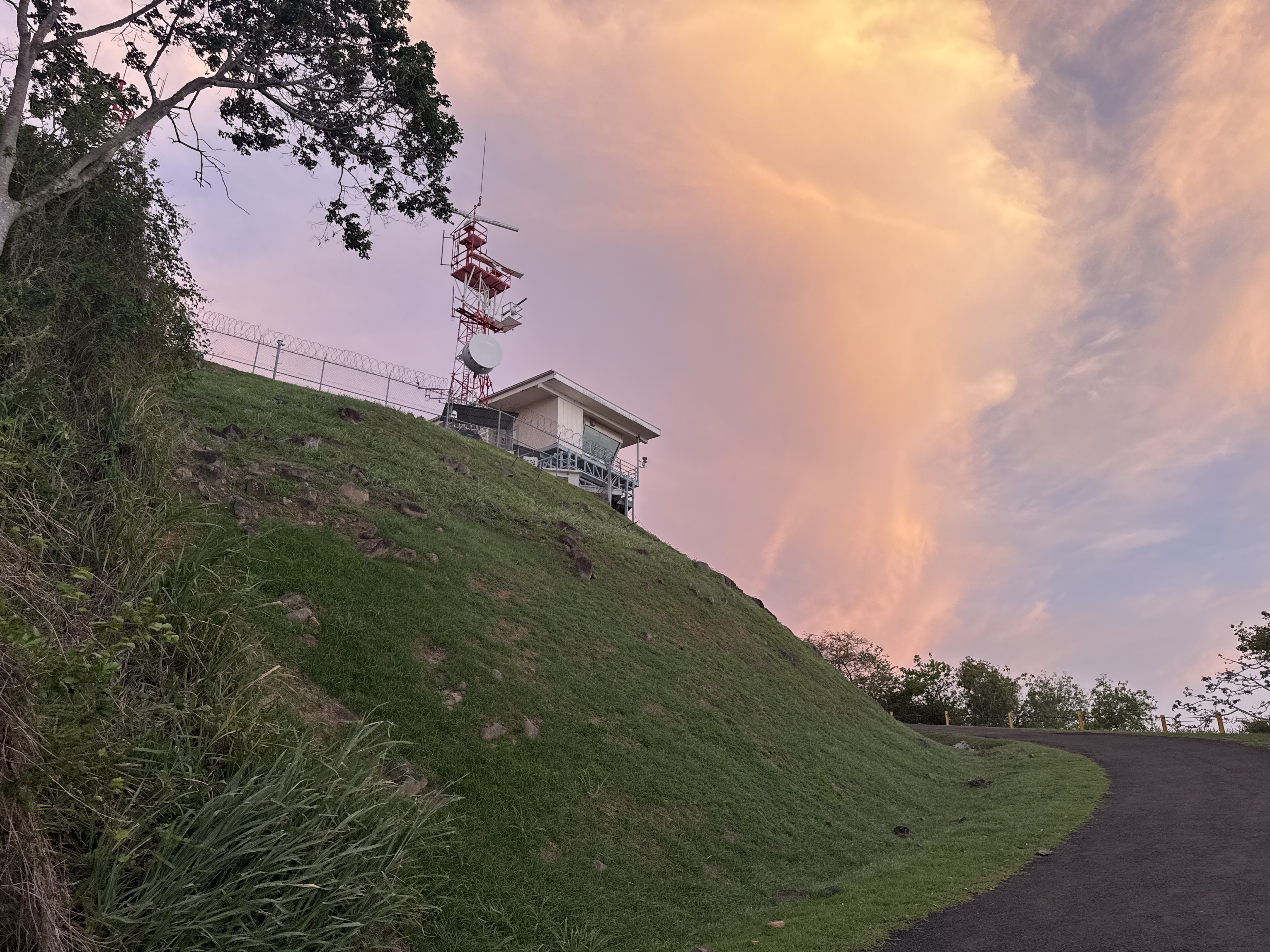
One of the most critical guardposts for global trade sits atop this hill, serving as the "eyes" for the Pacific entrance of the Panama Canal. This facility is a Vessel Traffic Service (VTS) station, specifically the one located on Isla Naos. While it might look like a simple radio tower or weather station, it is actually part of a high-tech coordination system that manages the movement of every massive container ship and tanker preparing to transit the canal.
Isla Naos, where this station is located, is the first of four islands connected by the Amador Causeway. The causeway itself was built using rocks excavated during the original construction of the Panama Canal. For much of the 20th century, this entire area was part of Fort Amador, a United States military base dedicated to protecting the canal's southern mouth. The strategic importance of this high ground hasn't changed; instead of cannons, it now hosts sophisticated radar, AIS (Automatic Identification System) receivers, and high-powered optics.
Because the canal is essentially a one-way "bridge of water" with very tight tolerances, the controllers in stations like this must orchestrate a complex dance of arrivals and departures. They monitor ship speeds, weather conditions, and the positioning of tugboats to ensure that vessels, some of which are over 1,200 feet long, enter the narrow channels safely. The barbed wire and steep embankment reflect its role as critical infrastructure—if this station goes offline, the flow of goods between the Atlantic and Pacific oceans could grind to a halt.
Behind the station, you might notice the lush tropical canopy that characterizes the islands of the bay. These islands were once isolated volcanic outcrops before being permanently linked to the mainland. Today, they represent a unique blend of Panama’s military history, its massive maritime economy, and its modern identity as a hub for international tourism and biological research.
The Gatekeeper of the Pacific
This structure on Isla Naos is a Vessel Traffic Service (VTS) station, essentially an air traffic control tower for the sea. Given its position at the Pacific entrance of the Panama Canal, it is one of the most critical maritime intersections in the world.
The radar array and sensors monitor the "Pacific Anchorage," where dozens of massive Panamax and Post-Panamax vessels wait for their scheduled transit slot. Because the canal operates on a strict convoy and lock schedule, precise timing is worth millions; a single ship's delay can disrupt global supply chains. The facility is managed by the Panama Canal Authority (ACP) and coordinates the boarding of specialized Canal Pilots, who take over command from the ship’s captain to navigate the narrow, high-stakes waterway. Historically, this island was part of the United States' "Fort Grant," a massive coastal defense system intended to protect the canal from naval bombardment during two World Wars.
Isla Naos Vessel Traffic Station
The Panama Canal Vessel Traffic Management (VTM) signal station on Isla Naos is a critical nerve center for global maritime trade. Situated at the Pacific entrance of the canal, this facility monitors and directs the massive "Neo-Panamax" vessels navigating the narrow channel.
The red and white lattice mast supports advanced Terma SCANTER 6000 radar and AIS (Automatic Identification System) transponders. These track ship positioning, speed, and heading with centimeter-level precision. This specific hill, once part of Fort Grant, a U.S. military installation, was strategically chosen for its unobstructed line-of-sight across the Bay of Panama.
The station manages the "Slot" system—a lucrative and sometimes murky auction process where shipping companies pay up to $4 million extra just to skip the weeks-long queue during drought-induced transit restrictions. It also coordinates the high-stakes boarding of specialized Panama Canal Pilots, who take total legal command of every vessel during transit, a unique requirement worldwide.