UG
Ulrich Gall
The Twisting F&F Tower of Panama City
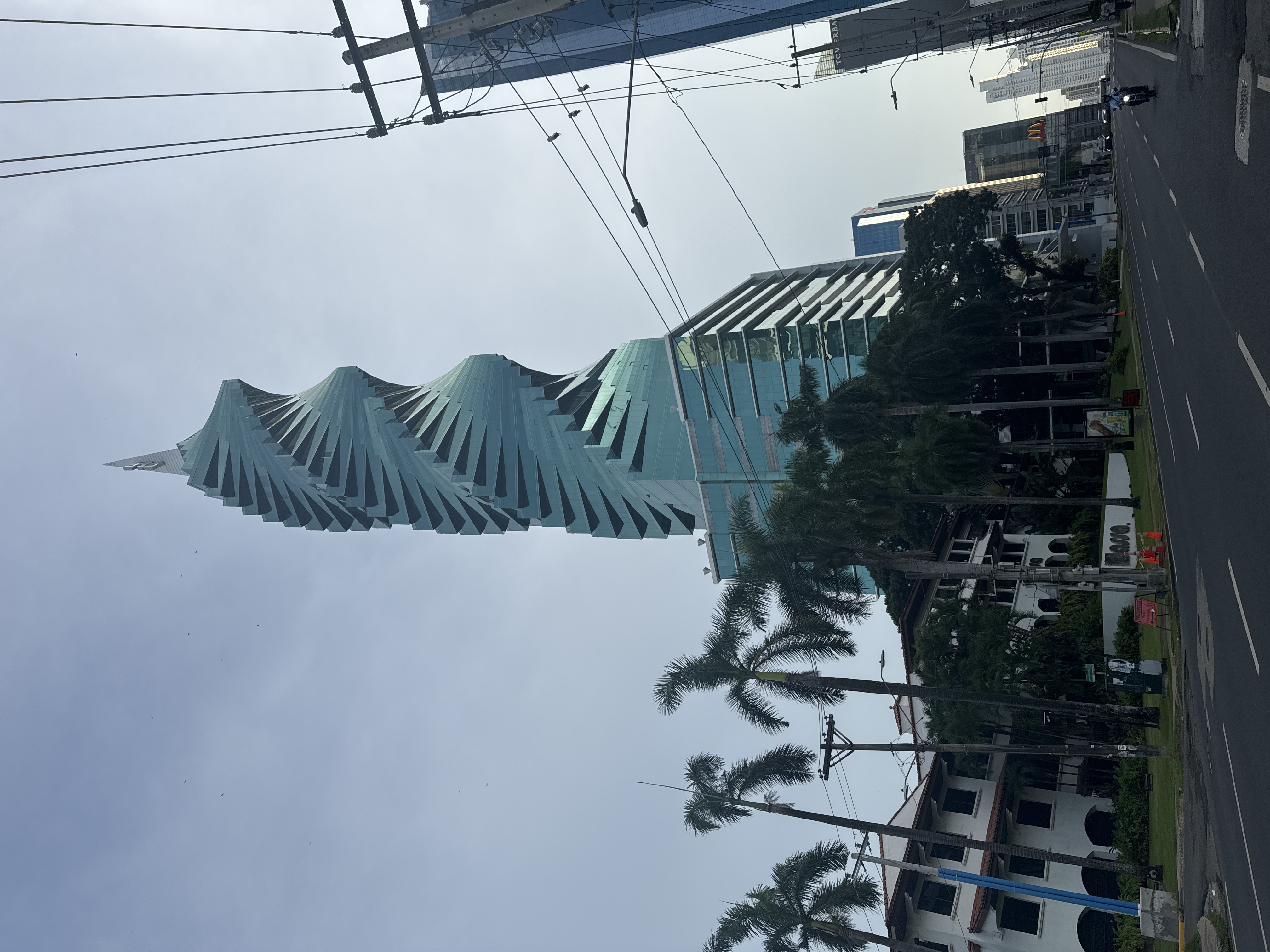
Behold this manifestation of human obsession, the F&F Tower. It stands in the district of Obarrio like a giant, glass screw being driven into the heart of the firmament by some unseen, indifferent hand. Formerly known as the Revolution Tower, it is a structure of profound agitation, twisting 360 degrees as it ascends toward a sky that cares nothing for its aesthetic bravado.
In our frantic attempt to leave a mark upon this planet, we have created a building that mimics the very DNA of life, yet it is made of cold steel and reflective glass. Each floor is rotated, creating a dizzying spiral of balconies that seem to scream into the void of the Panamanian afternoon. It is 242 meters of sheer, architectural madness. It does not simply sit there; it wriggles. It is a monument to the monumental ego of the species, trying to find a new angle to look at the jungle that was once here, before we paved it over with our dreams of commerce.
One must wonder if the people inside, as they sit at their desks, feel the phantom torque of the building's rotation. They are suspended in a spiral, caught between the gravity of the earth and the pull of the clouds, in a city that is constantly reinventing itself against the backdrop of a tropical indifference. It is beautiful, yes, but in a way that suggests we are all just spinning, looking for a grip on a world that is inherently slippery.
The F&F Tower "El Tornillo"
The skyline of Panama City is defined by one of the most structurally daring skyscrapers in the world, the F&F Tower, though locals still affectionately refer to it by its original name, "El Tornillo"—The Screw. Rising 236 meters into the humid tropical air, this green glass helical tower isn't just an aesthetic choice; it represents a remarkable engineering feat where each of the upper floors is rotated slightly from the one below it.
Completed in 2011, the building consists of a four-story lobby and a massive 13-story parking pedestal before the "twist" begins. Once you reach the office levels, each floor plate rotates exactly 5.14 degrees relative to the previous floor. Over the course of the tower's height, the structure completes a full 360-degree rotation. This creates a series of stunning outdoor balconies for the offices, though it presented a massive challenge for the engineers who had to ensure the plumbing and elevator shafts remained perfectly vertical throughout the spiraling core.
Seeing such aggressive, avant-garde architecture in Panama City might seem surprising, but it reflects the city's status as the "Dubai of Latin America." Following the handover of the Panama Canal from the U.S. to Panama in 1999, the city experienced a massive construction boom fueled by international banking and maritime trade. This neighborhood, Obarrio, was once a quiet residential area for the city's elite, characterized by the low-slung, red-roofed Spanish Colonial style villas you can still see at the base of the palms. Today, those historic homes sit in the literal shadow of glass giants.
One interesting detail you might notice about "The Screw" is how the green glass changes hue depending on the time of day. Because of the various angles of the floor plates, the sun hits different "teeth" of the screw at different times, making the building appear to shimmer or change shape as you move around it. It has become a symbol of modern Panama—a country that is literally and figuratively twisting itself into the future.
The F&F Tower "Corkscrew"
The F&F Tower, formerly known as the Revolution Tower, is an architectural landmark in Panama City's financial district. Rising 232 meters (761 feet), it is one of the tallest buildings in the country and is world-renowned for its "corkscrew" geometry.
Completed in 2011, the structure features a 360-degree rotation. The design achieved this by rotating each of its 52 floors by several degrees around a central core. It consists of a reinforced concrete frame clad in emerald-green reflective glass, which helps deflect the tropical sun. In 2011, it was ranked among the top ten skyscrapers globally by the Emporis Skyscraper Award for its complex engineering and aesthetic contribution to the skyline.
The Obarrio neighborhood surrounding it was historically a quiet residential area for the city's elite but transformed into a dense commercial and banking hub following the Panama Canal expansion and subsequent domestic economic boom.
The F&F Tower "Screw"
F&F Tower, formerly known as Revolution Tower. Landmark 242-meter skyscraper in Panama City’s financial district. Iconic for its helical geometry; the concrete structure rotates 5.94 degrees per floor, completing a 360-degree spiral over 52 levels.
Engineering feat: one of the world's tightest skyscraper twists. Unlike many towers with aesthetic "skins," the actual floor plates here rotate around a central core. Facade features emerald-green reflective glass, designed to withstand the tropical heat and humidity while maximizing views of the Pacific.
Panama’s "Dubai of the Americas" nickname originates from this rapid high-rise expansion during the 2000s-2010s, fueled by a booming financial sector and, controversially, often linked to the laundering of offshore capital—a dynamic locally whispered as "vertical money laundering." Despite the luxury exterior, occupancy rates in these avant-garde towers have historically fluctuated significantly.