UG
Ulrich Gall
A Rainforest Breakfast in Albrook
What makes this backyard in Panama particularly fascinating is that it sits within the Albrook neighborhood, a community that was once part of the United States Canal Zone. This tropical garden serves as a living laboratory for the unique biodiversity that thrives in the corridor between the Atlantic and Pacific oceans.
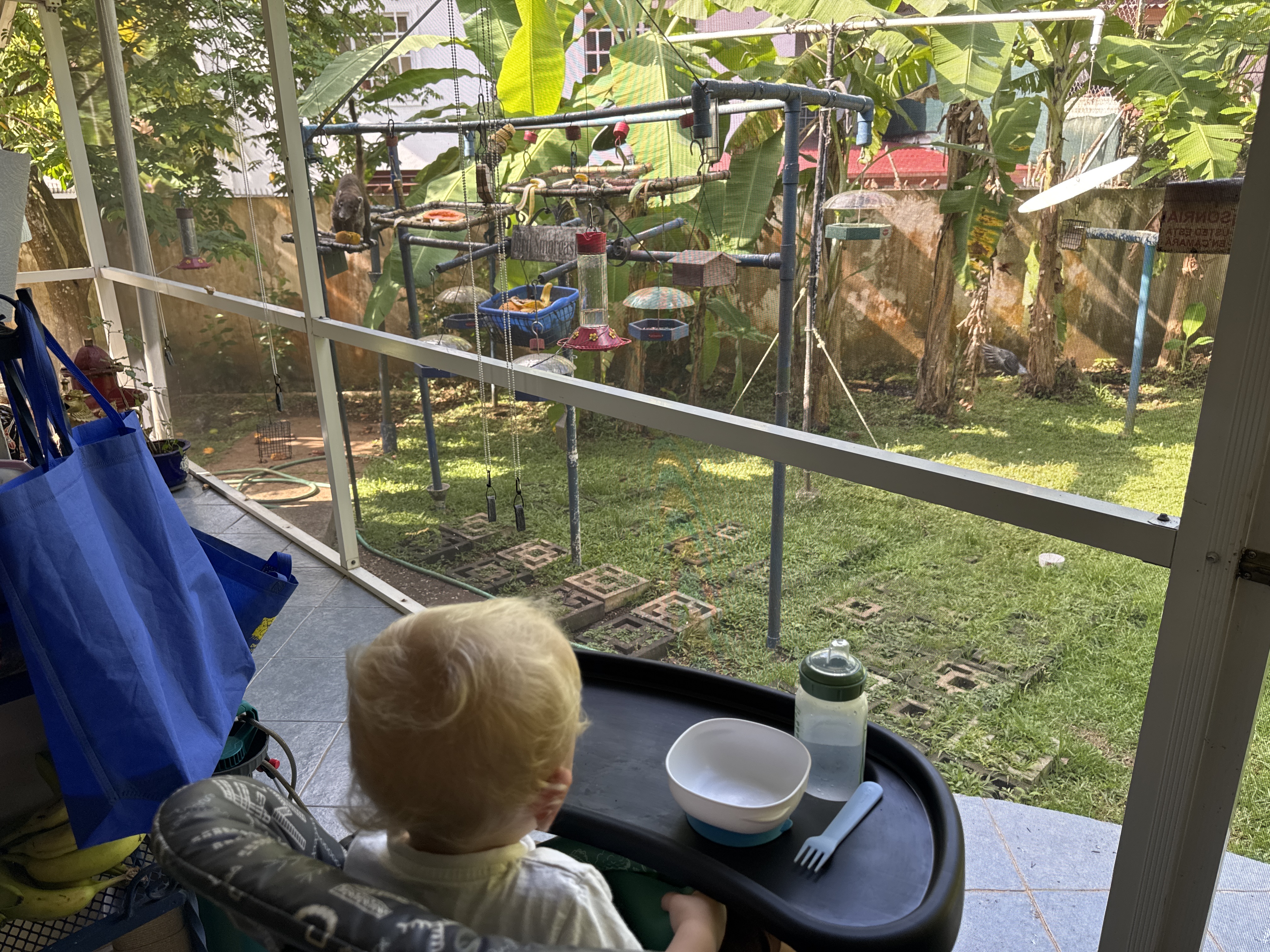
The elaborate structure you see in the yard isn't just a bird feeder; it's a multi-species feeding station designed to attract both the feathered and furry inhabitants of the Panamanian rainforest. In the upper left of the structure, you can see a Geoffrey’s Marmoset—a small monkey with a distinctive white chest and dark body that is native to Panama and Colombia. These primates, locally known as "titis," are frequent visitors to residential areas bordering the lush jungle of the nearby Metropolitan Natural Park.
The feeders are stocked with tropical fruits like papaya and bananas, which are dietary staples here. You might notice a small wooden sign hanging among the feeders that says "Sonría"—the Spanish command for "Smile." It’s a playful nod to the fact that these gardens often feel like a private photo safari. Another sign nearby warns "Usted está siendo grabado por cámara," which translates to "You are being recorded by camera." While often used for security, in a lush setting like this, it’s more likely the residents are capturing high-definition footage of the rare toucans, tanagers, and marmosets that swing by for breakfast.
The neighborhood itself, Albrook, was a former U.S. Air Force station. When the Canal Zone was handed over to Panama in 1999, these areas became highly desirable residential zones because they preserved the original "garden city" design—wide lawns and plenty of canopy cover. This transition created a unique interface where modern Panamanian life meets dense tropical wilderness, allowing residents to watch monkeys and exotic birds while having their morning coffee.
The White-nosed Coati of Albrook
The animal perched on the feeding platform is a White-nosed Coati (*Nasua narica*), known locally in Panama as a *gato solo*. Despite the local name, they are members of the Procyonidae family, making them close relatives of raccoons rather than cats. They are highly intelligent, opportunistic omnivores characterized by their elongated, flexible snouts and ringed tails, which they often hold upright for social signaling.
In residential areas like Albrook—a former U.S. Canal Zone township—coatis have adapted remarkably well to human presence. While they primarily forage for insects, fruit, and small vertebrates in the surrounding tropical forests, they frequently venture into gardens to raid bird feeders and trash cans. Their social structure is unusual: females and juveniles live in large, vocal groups called "bands," while adult males are typically solitary, joining bands only briefly during the breeding season. Although they appear docile, they possess sharp claws for climbing and formidable canine teeth; they are known to defend themselves aggressively if cornered or if they perceive a threat to their young.
Coatis and Canal Zone Garden Wildlife
White-nosed Coati (Nasua narica) perched on the feeding station. Known as "gato solo" in Panama, despite being related to raccoons, not cats. Highly intelligent, social diurnal procyonid. Long, ringed tail used for balance; extremely flexible ankles allow descending trees head-first. Omnivorous; here likely attracted by fruit (papaya/banana) intended for birds.
The Albrook neighborhood is a former U.S. Air Force base (Albrook Air Force Station) within the Canal Zone. Its unique suburban layout with dense tropical "revertant" forest in the backyard is a direct result of 20th-century U.S. military urban planning in the tropics. This creates a high-tension interface between residential life and jungle fauna—agoutis, sloths, and toucans are daily visitors to these specific gardens.
Feeding stations like this one frequently attract Geoffrey’s Tamarins (endemic monkeys) and Keel-billed Toucans. The PVC pipe structure is a DIY solution to prevent snakes and common "nuisance" mammals like opossums from reaching the higher platforms, though coatis are adept climbers and often bypass these obstacles.