
Eddie Codel
The Silent Sentinels of the Oakland Estuary
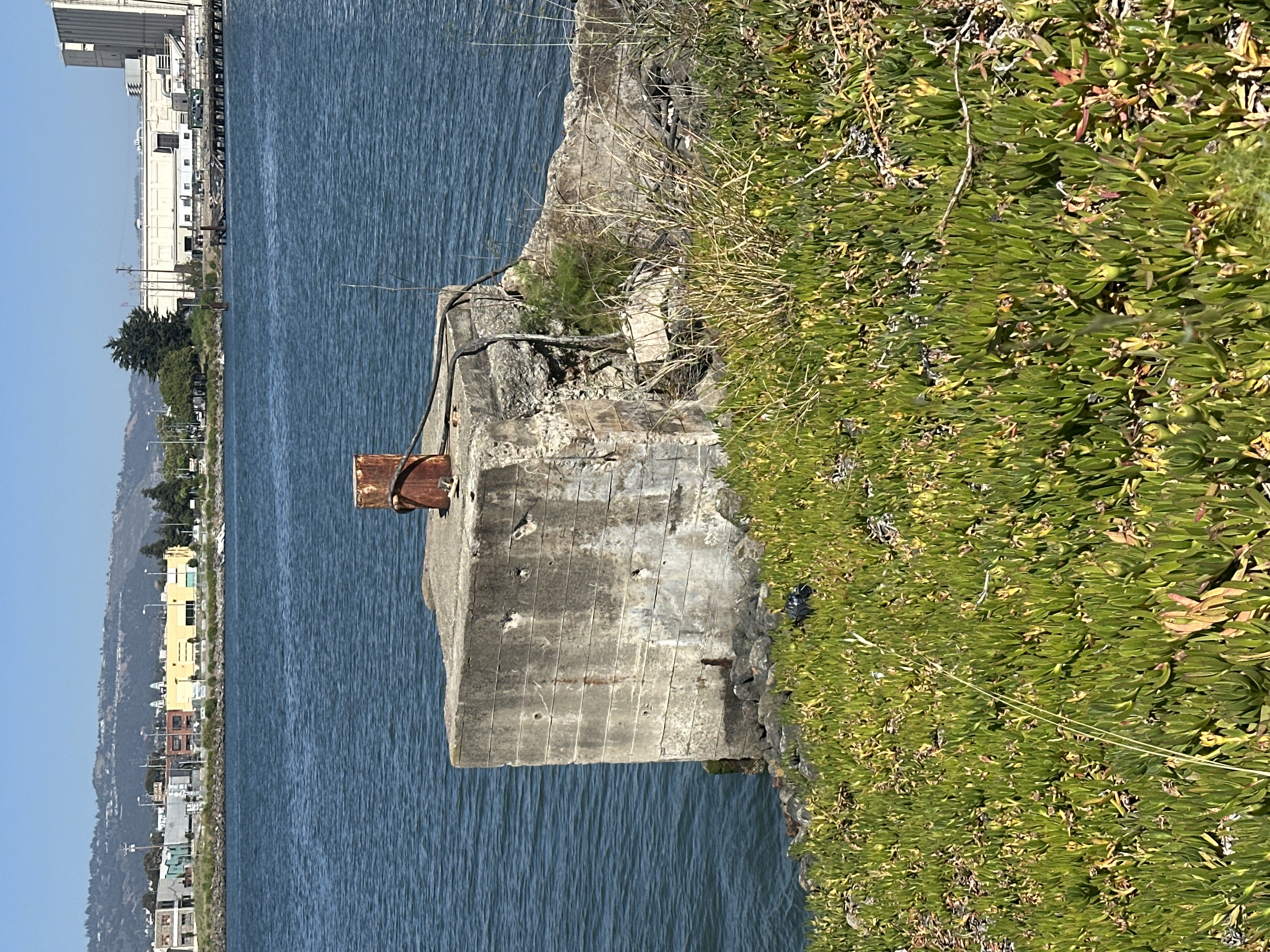
This weathered concrete block topped with a rusted iron bollard is a physical echo of Alameda’s massive industrial and maritime surge during World War II. While it may look like an isolated ruin today, it was once a critical anchoring point for the Del Monte Warehouse and the surrounding shipyard facilities that dominated this stretch of the Oakland Estuary.
The heavy iron post, known as a bollard, was designed to withstand the immense tension of mooring lines from large cargo ships and industrial barges. During the mid-20th century, this area was a frantic hub of activity. The nearby Del Monte plant was one of the largest fruit and vegetable canneries in the world, and vast quantities of goods were moved by water to supply both the domestic market and the military effort across the Pacific.
The rough, layered texture of the concrete block shows "form marks" from when the wet cement was poured into wooden frames decades ago. Its current state of decay—revealing rusted rebar and crumbling edges—is a result of nearly a century of exposure to the salty, corrosive air of the San Francisco Bay. The thick black cable looped around the bollard is likely a modern addition or a remnant of utility lines that often follow the old shoreline infrastructure.
Directly across the water sits the Fruitvale district of Oakland. If you look toward the horizon, you can see the rolling hills of the East Bay, which provide a stark contrast to the flat, reclaimed marshland that makes up much of Alameda Island. Today, this shoreline is transitioning from a gritty industrial zone into a residential and recreational space, leaving these concrete monoliths behind as unintentional monuments to the labor and shipping history that built the modern Bay Area.
Remnants of the Del Monte Empire
The concrete block and rusted bollard on Bohemia Lane are remnants of Alameda’s industrial maritime history, specifically the Del Monte Warehouse complex (Plant No. 51). This site was once one of the largest fruit-canning facilities in the world. The concrete structures served as part of the loading wharves where steamships docked to transport canned goods from California's Central Valley to global markets.
The shoreline is heavily covered in Carpobrotus edulis, commonly known as Ice Plant. Introduced from South Africa in the early 20th century to stabilize soil along Victorian-era railways and highways, it has become a problematic invasive species in California. It forms dense mats that outcompete native flora and can actually increase bluff erosion by adding excessive water weight to the soil.
Across the Oakland Estuary, the large industrial buildings include the ConAgra milling facilities. This channel remains a functional deep-water port, necessitating the constant dredging of the "Oakland Inner Harbor" to accommodate modern shipping transit.
Industrial Relics of the Alameda Estuary
Remnants of Alameda’s industrial maritime past. This concrete pylon and rusted steel bollard are vestiges of the massive Del Monte Warehouse complex and its associated wharf. Specifically, this served as a "dolphin"—a detached mooring structure used to secure large merchant ships without needing a full-length dock.
During the mid-20th century, the Alameda Estuary was a vital logistics hub for the California Packing Corporation (later Del Monte). Massive ships docked here to unload raw produce and move canned goods globally. The crumbling concrete reveals rebar and tie-back cables once engineered for extreme tension. The succulent ground cover is *Carpobrotus edulis* (Ice Plant), an invasive South African species originally planted by Caltrans and the military for erosion control along the Bay, now a controversial ecological presence due to its tendency to choke out native salt marsh flora. Across the water lies the Fruitvale district of Oakland, characterized by its historic cannery infrastructure and grain elevators.