UG
Ulrich Gall
The Vertical Transformation of Comuna 13
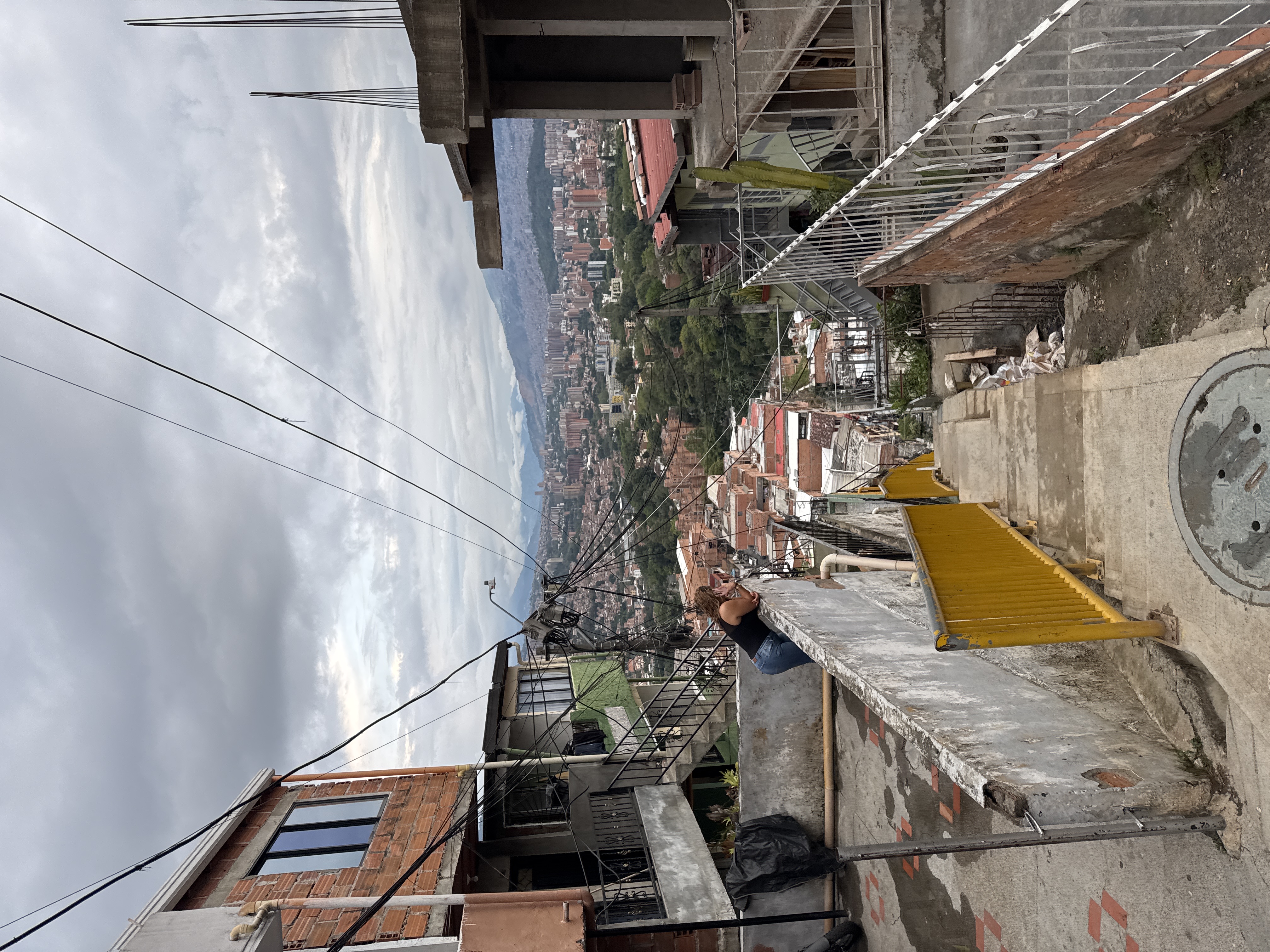
This vantage point offers a striking look at the social and architectural transformation of Medellín, a city that has moved from a history of intense conflict to being a global model for urban innovation. You are looking out from Comuna 13, a district that was once considered one of the most dangerous neighborhoods in the world. Its steep, narrow alleyways made it a strategic stronghold for various armed groups, as the difficult terrain effectively blocked traditional police and military access for decades.
One of the most unusual sights here is the juxtaposition of informal, incrementally built homes—characterized by exposed orange brick and rebar—against the high-rise skyline of the Aburrá Valley below. Those vertical steel rods poking out from the rooftops aren’t a sign of unfinished construction; they are a symbol of optimism. In this community, families build their homes as they can afford to, adding a new floor whenever they have the savings. The rebar is left exposed so that the next generation can easily tie in new columns for another level, a practice known as "incremental housing."
Directly below, the steep concrete staircases illustrate the daily physical reality of life in the "comuna." For years, these stairs were the only way to reach the upper reaches of the mountainside, requiring residents to carry groceries, building materials, and water up hundreds of steps. To solve this, the city installed a massive system of outdoor electric escalators (las escaleras eléctricas) just a short distance from here. These escalators, alongside the metrocable gondolas you see crossing the valley, have drastically cut commute times and integrated these marginalized hillside communities into the economic heart of the city. What was once a secluded war zone has become a vibrant hub of street art, hip-hop culture, and tourism, proving that thoughtful urban design can radically change the trajectory of a neighborhood.
Comuna 13: From War Zone to Urban Renewal
Comuna 13 was once considered the most dangerous neighborhood in the world, largely due to its strategic position on the steep slopes of Medellín's western hills. This location made it a crucial corridor for drug cartels and paramilitary groups moving illicit goods in and out of the city. For decades, the area was a battleground, culminating in the 1990s and early 2000s with intense urban warfare.
The most infamous event here was **Operación Orión** in October 2002. It was a massive military strike involving over 3,000 government troops, helicopters, and tanks to oust rebel groups. The operation resulted in numerous civilian casualties and "disappearances." Many victims are believed to be buried in *La Escombrera*, a nearby construction landfill now considered one of the largest urban mass graves in Colombia.
Today, the district has undergone a radical transformation through "social urbanism." The installation of outdoor escalators (*escaleras eléctricas*) and integrated transit systems broke the isolation of the hillside communities. This infrastructure, combined with state-sponsored community centers and a flourishing local hip-hop and graffiti scene, transitioned Comuna 13 from a site of war into a global model for urban renewal and resilience.
The Vertical Scars of Comuna 13
Comuna 13: once Medellín’s most dangerous district, now a hub of "social urbanism." Situated on steep hillsides, this neighborhood was a strategic corridor for guerrillas, paramilitaries, and Medellín Cartel traffickers moving drugs and weapons. The year 2002 marked Operation Orion, a brutal military intervention led by the Colombian government to flush out leftist rebels—resulting in hundreds of "disappeared" residents, many allegedly buried in *La Escombrera*, a nearby rubble dump currently being excavated for remains.
The district's transformation was driven by radical infrastructure: 384 meters of orange-roofed outdoor escalators and the Metrocable gondolas, connecting isolated hillside shantytowns to the city center and formal economy. Note the "crecimiento progresivo" architecture—homes built layer-by-layer as families afford more concrete and rebar. This verticality isn't just aesthetic; it’s a defensive layout historically used for lookout points and quick escapes through interconnected rooftops. Today, the area is famous for hip-hop culture and political graffiti, though underlying control by *combos* (local criminal gangs) still persists through localized extortion and "vaccines" (protection taxes) paid by local businesses.