UG
Ulrich Gall
The Legend of 'La Pollita' Chapel
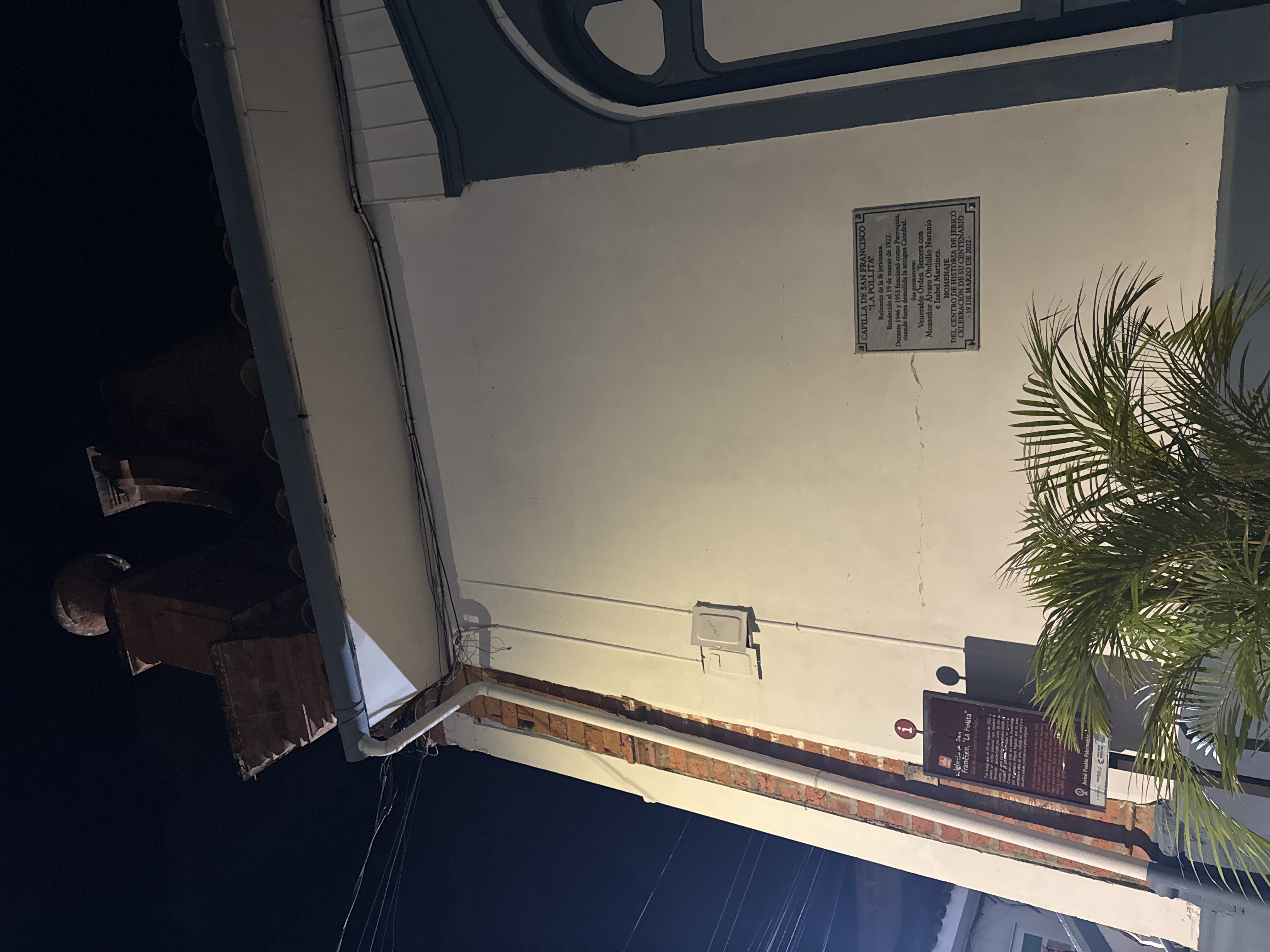
Jericó is often called the "Athens of Antioquia" because of its deep religious heritage and preservation of republican-style architecture, and this unassuming structure, known affectionately as "La Pollita," is one of its most cherished historical relics. While its official name is the Chapel of San Francisco, the nickname *La Pollita*—which translates to "The Little Chicken"—stems from a local legend regarding the small, weathered stone figure perched atop the roof. Though it is actually a simplified representation of an eagle or perhaps a dove, generations of residents in Jericó have insisted it looks more like a young hen, and the name has stuck for over a century.
The plaque on the wall commemorates a very specific and dramatic moment in the town's history. It notes that the chapel was blessed on March 19, 1922, but more importantly, it served as the town’s primary parish church between 1946 and 1953. During those years, the old main cathedral of Jericó had been demolished due to structural failures, leaving this tiny chapel to hold the spiritual weight of the entire community while the massive, neo-Gothic Cathedral of Our Lady of Mercies was being constructed just a few blocks away. For a town that considers its faith a central pillar of its identity, having to "squeeze" the congregation into this intimate space for seven years is a point of local pride and nostalgia.
The dedication was placed here by the Jericó History Center in March 2022 to celebrate the chapel's centenary. Jericó itself is famous nationwide as the birthplace of Santa Madre Laura Montoya, Colombia's first saint, and houses dozens of these small devotional niches and chapels. Beyond the religious history, the building is a classic example of the "Antioquian Colonization" architecture, characterized by thick masonry, clay tile roofs, and bright, contrasting trim. When you see structures like this, you aren't just looking at a place of worship, but at the resilient heart of a mountain town that has rebuilt itself time and again without losing its sense of humor or its history.
Capilla de San Francisco "La Pollita"
The Capilla de San Francisco in Jericó is affectionately known as "La Pollita" (The Little Hen). This nickname reflects the chapel’s humble architectural scale compared to the town's grand Cathedral of Our Lady of Mercies. Despite its small size, it played a critical role in the community's religious life between 1946 and 1953, serving as the main parish church while the original cathedral was being demolished and rebuilt. It was originally blessed on March 19, 1922.
Jericó is often called the "Athens of Southwest Antioquia" due to its rich religious history and deep-rooted Catholic traditions. It is best known as the birthplace of Saint Laura Montoya, the first Colombian to be canonized. Local life revolves around these historical chapels and the traditional craftsmanship of "carriels"—the iconic, multi-compartment leather bags once used by coffee muleteers.
Capilla de San Francisco "La Pollita"
Capilla de San Francisco, affectionately known as **"La Pollita"** (The Little Chicken). Paradoxical name for a site of deep religious conservatism in Jericó, one of Colombia's most pious towns and birthplace of the country’s first saint, Mother Laura.
Blessed March 19, 1922. Served as the makeshift municipal cathedral between 1946 and 1953 while the main Cathedral of Our Lady of Mercies was being rebuilt due to structural failures. Operated by the Venerable Third Order of Franciscans. The nickname likely stems from its diminutive size compared to the town’s massive brick cathedral, or potentially local folk nomenclature for its original humble construction.
Jericó remains a bastion of "Antioqueño" identity—a culture defined by intense Catholicism, coffee wealth, and the iconic *carriel* (leather bag). The chapel’s centenary plaque (2022) marks its survival as a "reliquary of Jericoan faith." It represents the town's transition from an 1850s frontier settlement to a religious cultural capital.