UG
Ulrich Gall
The Grutas of Jericó
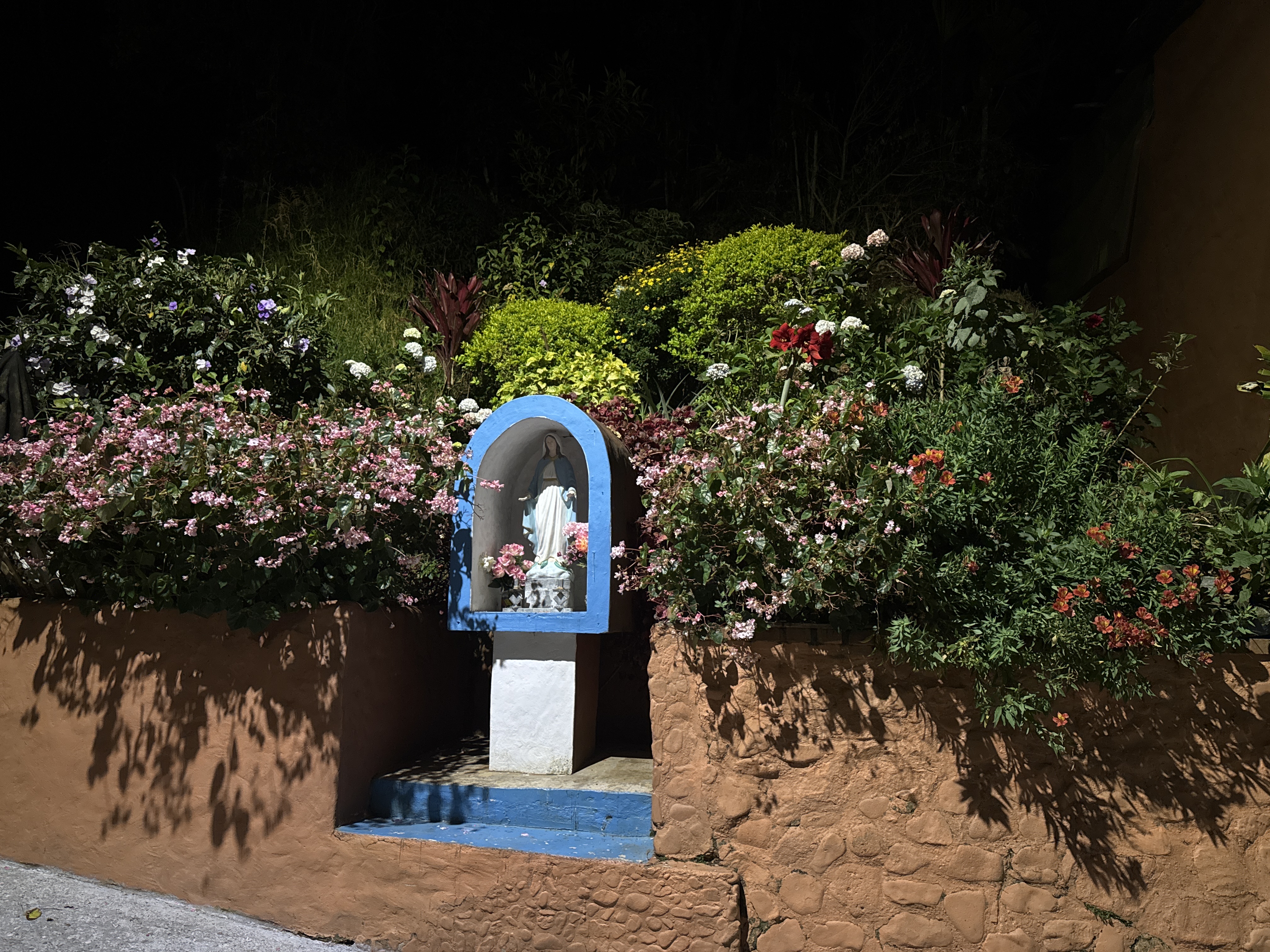
Jericó is often called the "Athens of Southwest Antioquia" because of its deep devotion to culture and religion, a fact that becomes immediately clear when you notice these small, meticulously maintained sidewalk shrines tucked into the lush greenery of the town's steep streets. This particular niche houses a statue of the Virgin Mary, known as "La Milagrosa" (The Miraculous One). While religious imagery is common throughout Latin America, in Jericó it takes on a deeper local pride because this town is the birthplace of Saint Mother Laura Montoya, the first Colombian to be canonized as a saint. Her legacy has infused the town with a culture of public prayer and floral offerings.
The architectural style of the base and wall reflects the "Pueblos Patrimonial" status of Jericó. You’ll notice the use of vibrant, contrasting colors—like the bright sky blue against the earthy terracotta—which is a hallmark of Antioquian colonial architecture. The lush collection of begonias, hydrangeas, and lilies surrounding the shrine isn't just accidental landscaping; in many Colombian "Pueblos de Montaña," there is a silent competition among neighbors to maintain the most beautiful roadside gardens as a matter of civic duty and spiritual gratitude.
These shrines, or "grutas," serve as informal community landmarks. Passersby will often make a quick sign of the cross or leave a fresh petal as they walk to the town square. It is a physical manifestation of a "cultura de pueblo" where the boundary between a private home and the public street is softened by shared faith and a collective love for flowers. For a visitor, they act as quiet, illuminated anchors in the night, reflecting Jericó’s reputation as one of the most peaceful and traditional "Pueblos Más Lindos" of Colombia.
Roadside Piety in Jericó
Jericó is known as the "Athens of Southwest Antioquia," but its identity is primarily defined by deep-seated Catholic mysticism. This roadside shrine features Our Lady of the Miraculous Medal, a central figure in Colombian popular piety. Unlike institutional church settings, these *animitas* or street niches are typically maintained by local families or neighbors as an "act of grace" for a perceived miracle or for protection over a specific stretch of road.
The town is the birthplace of Saint Mother Laura Montoya, Colombia's first saint. Her canonization in 2013 transformed Jericó into a pilgrimage site, fueling a local culture where every street corner and garden is integrated into a sacred geography. These shrines serve as informal boundary markers between the domestic and the public, where the maintenance of fresh flowers and lighting is considered a communal moral obligation.
Roadside Oratory of Jericó
Jericó is the birthplace of Saint Laura Montoya, Colombia's first saint, making roadside shrines like this deeply integrated into the town’s cultural fabric. This specific roadside oratory serves as an "ánima"—a focal point for folk Catholicism where residents pray for souls in purgatory or seek divine protection for travelers.
The figure is the Virgin of the Miraculous Medal, recognizable by her blue and white robes and downward-reaching hands. In Antioquian culture, these shrines often mark spots of personal significance—survived accidents, property boundaries, or neighborhood protection. Local "rezanderos" (professional prayer leaders) may occasionally gather here. While the town is famous for "carriel" leather bags, its religious identity is its most defining trait, boasting one of the highest densities of churches and shrines per capita in the region.
The surrounding lush vegetation includes Begonias and Hydrangeas, which thrive in Jericó’s "eternal spring" climate (approx. 1,900m altitude). Maintaining these shrines is a communal duty, often funded by nearby families as a form of "promesa" (vow) in exchange for answered prayers.