UG
Ulrich Gall
The Chiva Escalera of the Antioquian Highlands
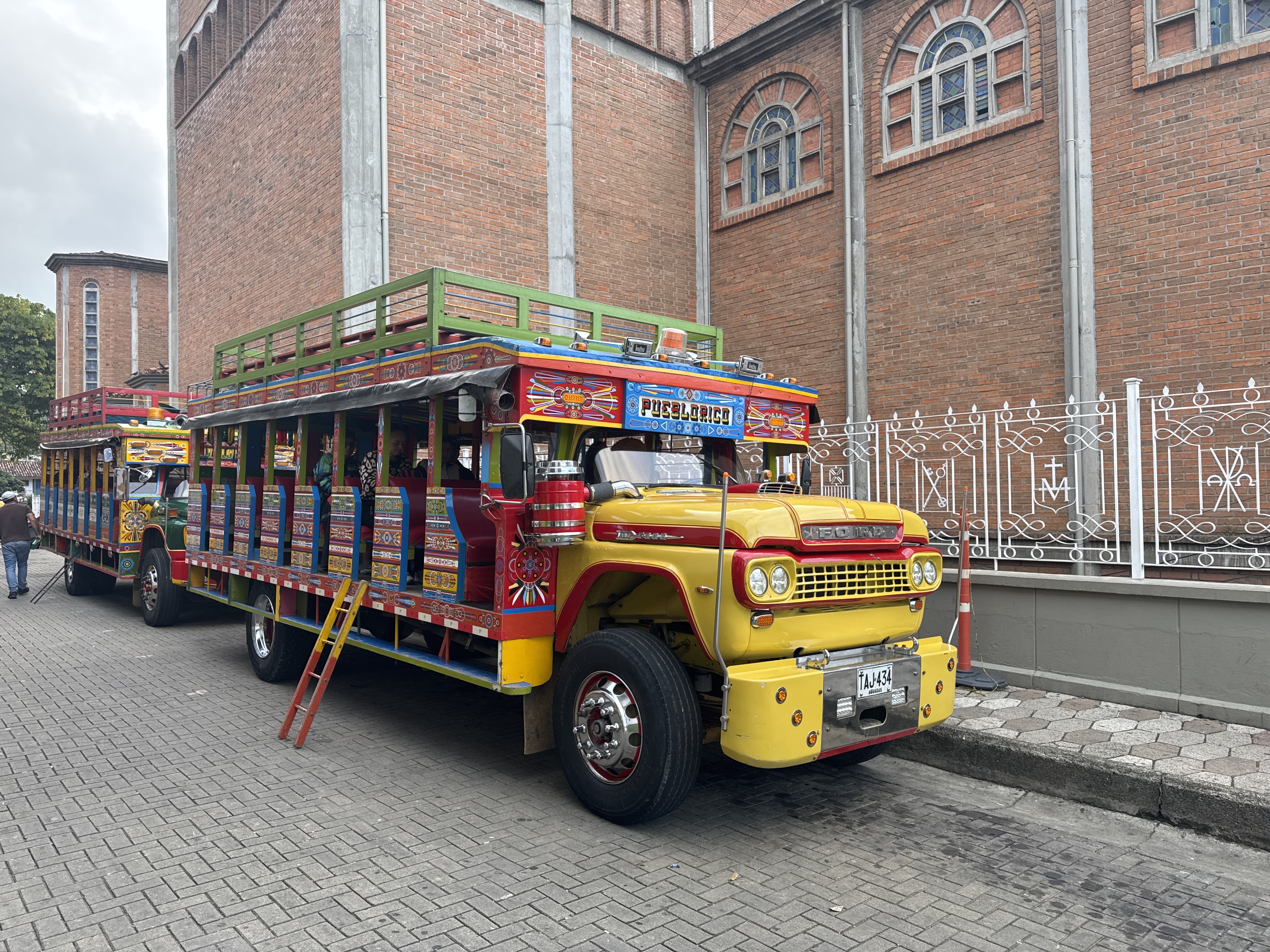
Here, in the vertical reality of the Antioquian highlands, man has devised a peculiar beast of burden to navigate the indifference of the mountains. This is the *Chiva*, or the "escalera" bus—a creature born of a heavy-duty truck chassis, often a Ford or International from a bygone era, yet transformed into a kaleidoscope of defiance against the monochrome of the earth.
Observe the geometry of these machines. They are not merely vehicles; they are rolling testimonies to a collective rural memory. The bodywork is crafted from wood, a material that breathes and groans under the weight of passengers, coffee sacks, and livestock. This artisanal construction is an act of profound craftsmanship, where the carpenter becomes a poet of structural integrity. In a landscape where the roads are often a treacherous dialogue with landslides and gravity, the Chiva’s high clearance and exposed ladder—the *escalera*—allow it to reach the remote *veredas* where the asphalt simply ends.
The ornamentation is what we must contemplate with particular gravity. These intricate, symmetrical patterns are known as *pintas*. They are hand-painted with a devotion that mirrors the religious icons found in the nearby Cathedral of Our Lady of the Mercies. Does the brilliance of the yellow, blue, and red serve as a warning to the abyss, or is it a jubilant scream against the looming fog of the Andes? Each line is a manifestation of the "baroque of the humble." They represent an identity that refuses to be erased by the standardization of the modern world.
In Jericó, these buses represent the circulatory system of the town. They arrive in the plaza loaded with the fruits of the labor of the campesino. To ride atop one—on the roof among the cargo—is to experience the terror and beauty of the Colombian landscape at a human scale. It is a slow, rhythmic movement, a migration that has occurred every morning for nearly a century. This specific Ford model, with its chrome bumpers polished to a mirror finish, suggests a pride that borders on the religious. It is a vessel of life, carrying within its wooden ribs the songs, the sweat, and the stoicism of a people who have looked into the heart of the mountains and decided to stay.
The Chiva, Colombia’s Rainbow on Wheels
While these vibrant vehicles might look like parade floats, they are actually the hardworking backbone of rural Colombian transport known as Chivas, or escaleras. In the rugged, mountainous terrain of the Antioquia region, these modified trucks are often the only way for farmers and villagers to move goods and people between remote coffee plantations and town centers like Jericó.
The name "escalera" literally translates to "ladder," referring to the wooden rungs typically found on the rear or sides, used to access the roof rack where everything from sacks of coffee and crates of chickens to furniture is stowed. These vehicles are almost always built onto sturdy, vintage American truck chassis—like the Ford models popular in the mid-20th century—because their powerful engines and high clearance are essential for navigating steep, unpaved Andean roads.
What makes a Chiva truly iconic is its "pinta," or hand-painted aesthetic. Local artisans use bright, geometric patterns to decorate every available inch of the wooden body. You will often see a name painted above the windshield; for instance, the blue plaque on this one reads "Pueblorrico," which is the name of a nearby municipality, signaling the route this specific bus serves.
In many ways, the Chiva is a rolling community center. While they serve as essential transit during the week, on weekends or special occasions, they are often converted into "Chivas Rumberas"—party buses equipped with booming sound systems and lights. Whether they are hauling agricultural products or a group of revelers, they remain a cherished symbol of Colombian resilience and kaleidoscopic folk art.
The Colombian Chiva
Known as *Chivas* or "escaleras," these vibrant buses are foundational to rural Colombian life, especially in mountainous Antioquia. Originally built on modified 1950s Ford or Dodge truck chassis, they utilize open-air wooden benches and a top rack (*parrilla*) for transporting everything from coffee sacks to livestock and people.
The ornate geometric patterns and hand-painted landscapes—often featuring the national flag—are the work of specialized folk artists. This craft, while decorative, signifies the owner's pride and the vehicle's specific route. Within the steep, unpaved terrain around Jericó, Chivas are often the only mechanical link between remote *veredas* (hamlets) and the town center. Beyond daily transport, they frequently transform into "Chivas Rumberas"—mobile parties equipped with sound systems and liquor, serving as a staple of regional celebrations.
The Chiva Bus: Colombia's "Staircase" on Wheels
Chiva buses, also known as *buses escalera* (ladder buses), are rustic, handcrafted vehicles essential to Colombian rural culture. Built on modified Dodge or Ford truck chassis from the mid-20th century, their bodies are constructed of wood and metal, featuring open-sided benches and a distinctive roof rack (*parrilla*) for livestock, coffee sacks, and produce.
Each chiva is unique, hand-painted by specialized artists using vibrant geometric patterns and motifs. In regions like Antioquia, they serve as the primary lifeline for remote mountain villages where modern buses cannot navigate the steep, unpaved terrain. While historically utilitarian, many have been converted into "Chivas Rumberas"—mobile parties equipped with sound systems, lights, and aguardiente—though in traditional towns like Jericó, they remain vital public transport for the *campesinos*.
The name *escalera* comes from the ladder at the rear, allowing passengers to climb to the roof. Despite appearing chaotic, there is a strict social hierarchy: the best seats are in the front, while the roof is reserved for young men, goods, or those looking for a cheaper (but riskier) fare.