UG
Ulrich Gall
Jericó, the Athens of the Southwest
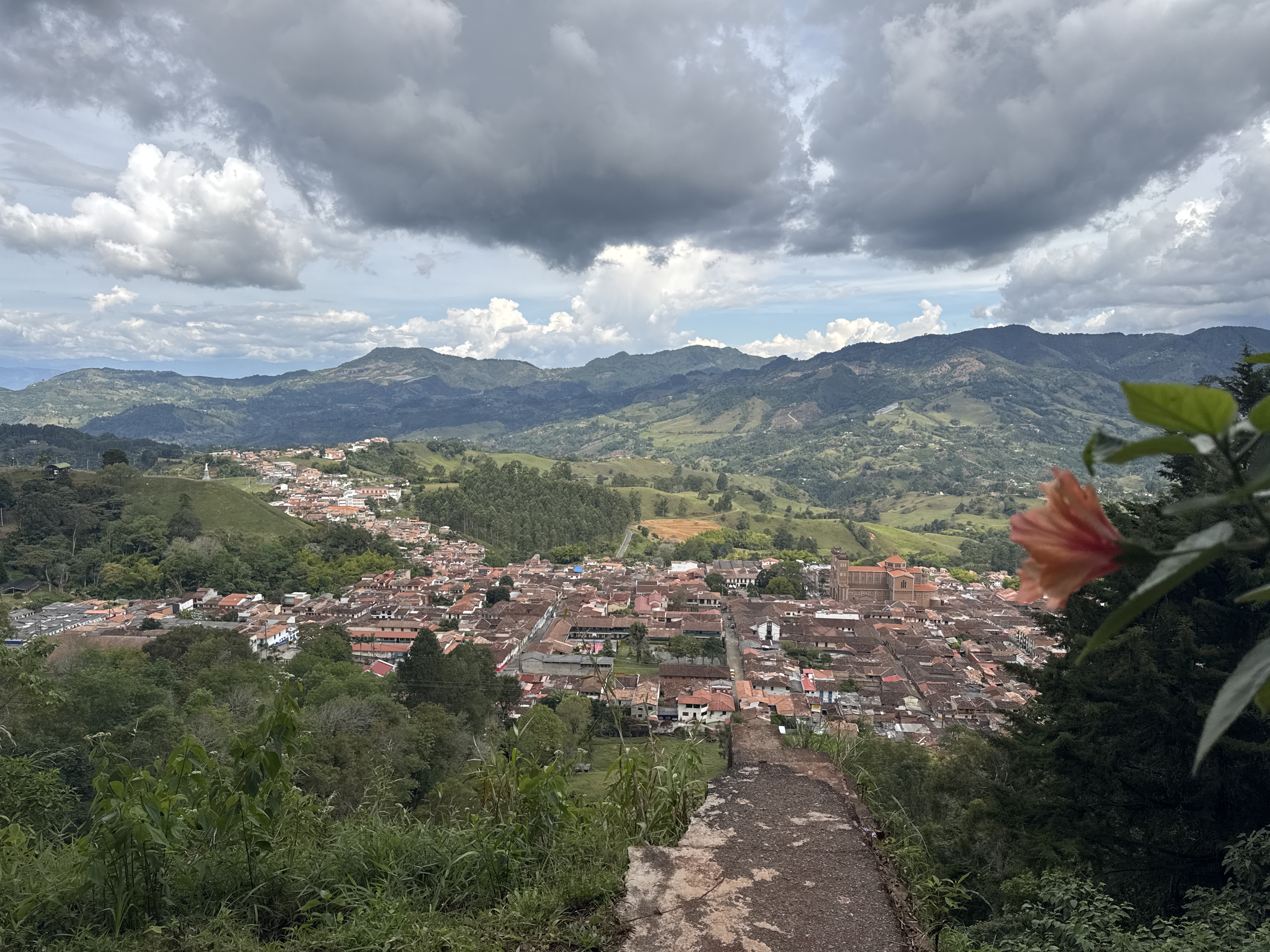
The town of Jericó is often referred to as the "Athens of Southwest Antioquia," a nickname earned not just for its dramatic mountain setting, but for its deep commitment to culture, religious history, and the arts. Perched on a natural balcony overlooking the Piedras River valley, this town is one of Colombia’s seventeen "Pueblos Patrimonio," a designation reserved for the most beautiful and historically significant colonial towns in the country.
What makes Jericó truly unique is its role as the birthplace of Mother Laura Montoya, Colombia’s first and only canonized saint. This legacy has transformed the town into a major site of pilgrimage, which explains the high density of religious architecture visible across the landscape. The large brick structure rising above the rooftops is the Cathedral of Our Lady of Mercies. Interestingly, while the town looks perfectly preserved in a colonial style, the cathedral actually underwent a significant reconstruction in the mid-20th century after a massive earthquake damaged the original structure.
Beyond its religious importance, Jericó is the world capital of the "Carriel." If you walk through the streets below, you will notice many men wearing a specific type of accordion-pleated leather satchel. This is the *Carriel Antioqueño*, an iconic piece of Colombian cowboy (arriero) culture. Legend has it a true Carriel must have numerous hidden compartments—traditionally up to twelve—to hide money, letters from loved ones, and even a deck of cards.
The geography surrounding the town is equally fascinating. The steep, lush ridges are part of the Cordillera Central of the Andes. This high-altitude, temperate climate is the secret behind the region's world-class coffee production. The "Gruta de la Inmaculada" where this view is captured serves as both a spiritual site and a natural viewpoint, connecting the town's urban grid directly to the "Morro El Salvador," a hill topped with a statue of Christ that mirrors the famous landmark in Rio de Janeiro, albeit on a much more intimate, local scale.
Jericó and the Muleteer's Carriel
Jericó is one of Colombia’s seventeen "Pueblos Patrimonios" (Heritage Towns), a designation strictly maintained to preserve its 19th-century colonial architecture. Beyond its aesthetic, the town is the birthplace of Laura Montoya Upegui (Mother Laura), Colombia’s first saint, which makes it a major site for religious pilgrimage.
A unique local industry defines Jericó: the production of the *carriel*. This specialized, multi-compartment leather bag was originally designed for muleteers traveling through the rugged Andean terrain. A traditional carriel is recognized by its twelve to eighteen secret pockets (some for hidden money, others for lockets or dice) and its distinctive use of un-shaved cowhide on the exterior flaps.
The surrounding landscape is part of the "Southwest" region of Antioquia, a topography shaped by steep coffee plantations and cloud forests. This specific altitude and volcanic soil are scientifically critical to the profile of high-mountain Colombian coffee, which requires the consistent humidity and cloud cover seen over these peaks to slow bean maturation, resulting in higher acidity and complex flavors.
Jericó, the Cradle of Saints and Carriels
Jericó is often called the "Athens of Southwest Antioquia." Founded in 1850, it is a preserved colonial gem and a Pueblo Patrimonio of Colombia. The large brick structure dominating the skyline is the Cathedral of Our Lady of Mercies, unusual for its Romanesque-Gothic style in a region mostly dominated by Spanish colonial architecture.
Jericó is the birthplace of Santa Laura Montoya, Colombia's first saint. Her canonization in 2013 transformed this quiet mountain town into a major pilgrimage site.
Locally, the town is famous for the *Carriel*, a traditional leather satchel used by *arrieros* (muleteers). A genuine Jericoano Carriel must have exactly twelve pockets, including secret "hidden" compartments historically used to conceal letters, money, or weapons. The craft is disappearing, with only a few master artisans left in the town center still hand-stitching them from cowhide and nutria fur.
The surrounding "Cuchilla de Jardín" mountains are part of a critical cloud forest ecosystem. This specific vantage point, the Gruta de la Inmaculada, sits on a steep ridge that served as a natural fortification during the Thousand Days' War (1899–1902), one of Colombia’s bloodiest civil conflicts.