UG
Ulrich Gall
The Grassroots of Colombian Cycling
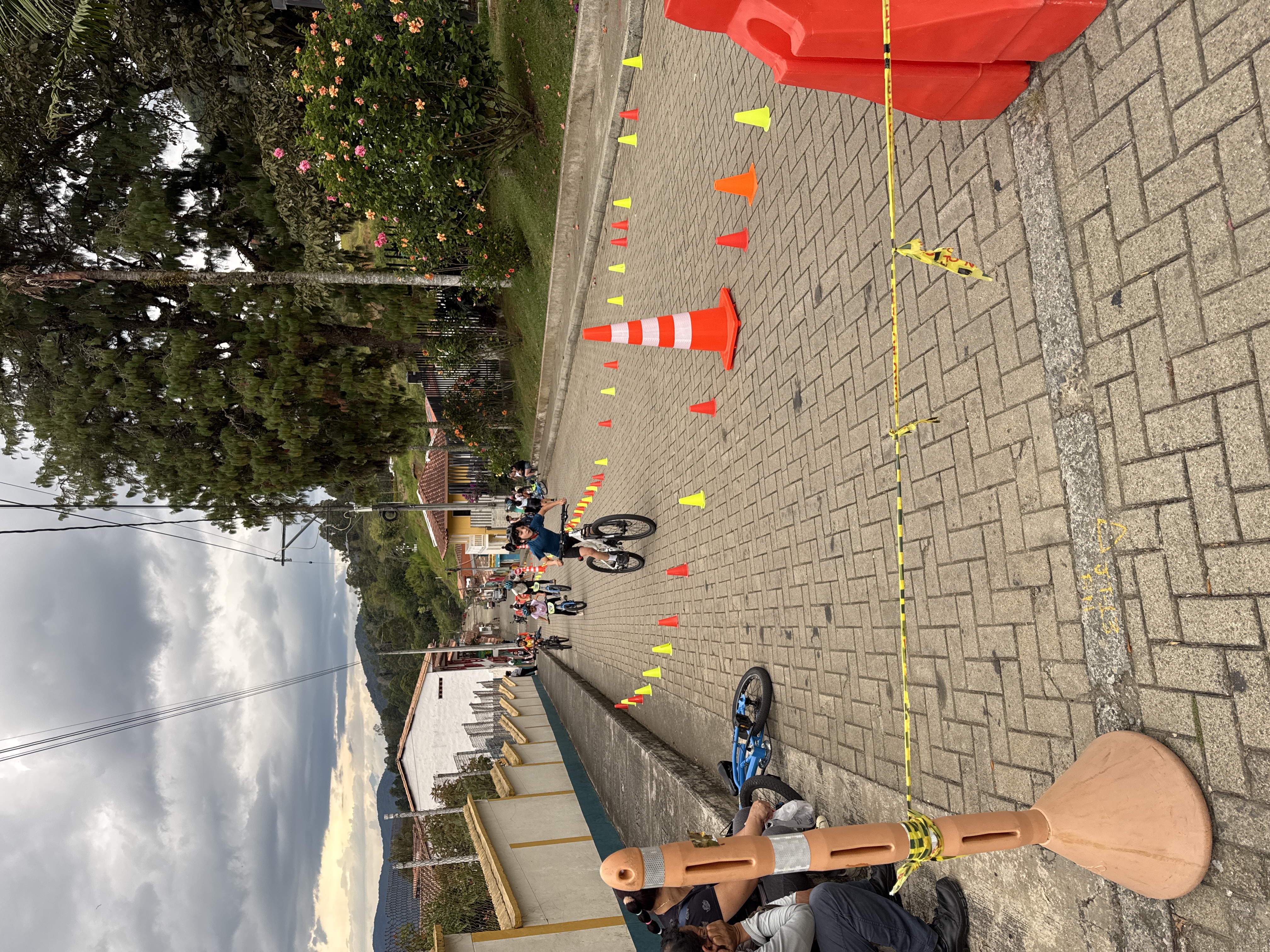
Cycling is not just a sport in Colombia; it is often described as the national obsession, a cultural cornerstone that rivals football in popularity. In a town like Jericó, nestled in the steep mountains of the Antioquia region, these obstacle courses are a common sight, representing the grassroots foundation of a country that consistently produces world-class climbers for the Tour de France.
This specific setup is part of a "gymkhana" or a community bike skills workshop. Children navigate a series of cones and markers designed to build balance, technical handling, and confidence on two wheels. You might notice the terrain is quite challenging—Jericó is part of Colombia's "Pueblos Patrimonios" (Heritage Towns), known for its incredibly steep, cobblestone streets. Because the geography is so vertical, learning to master a bike here is a matter of both pride and necessity.
The yellow tape blocking the road frequently says "Peligro" or "No Pase," which simply means "Danger" or "Do Not Cross." In many Colombian towns, it is standard practice to shut down entire residential streets (often called "vías peatonales" or temporary "Ciclovías") to provide a safe space for neighborly events, away from the motorcycles and trucks that usually dominate these narrow corridors.
The Antioquia region is the heartland of "Escarabajos," or the "Beetles," a nickname given to Colombian cyclists for their ability to practically crawl up the steepest mountain faces. By transforming a public thoroughfare into a training ground, the community is continuing a tradition of nurturing the next generation of riders in the same thin mountain air that trained legends like Egan Bernal and Nairo Quintana.
Youth Cycling Culture in Jericó
Jericó is one of Colombia’s 17 *Pueblos Patrimonios* (Heritage Towns), renowned for its well-preserved republican-style architecture and deep-rooted religious history.
Cycling is ingrained in Colombian national identity, often viewed as the primary path for social mobility in rural Antioquia. This "slalom" event for youth is part of a broader local initiative to foster competitive talent, a system that has historically produced world-class "Escarabajos"—Colombia’s elite climbers who dominate European Grand Tours.
Beyond sport, Jericó is the birthplace of Santa Laura Montoya, Colombia's first saint, and the traditional center for the production of the *Carriel*. This iconic leather satchel with hidden compartments was originally designed for muleteers traveling these steep Andean slopes; today, it is a protected piece of Colombian cultural heritage. The town's steep, gridded streets, like the one being used for this race, are a functional necessity of "pueblo" design in the rugged Cordillera Central.
Climbing for Glory: Colombian Cycling Culture
Cycling is Colombia's national obsession, often surpassing football in cultural significance. This mountain town of Jericó is a prime training ground due to its steep, Andean topography, producing "escarabajos" (beetles)—the nickname for elite Colombian climbers like Egan Bernal or Nairo Quintana.
Local municipalities frequently organize "Ciclovía" events or youth skills clinics like this one. Slalom drills with cones aren't just for fun; they are basic technical training for competitive road racing and mountain biking, pathways many see as a ticket out of poverty. Colombia's high altitude helps athletes develop superior cardiovascular capacity, making them naturally dominant in Grand Tour mountain stages.
Historically, the bicycle became a staple of rural life in the coffee-growing "Eje Cafetero" for its utility on rugged terrain. Today, even small-town races draw massive crowds, reflecting a deep-seated pride in a sport where Colombians consistently rank among the world's best.