UG
Ulrich Gall
The Spirit of the Jericoano Coffee Farmer
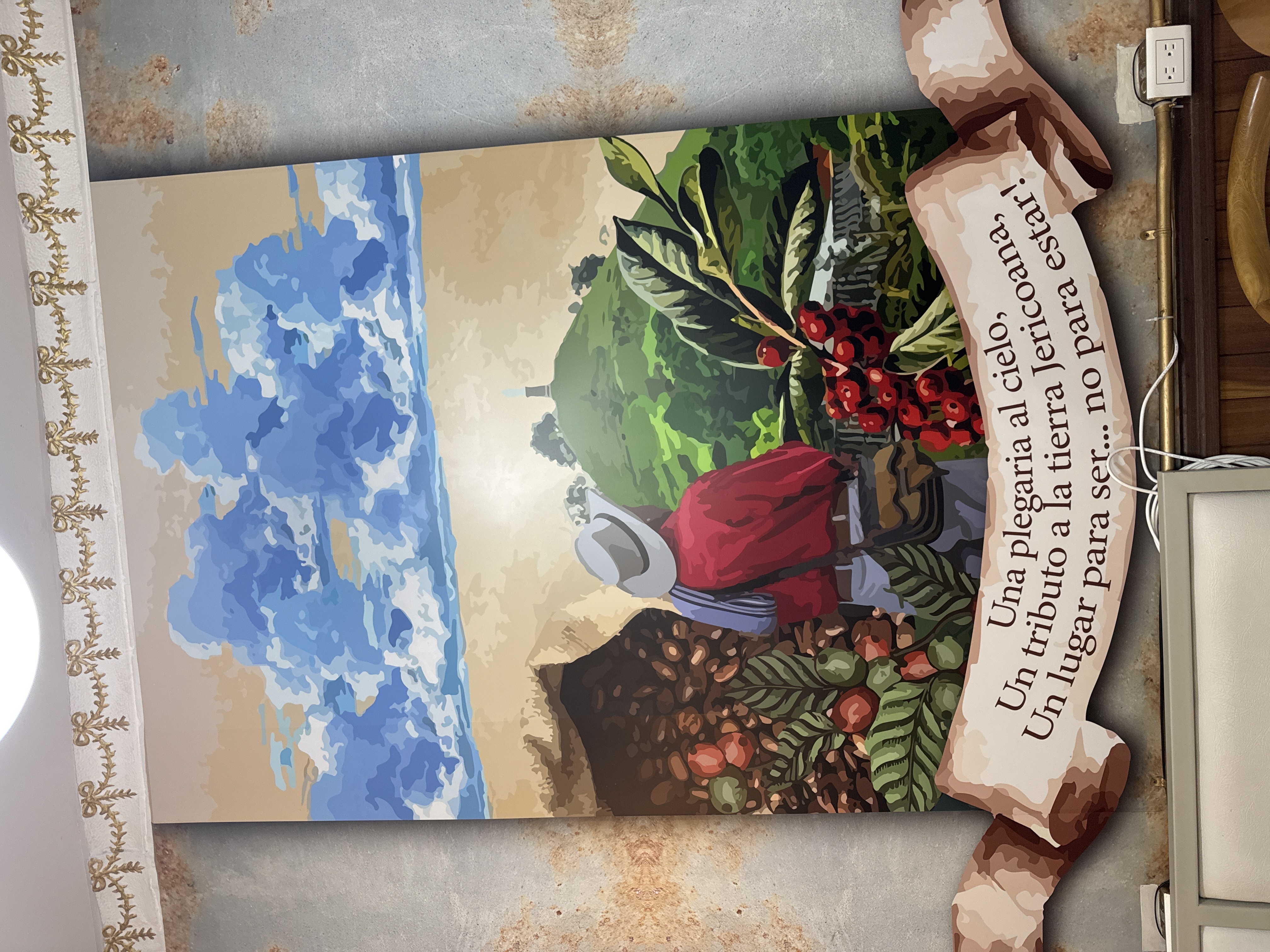
Beyond its reputation as one of Colombia’s most beautiful "Pueblos Patrimonios" (Heritage Towns), Jericó is a place where the identity of the coffee farmer, or *cafetero*, is elevated to a form of spiritual devotion. This mural captures that essence, depicting a farmer looking out toward the "Cerro El Salvador," a prominent hill overlooking the town known for its giant statue of Christ. The imagery emphasizes the profound connection between the local landscape, religious faith, and the labor of coffee cultivation that sustains this region of Antioquia.
The Spanish inscription on the scroll translates to: *"A prayer to heaven, a tribute to the Jericoana land, a place to be... not just to stay!"* This poetic sentiment reflects a deep local pride. It suggests that Jericó isn't just a destination to visit or a place to occupy space, but a place that shapes one's soul and identity. The word *Jericoana* is the specific demonym for someone or something from Jericó.
You’ll notice the farmer is wearing a very specific leather bag with multiple straps and pockets. This is a *carriel*, the most iconic symbol of the Antioquian *arriero* (muleteer) culture. Jericó is actually the world capital of the *carriel*; people come from across the country to buy these handmade bags, which traditionally contain various hidden compartments meant to hold everything from money and tobacco to a lock of a loved one's hair and a deck of cards.
The plants in the foreground with bright red berries are coffee trees. In this region, coffee isn't just a crop—it’s a carefully hand-harvested art form. The mural contrasts the raw, harvested beans in the burlap sack on the left with the ripening "cherries" on the branch, illustrating the back-breaking but celebrated cycle of production. To a local, this scene isn't just a picturesque landscape; it’s a representation of the "Paisa" spirit—hardworking, deeply religious, and fiercely attached to the dramatic, green mountains of the Andes.
The Soul of Jericó
Jericó is the birthplace of Santa Laura Montoya, Colombia's first saint, and this mural captures the town's dual identity as a center of religious pilgrimage and high-altitude coffee production. The figure wears a traditional *carriel*, a leather satchel synonymous with the "Paisa" culture of Antioquia; these bags historically featured numerous hidden compartments used by muleteers to carry everything from dice and tobacco to charms and letters.
The hill in the background is Cerro El Salvador, topped by a statue of Christ the Redeemer. The inscription, "A place to be... not to stay," references a local philosophical sentiment about Jericó as a transformative spiritual retreat rather than a mere geographical destination. The town is also famous for being one of the few places where the craft of handmade *guarnilería* (leatherwork) is preserved, a tradition directly linked to the coffee-growing heritage depicted here.
The Carriel and Coffee Soul of Jericó
Mural inside La Casona restaurant honoring Jericó’s identity as one of Colombia's *Pueblos Patrimonios* (Heritage Towns). The figure is a typical "Arriero" (muleteer), the historical backbone of the Antioquian economy, identifiable by the *carriel*—a multi-compartment leather satchel traditional to this specific town. Jericó is the world capital of carriel production; authentic ones have precisely 12 pockets, including secret ones for "love letters" or money.
The hill in the background is Cerro El Salvador, topped by a Christ statue, a key local landmark. The red berries are "cerezas" (coffee cherries). This region produces high-altitude Arabica coffee; labor is still largely manual due to the steep Andean terrain.
Text translation: "A prayer to heaven, a tribute to the Jericoan land, a place to be... not just to stay!" This reflects a local philosophical pride in Jericó as a center of religious and cultural essence (birthplace of Santa Laura Montoya, Colombia's first saint) rather than just a physical location.