UG
Ulrich Gall
The Reflective Guardians of the Sidewalk
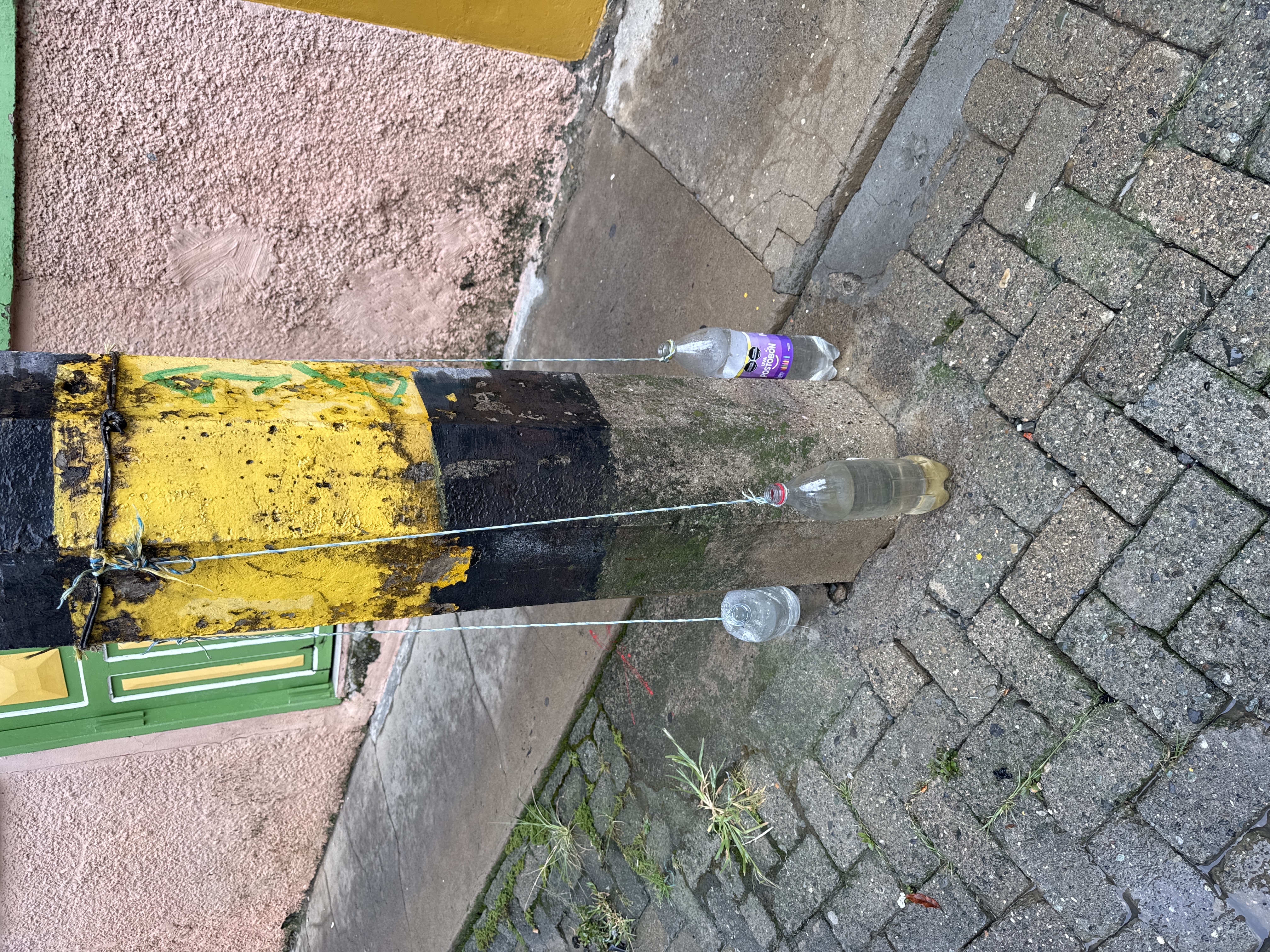
What may look like a forgotten DIY project is actually a piece of traditional Latin American urban folklore using "visual deterrents" to maintain the cleanliness of the sidewalk. In towns like Jericó, hanging clear plastic bottles filled with water around poles or outside doorframes is a widespread folk remedy intended to discourage street dogs from urinating on the structure.
The logic behind this practice, though scientifically unproven, is rooted in the idea that a dog approaching the pole will see its own distorted reflection in the water and the curved plastic, or perhaps be startled by the refraction of light through the liquid. This is believed to confuse or frighten the animal enough that it chooses a different spot for its business. While many locals swear by its effectiveness, others acknowledge it as more of a symbolic gesture—a polite way of asking neighbors to keep their pets away from a specific storefront or corner.
The bottle on the right is a recycled container for "Postobón," which is Colombia's most iconic beverage company. Founded in 1904, Postobón is a massive part of Colombian identity, famous for its bright pink apple-flavored soda called Manzana Postobón. Seeing these bottles repurposed for various household needs is a common sight throughout the Antioquia region.
This custom is part of a larger category of "popular wisdom" in Colombia that often uses simple, everyday objects to solve community problems. In a town like Jericó, which is famous for its well-preserved colonial architecture and vibrant "Pueblo Patrimonio" status, these bottles serve as a quiet, local alternative to harsh chemical deterrents or more aggressive "No Dogs" signage, blending seamlessly into the colorful streetscape of the Andes.
The Water Bottle Deterrent
Across Colombia and much of Latin America, water-filled plastic bottles are a common folk remedy used to deter dogs (and sometimes cats) from urinating on doorsteps, walls, or utility poles. The prevailing urban legend suggests that reflections from the water, or the magnification of movement through the clear plastic, startles animals and discourages them from marking their territory.
While there is no scientific evidence to support the efficacy of this " repellent," the practice remains a deeply ingrained cultural tradition. In many Colombian towns like Jericó, these "botellas de agua" serve as a low-cost, non-confrontational way for business owners and residents to protect their property from the odors and hygiene issues associated with stray animals.
Colombian Dog Deterrent Bottles
A common folk deterrent across Colombia and Latin America to prevent dogs from urinating on poles, walls, or storefronts. Known as *botellas de agua*, the practice stems from the belief that dogs are startled by their own reflection or the refraction of light through the water, discouraging them from marking the spot. While scientifically unproven—dogs primarily navigate by scent, not sight, when marking—it remains a ubiquitous urban myth and a DIY alternative to chemical repellents.
The bottles often utilize local brands like Postobón. In Jericó and wider Antioquia, maintaining clean facades is a matter of local pride, especially given the town’s status as a *Pueblo Patrimonio* (Heritage Town). You will often see these hanging from doorways or tied to utility poles at "sniffing height" to protect the colorful bahareque architecture from acidic damage.