
Eddie Codel
The Mineral-Etched Water Tanks of Hellissandur
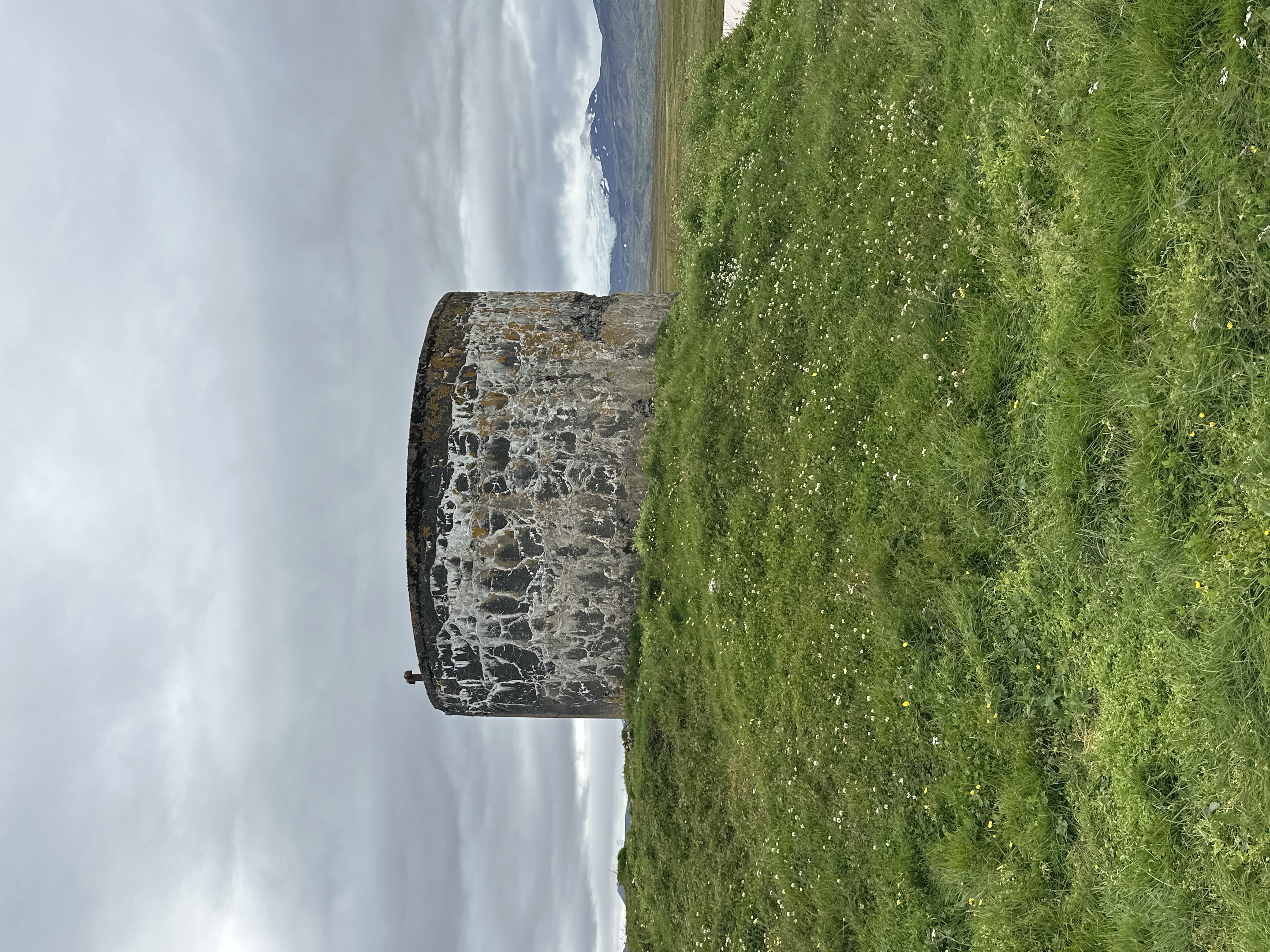
While it may look like an ancient ruin or a mysterious bunker, this weathered concrete cylinder is actually a remnant of Iceland’s early industrial innovation: a historic water tank designed to harness the power of the landscape. Located in Hellissandur on the Snæfellsnes Peninsula, these structures were vital for providing a steady water supply to a fishing village that, for centuries, had to contend with the harsh, salt-sprayed environment of the North Atlantic.
This tank belongs to a system developed in the mid-20th century. In a region where the ground is primarily composed of porous volcanic rock and lava fields, keeping fresh water separate from the encroaching sea was a constant challenge. Engineers built these reinforced concrete tanks on elevated mounds to use gravity to distribute water to the town below. The striking, marbled texture on the exterior isn't paint or intentional decoration; it is the result of decades of "efflorescence." This occurs when moisture moves through the porous concrete, dissolving internal salts and minerals, which then crystallize on the surface as the water evaporates. The harsh Icelandic winds and volcanic grit have further etched these patterns, turning a utilitarian utility into a piece of accidental land art.
Today, Hellissandur is perhaps better known for its vibrant street art—the town has transformed many of its old industrial buildings into canvases for international muralists—but these older, untouched structures serve as a quiet reminder of the grit required to settle this coastline. In the distance, you can see the Snæfellsjökull glacier, the very ice cap that inspired Jules Verne’s *Journey to the Center of the Earth*. The water once stored here likely began its journey as meltwater from that very glacier, filtering through layers of basalt for years before being captured in this tank to sustain the local community.
The Singing Water Tank of Hellissandur
This structure is Fjárborg, a former water tank that served the fishing village of Hellissandur. Built in the mid-20th century, it was originally designed to store and provide water pressure for the local community, which was once a major fishing hub on the Snæfellsnes Peninsula.
What makes it unique today is its acoustics. The concrete cylinder has been repurposed into a natural amplifier and performance space. Because of its specific dimensions and material, the interior produces an exceptionally long, haunting echo that lasts for several seconds. It is frequently used by musicians and vocalists to record atmospheric tracks or by visitors who simply want to experience the "delay pedal" effect of the room. The exterior shows significant efflorescence—white salt and mineral deposits leaching through the concrete—caused by decades of exposure to the harsh, salt-heavy North Atlantic winds.
Fjárborg Liver Oil Tank
Fjárborg. Former fish-liver oil storage tank. Built 1947 by the Hellissandur fishing cooperative. Concrete construction, roughly 6 meters high, 8 meters diameter. Located in a historic fishing hub dating to the 16th century.
Originally held hundreds of tons of cod liver oil—a vital export for vitamin A/D and industrial lubricants. Now converted into a micro-performance space and art gallery. Famous for its 15-second natural reverb. Sound carries through small acoustic openings. Part of the broader "Street Art Capital of Iceland" movement in Hellissandur, where old industrial structures are repurposed to prevent urban decay in shrinking coastal villages.
Behind the structure sits the Snæfellsjökull glacier, a 700,000-year-old stratovolcano. Jules Verne's chosen entry point to the center of the Earth. The contrast between the brutalist industrial tank and the ancient ice cap defines the Snæfellsnes peninsula's aesthetic.