
Eddie Codel
The Icelandic Rétt
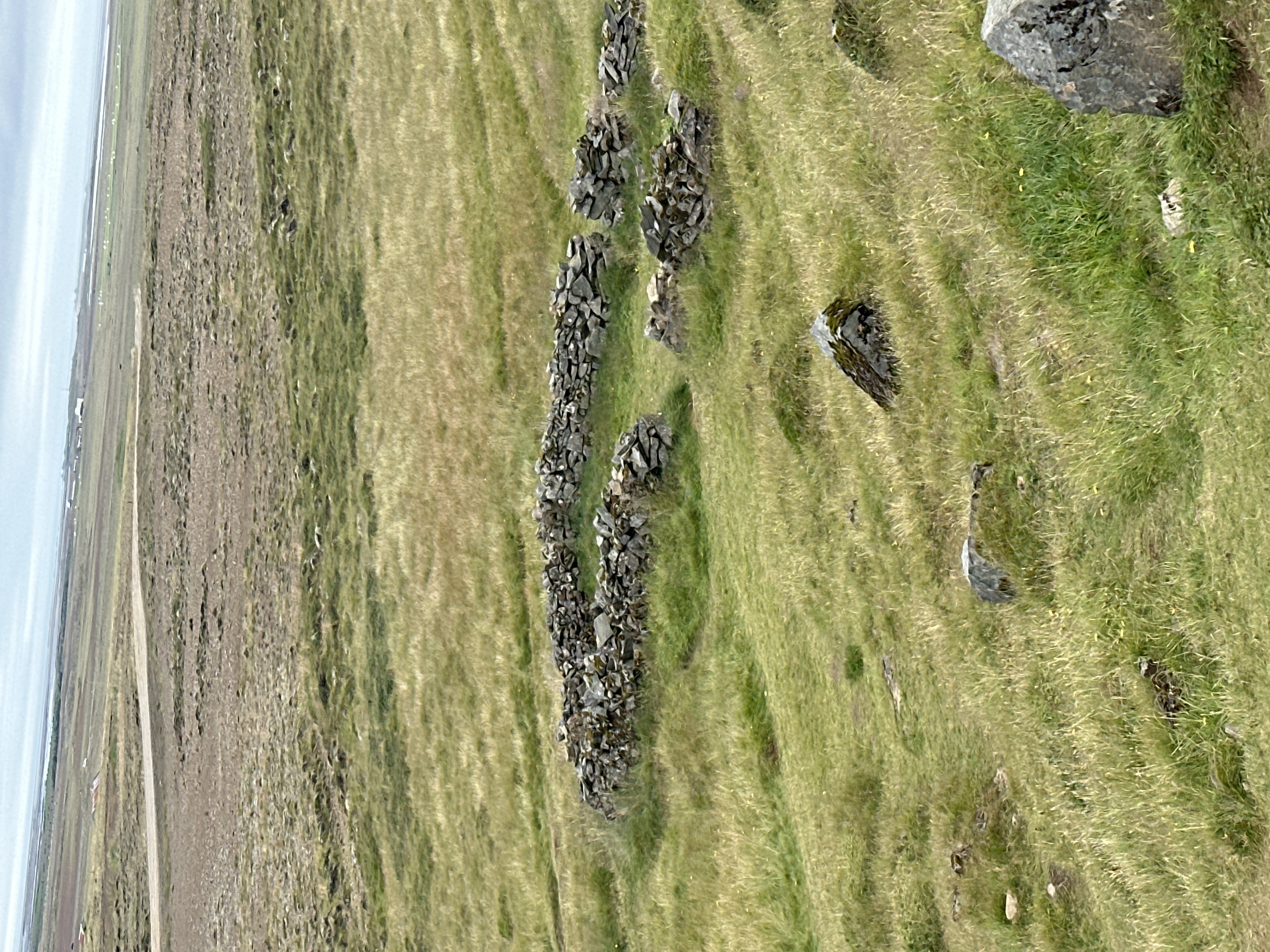
Standing in this windswept landscape, you are looking at a "rétt," a traditional Icelandic sheep fold that serves as a cornerstone of rural community life and one of the country's oldest agricultural traditions. While it might look like a simple ruin or a basic enclosure, it is actually a vital piece of infrastructure for the annual autumn "réttir."
Every September, Icelandic farmers and their families head into the highlands on horseback to gather their sheep, which have spent the entire summer roaming free across the volcanic mountains and valleys. This massive communal effort is called the "smölun." Once the sheep are rounded up, they are driven down to enclosures like these. The central area of the fold is where all the sheep are gathered together, and the smaller branching segments or "pockets" are used by individual farmers to sort their specific livestock based on ear markings.
The construction itself is a testament to Icelandic ingenuity in a land with few trees. These walls are built using dry-stone masonry, utilizing the abundance of volcanic basalt rocks scattered across the Snæfellsnes peninsula. In some areas, these walls are also reinforced with turf to provide better insulation and stability against the fierce Atlantic winds.
For locals, the sorting at the rétt is much more than a chore; it is a major social event. People from all over the region, and even city dwellers from Reykjavík, come to help, celebrate the end of summer, and share traditional food and "brennivín" (Icelandic schnapps). While these stone circles stand quiet and empty for most of the year, they represent a thousand-year-old link to the Viking age, when the first settlers brought their sheep to this island and established this same system of communal grazing and gathering.
Icelandic Stone Sheep Folds
These low, dry-stone structures are traditional Icelandic sheep folds, or *réttir*. Historically, they served as temporary holding pens during the annual autumn *réttir*—one of the country's oldest cultural traditions. In September, farmers descend from the highlands where sheep roam freely all summer to gather the flock. These specific stone enclosures, built without mortar from local basalt, were used to sort animals by their earmarks before they were herded back to individual farms.
In many cases, such ruins also represent the remains of *sel*, or summer dairy huts. Up until the early 20th century, young women would live in these remote outposts for several months to milk cows and sheep and produce skyr and butter. This practice, known as shieling, was essential for survival in Iceland’s marginal agricultural environment, allowing farmers to preserve lowland hay for winter while utilizing upland grazing.
Gerðuberg Basalt Dry-Stone Enclosure
Gerðuberg basalt columns debris repurposed into a *réttir* (sheep fold) or historical livestock enclosure. Built using dry-stone stacking, these basalt blocks are naturally hexagonal or pentagonal, formed by cooling lava contracting into geometric pillars.
Unique Icelandic cultural context: "Elf Belief." In this region of the Snæfellsnes Peninsula, construction of roads and fences is occasionally diverted to avoid "Huldufólk" (Hidden People) dwellings. Locals often attribute equipment failure or accidents to disturbing these specific rock formations or ancient ruins. While seemingly just a wall, such structures are protected by the Cultural Heritage Agency of Iceland if they pre-date 1900. These specific stones likely fell from the Gerðuberg cliffside nearby, a massive wall of basalt columns considered one of the most symmetrical in the country.