
Eddie Codel
The Iron Remains of the Epine Wreck
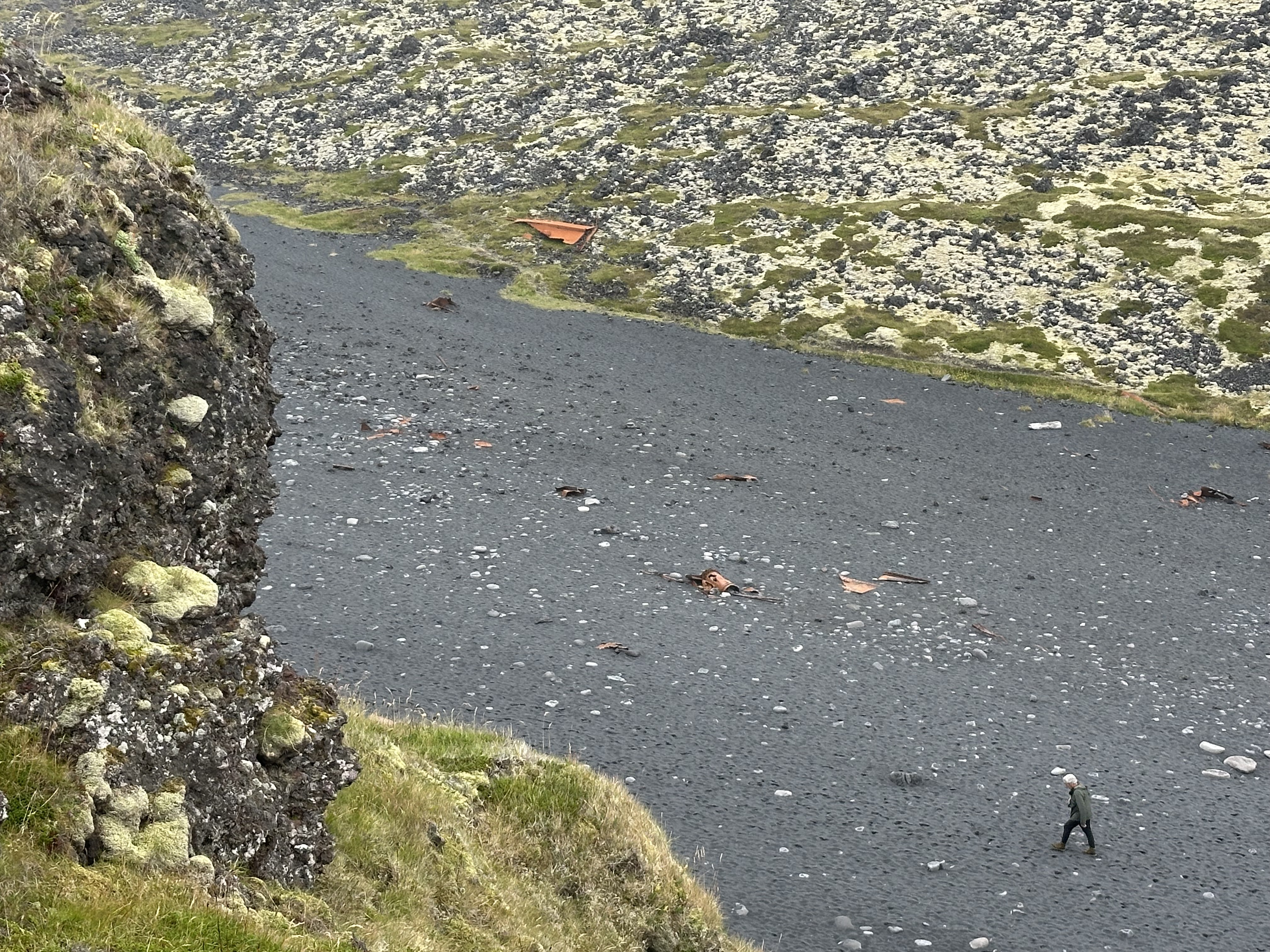
Scattered across the black sands of Djúpalónssandur and Dritvík are the rusted iron remains of a British trawler, serving as a solemn, open-air memorial to a maritime disaster that occurred nearly a century ago. On a stormy night in March 1948, the Grimsby trawler *Epine* GY 7 crashed against the treacherous rocks just offshore. The Atlantic waves were so violent that they tore the ship apart, scattering heavy iron plates and machinery across the beach where they have remained ever since, slowly oxidizing against the dark volcanic pebbles.
For many years, the presence of these rusted fragments might seem like neglected debris, but they are actually legally protected as historical relics. The Icelandic people leave them in place out of respect for the nineteen men who lost their lives in the shipwreck; only five crew members survived, thanks to the heroic efforts of local rescue teams from the nearby region who managed to reach them despite the brutal weather.
These iron shards are often referred to as "Iron of the Epine." Because the salt air and harsh Icelandic winters have integrated the metal so deeply into the landscape, the rusted orange hue provides a stark, almost artistic contrast to the jet-black basalt sands and the neon-green moss that blankets the surrounding lava fields. Walking among these ruins offers a poignant connection to the dangerous history of the North Atlantic fishing industry, which was the lifeblood of this remote peninsula for centuries.
Further down this same coastline, you might encounter the "lifting stones," which were historically used by fishermen to test their strength and determine their suitability for working on a boat. Together with the wreck, these features tell a story of a community that lived—and sometimes perished—at the mercy of the sea.
The Iron Remains of the Epine GY7
These rusted iron shards scattered across the black sands of Djúpalónssandur are the remains of the Epine GY7, a British deep-sea trawler from Grimsby. On the night of March 13, 1948, the vessel ran aground during a violent blizzard. Despite a perilous rescue operation by the local Icelandic search and rescue team, only five of the nineteen crew members survived.
The wreckage is legally protected as a memorial to the fourteen men who lost their lives. Visitors are forbidden from removing any pieces. Over decades, the intense North Atlantic surf and shifting volcanic sands have broken the ship into these weathered fragments, creating a "shipwreck graveyard" that serves as a stark reminder of the dangers historically faced by fisherman in these treacherous Icelandic waters.
The Iron Remains of the Epine Trawler
Iron wreckage scattered across Djúpalónssandur beach near Dritvík. Remains of the British trawler *Epine* (GY 7), wrecked March 13, 1948. Ship caught in a blizzard; 14 men perished, 5 rescued by local Icelanders via breeches buoy. Trawler smashed against the skerries; tide and surf ground the steel into the small fragments seen today. Protected as a historical monument; illegal to remove any metal shards.
Surrounding landscape: *Djúpulónsperla* (pebbles) and four famous lifting stones (*Steintökin*) historically used to test the strength of rowers for fishing crews. Fullsterkur (Full-strength, 154 kg), Hálfsterkur (Half-strength, 100 kg), Hálfdrættingur (Weakling, 54 kg), and Amlóði (Useless, 23 kg). Moss-covered lava fields are *Pahoehoe* flow, characterized by smooth, billowy surfaces colonized by resilient *Grimmia* moss.